AI & Automation
AI Receptionist for Martial Arts Schools: Win More Leads
See how an AI receptionist for martial arts schools captures leads, books intro classes, follows up, and handles member questions around the clock every day.
 Watch · 20s
A parent finds your martial arts school at 9:30 p.m. They want to know whether the beginner program is right for their child, which days it meets, and how to schedule a first class. If nobody responds until the next morning, that parent may already be talking to another school.
An AI receptionist closes that response gap. It can answer common questions, qualify prospective students, book intro classes, follow up with leads, and route unusual situations to your staff. The goal is not to replace the front desk. It is to keep routine conversations moving when your team is teaching, cleaning the mats, helping families, or off the clock.
For martial arts operators, that distinction matters. Enrollment conversations often involve age, experience, program fit, schedules, uniforms, parent participation, and safety expectations. A useful AI receptionist must handle those details accurately—not just send a generic message asking someone to call back.
See how Fitty can respond to martial arts leads and book intro classes 24/7 →
What an AI receptionist should do for a martial arts school
An AI receptionist is a conversational agent connected to your approved business information, booking rules, and follow-up workflows. Depending on the channels you configure, it can handle website inquiries, messages, calls, or text conversations.
For a dojo, academy, or martial arts studio, the highest-value jobs usually include:
- Responding immediately to new membership inquiries
- Asking whether the prospective student is an adult or child
- Collecting the student’s age, experience level, and preferred discipline
- Recommending an appropriate beginner or intro option
- Showing eligible class times without exposing the entire internal schedule
- Booking a trial, orientation, consultation, or first class
- Sending reminders and directions before the visit
- Following up after an unanswered inquiry or missed appointment
- Answering routine member questions about closures, schedules, and policies
- Escalating billing, injury, cancellation, or sensitive account issues
- Following up on overdue dues using approved language and payment processes
That last group requires restraint. AI should not improvise around injuries, disputes, contracts, rank progression, or exceptions to school policy. Those conversations need clear escalation rules.
Where martial arts schools lose leads
Most schools do not lose leads because their instruction is weak. They lose them in the handoff between interest and attendance.
Inquiries arrive while everyone is teaching
Peak inquiry hours can overlap with evening classes. The owner may be on the floor, and the front desk may be checking in students or speaking with parents. Even a motivated lead can sit unanswered.
An AI receptionist can acknowledge the inquiry, answer initial questions, and offer the next appropriate intro slot without interrupting instruction.
Follow-up depends on staff memory
A lead asks about youth karate, receives one reply, and disappears. Without an automated follow-up sequence, the conversation often ends there.
Useful follow-up should reflect the lead’s actual situation. A parent asking about a six-year-old beginner should not receive the same message as an adult asking about Brazilian jiu-jitsu experience classes.
Booking creates unnecessary friction
Telling a prospect to review a large schedule and call back adds work. A better workflow asks a few qualifying questions and presents only relevant options.
For example:
- Is the program for an adult or a child?
- What is the student’s age?
- Is the student a beginner?
- Which days or time windows work best?
- Would the family prefer an intro class, private orientation, or facility tour?
The AI can then offer valid times based on your rules rather than making the prospect interpret your timetable.
A practical lead conversation for a dojo
A strong conversation feels direct and helpful. It does not pretend that every prospect is ready to enroll immediately.
Step 1: Identify the program
The receptionist should determine the discipline and age group before discussing availability. If your school offers youth karate, adult kickboxing, Brazilian jiu-jitsu, and an after-school program, each path needs separate eligibility and booking logic.
Step 2: Answer the immediate concern
Parents commonly ask whether a child needs experience, what to wear, whether they can observe, and how the first visit works. Adults may ask about fitness requirements, contact levels, equipment, or beginner-friendly classes.
Give the AI short, approved answers. Avoid broad promises such as guaranteeing confidence, fitness results, self-defense capability, or competitive success.
Step 3: Offer a specific next action
A conversation should end with a useful choice:
- Book an intro class
- Schedule a tour
- Arrange a call with an instructor
- Join a waitlist
- Receive the beginner information packet
Open-ended endings such as “Let us know if you have questions” create fewer commitments than offering two eligible appointment times.
Step 4: Confirm and prepare
Once booked, the prospect should receive the location, arrival time, clothing guidance, parking details, waiver instructions, and any parent or guardian requirements. The system should also explain how to reschedule.
Step 5: Continue follow-up
If the prospect does not book, follow up based on the question they asked. If they book but do not attend, offer a simple path to reschedule. If they complete the intro, route them into the school’s enrollment process rather than continuing a generic lead sequence.
What to configure before turning the AI on
An AI receptionist is only as reliable as its source material and operating rules. Do not connect it to a messy document folder and assume it will infer your policies.
Build a controlled knowledge base covering:
Programs and eligibility
Document each discipline, age range, experience requirement, capacity rule, and beginner entry point. Include what should happen when a student is too young, a class is full, or the requested program is not offered.
Booking rules
Specify which classes can accept trials, how far ahead someone can book, required lead time, capacity limits, and whether siblings need separate reservations. Define when a tour or instructor call is more appropriate than a class booking.
Pricing boundaries
Decide what the AI may disclose. If pricing depends on program, term, family plan, or equipment package, the receptionist should explain the process without inventing a quote. It can collect the necessary details and schedule a staff conversation.
Policies and escalation
Create a clear handoff list. Staff should handle:
- Injury or medical questions
- Bullying, harassment, or safety complaints
- Contract interpretation and cancellation disputes
- Refund requests and unusual billing issues
- Rank, testing, and promotion decisions
- Competition eligibility
- Requests for exceptions to age or attendance rules
- Emergencies or threats
The AI should identify these topics, stop routine automation, and notify the right person.
Protect parents, students, and your school
Martial arts businesses frequently communicate with parents about minors. Configure the receptionist to collect only what is needed to recommend and book a program. Sensitive details should not be requested casually in an open conversation.
Operational safeguards should include:
- Obtaining appropriate consent for automated texts or calls
- Honoring opt-out requests promptly
- Directing medical concerns to a qualified person rather than providing advice
- Using secure payment links instead of requesting card details in ordinary chat
- Restricting account information until identity is appropriately verified
- Keeping a conversation history so staff can review what was promised
- Clearly identifying the assistant as an automated or AI system
Have legal or compliance counsel review your workflows where necessary, especially for marketing consent, recurring payments, contracts, and communications involving minors.
How to measure whether it is working
Do not judge an AI receptionist by how many messages it sends. Measure whether it advances real operating outcomes.
Track these metrics by location, program, and lead source:
- Time from inquiry to first response
- Percentage of inquiries that receive a completed response
- Qualified leads who book an intro or consultation
- Booked prospects who attend
- No-shows who reschedule
- Intro students who move into the enrollment process
- Conversations escalated to staff
- Incorrect answers or failed bookings
- Overdue accounts that enter an approved payment workflow
Review conversation transcripts regularly. Look for repeated questions, dead ends, incorrect program recommendations, and points where prospects ask for a human. Those findings should become knowledge-base updates or new routing rules.
AI receptionist versus a basic chatbot
A basic chatbot usually follows a fixed decision tree or displays links. That can answer simple questions, but it often fails when a prospect phrases something differently or asks several questions at once.
A capable AI receptionist should understand natural language, retain the context of the conversation, use current scheduling rules, complete an action, and know when to hand off. The difference is execution: answering “Do you have classes for my eight-year-old?” is useful, but checking eligibility and booking the correct beginner visit is much more valuable.
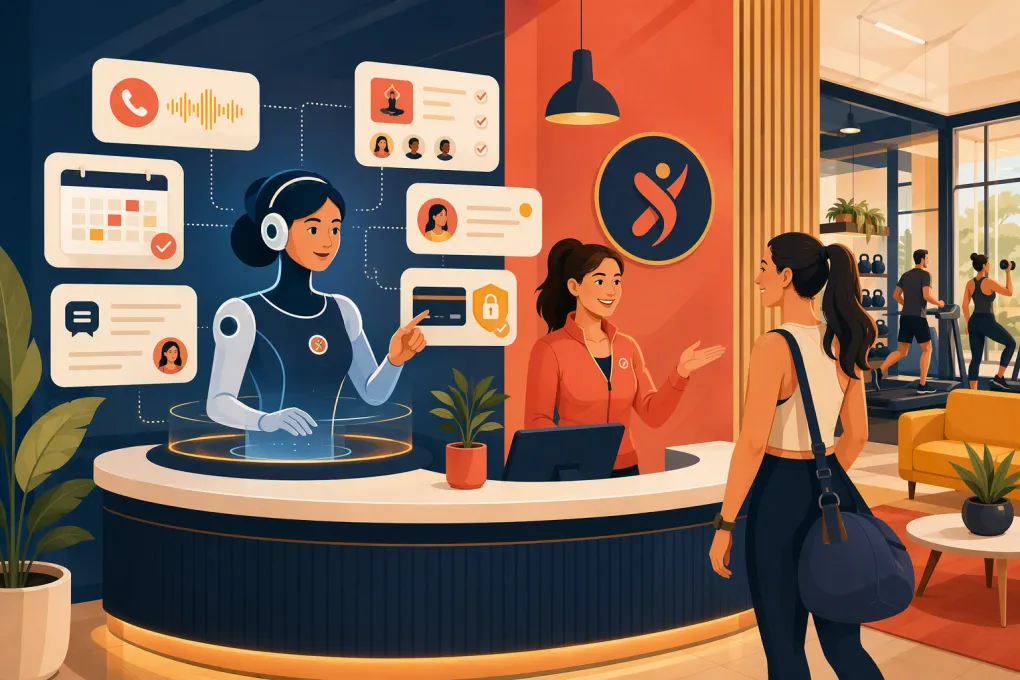
WTF Go brings lead management, booking, follow-up, payments, and operations into one system. Fitty acts as the always-available receptionist layer, so the conversation is connected to the workflow instead of ending with a phone number or inbox notification.
Explore Fitty as an AI receptionist for your martial arts school →
A sensible rollout plan
Start narrow instead of automating every conversation at once.
- Choose one program with clear eligibility and booking rules.
- Load approved answers for the most common prospect questions.
- Connect only the intro slots you actually want the AI to book.
- Define mandatory escalation topics and staff owners.
- Test realistic conversations, including typos and incomplete answers.
- Run the workflow with staff oversight.
- Review transcripts and booking outcomes weekly.
- Expand to additional programs once the first workflow is dependable.
The right AI receptionist should make your school easier to reach without making it feel impersonal. It should answer quickly, stay inside your rules, and move the right prospects toward the mat while giving your team more time to teach and operate the business.
Frequently asked questions
Can an AI receptionist book martial arts trial classes?
Yes. When connected to your schedule and booking rules, it can qualify the student, show eligible intro times, create the booking, and send visit instructions.
Can it answer questions from parents after hours?
Yes. It can use your approved information to answer routine questions about age groups, beginner programs, schedules, clothing, waivers, and first visits.
Should an AI receptionist discuss martial arts pricing?
Only within rules you define. It can provide approved pricing or explain available plans, but variable quotes, discounts, contract disputes, and exceptions should be escalated to staff.
Will an AI receptionist replace front-desk staff?
It is better used to handle repetitive inquiries, booking, reminders, and follow-up. Staff should remain responsible for sensitive, complex, safety-related, and relationship-driven conversations.
How should a martial arts school start using AI?
Begin with one program and one clear conversion goal, such as booking youth beginner introductions. Test the answers and escalation rules before expanding automation to other programs or member workflows.
Keep reading


Run your gym on autopilot with WTF Go
Fitty — your AI receptionist — answers calls and DMs, fills classes, follows up with every lead, and collects dues while you coach.