AI & Automation
AI Receptionist for Laser Hair Removal Clinics: Buyer’s Guide
An AI receptionist for laser hair removal clinics can answer leads, book consultations, follow up, and collect deposits. Learn the workflows and safeguards.
 Watch · 20s
A prospective laser hair removal client rarely contacts only one clinic. They may call during lunch, send a message after work, or submit a form while comparing packages across several local providers. If your clinic takes hours to respond—or makes the person wait until the front desk reopens—the conversation can be over before your team sees it.
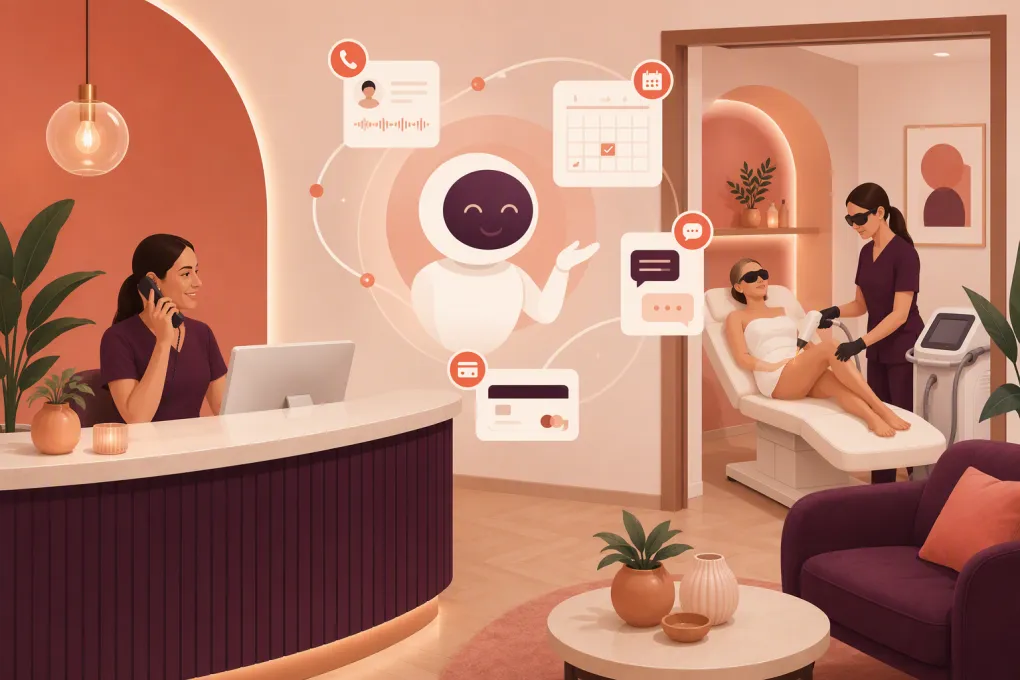
An AI receptionist gives laser hair removal clinics a practical way to handle that gap. It can answer common questions, collect lead details, book consultations, send reminders, follow up with undecided prospects, and route sensitive questions to a qualified team member.
The goal is not to replace clinical judgment or every front-desk interaction. It is to stop routine administrative work from delaying the client journey.
See how Fitty handles after-hours laser clinic inquiries and booking →
What an AI receptionist should handle for a laser clinic
A useful AI receptionist needs to do more than produce conversational answers. It should complete the next appropriate action inside an operating workflow.
For a laser hair removal clinic, that usually includes the following.
Answering calls and messages at any hour
Prospects often start with predictable questions:
- Do you treat a particular body area?
- Where is the clinic located?
- What appointment times are available?
- Is a consultation required?
- How should someone prepare for a consultation or treatment?
- What is the clinic’s cancellation policy?
- Do you offer packages or payment options?
The AI should answer approved administrative questions immediately. When a question requires clinical interpretation, it should explain that a provider needs to respond and create a clear handoff.
Capturing leads consistently
A name and phone number are not enough to manage a laser hair removal inquiry. Depending on your process, the receptionist may also need to collect:
- Preferred treatment area
- New or returning client status
- Preferred clinic location
- Preferred days or times
- Communication preference
- How the lead found the clinic
- Whether the person wants a consultation or is ready to schedule
Only collect information that serves a defined operational purpose. Avoid turning the first conversation into a long intake form, especially when sensitive health information belongs in a secure clinical workflow.
Booking the correct appointment type
Laser clinics may offer consultations, patch tests, treatment sessions, touch-ups, and appointments with different durations or equipment requirements. The AI receptionist needs booking rules that reflect those differences.
It should know:
- Which services require a consultation first
- Which providers can perform each appointment type
- How much time and room capacity each service requires
- Whether a deposit is required
- Which locations offer the requested service
- How rescheduling and cancellation windows work
A system that books every inquiry into a generic calendar slot creates more work than it removes.
Following up without relying on staff memory
Not every person books during the first conversation. A prospect may need to check a schedule, think about a package, or speak with a partner.
An AI receptionist can place that lead into an approved follow-up sequence rather than leaving a sticky note for the front desk. The sequence might include a booking link, an answer to the original question, a consultation reminder, and a final invitation to schedule.
Follow-up should stop when the person books, opts out, or asks to speak with a human. Repeated messages without context will damage trust.
The most valuable laser hair removal workflows
Start with workflows tied to obvious leaks in your client journey. Do not automate every conversation at once.
Missed-call recovery
When a call is not answered, the system should immediately acknowledge the inquiry through an approved channel, identify the clinic, and offer a useful next step.
A simple flow is:
- Confirm what service or treatment area the person is interested in.
- Answer approved nonclinical questions.
- Offer available consultation times.
- Book the appointment or create a staff callback task.
- Record the conversation in the lead profile.
The prospect should not have to repeat the entire conversation when a staff member takes over.
Consultation booking and deposit collection
If your clinic requires a deposit, the receptionist should explain the policy before sending the payment request. Payment details should be processed through an appropriate payment provider rather than collected in free-form chat.
After payment, the system should confirm the appointment, provide the clinic address, and send approved preparation instructions. If payment is not completed, the slot should be released according to your clinic’s policy.
No-show and cancellation prevention
Good reminders are operational, not promotional. They should include the appointment date, time, location, rescheduling method, and relevant policy.
The AI can also respond when a client needs to move an appointment. Giving clients a controlled self-service option is usually better than forcing them to call during business hours. Your scheduling rules should prevent changes that violate treatment timing, provider availability, or cancellation policies.
Package renewal and outstanding balance follow-up
Laser hair removal often involves a sequence of appointments. An AI receptionist can identify clients who need to schedule the next eligible visit, complete an outstanding payment, or discuss a renewal with the team.
The system should never assume that a client is clinically ready for another session. It can facilitate scheduling based on clinic rules, while exceptions and treatment decisions remain with qualified staff.
See how Fitty follows up, books appointments and handles dues from one workflow →
Keep clinical questions inside firm boundaries
An AI receptionist is an administrative agent, not a laser technician or medical provider. That distinction needs to be visible in both its instructions and its behavior.
It should not independently:
- Decide whether someone is a suitable treatment candidate
- Interpret medications, skin conditions, pregnancy status, or prior reactions
- Promise treatment outcomes
- Diagnose a complication
- Override preparation, patch-testing, or treatment protocols
- Advise someone to ignore urgent symptoms
Instead, create escalation categories. A pricing or scheduling question can stay automated. A question involving medication, skin response, contraindications, or treatment safety should be assigned to the appropriate staff member. Urgent concerns should receive your clinic’s approved emergency direction rather than an improvised AI response.
Build the knowledge base from policies approved by clinic leadership and, where applicable, clinical leadership. Review it whenever services, devices, locations, hours, or policies change.
Privacy, consent and payment controls to verify
Laser hair removal businesses operate under different legal and clinical structures. Do not assume every clinic has identical privacy obligations.
Before deploying an AI receptionist, verify:
- What personal and health information the system stores
- Where conversation records are retained
- Which staff roles can access them
- Whether vendors will sign required agreements, including a business associate agreement when applicable
- How data can be corrected, exported, or deleted
- How messaging consent and opt-out requests are documented
- Whether automated texts follow applicable federal and state requirements
- Whether payment data is handled by a suitable payment processor
- How incidents and unauthorized access are managed
Ask for specific documentation. A broad claim that a tool is “secure” does not explain encryption, access controls, data retention, subcontractors, or contractual responsibilities.
How to choose the right AI receptionist
A polished demonstration is not enough. Test each product against actual clinic scenarios.
Require real scheduling integration
The receptionist should read current availability and write confirmed appointments to the system your team uses. If staff must copy every booking manually, double-booking and incomplete records become likely.
Ask how it handles provider calendars, room capacity, location-specific services, deposits, appointment buffers, and cancellations.
Test voice and messaging together
Some prospects call; others text or use a website form. A connected system should preserve the lead’s history across channels so the conversation can continue without starting over.
Test interruptions, background noise, unusual treatment-area questions, Spanish-language inquiries if relevant to your market, and requests to speak with a person.
Inspect the handoff process
A handoff should include the prospect’s contact details, question, conversation summary, urgency, and recommended next action. It should also assign ownership rather than dropping the message into a shared inbox that nobody monitors.
Confirm reporting is operationally useful
At minimum, your team should be able to review:
- Inquiry source
- Contact attempts and response history
- Consultation bookings
- Cancellations and reschedules
- Deposits or balances requested and completed
- Escalations awaiting staff action
- Reasons prospects did not book, when known
Use this information to improve staffing, scripts, offers, and booking rules—not just to count conversations.
A practical rollout plan
Begin with one location or one high-volume inquiry type. Document the current process before automating it.
- Map the journey. List every step from first inquiry through consultation, deposit, reminder, arrival, and follow-up.
- Approve the knowledge base. Separate administrative answers from questions that require clinical review.
- Define booking rules. Include appointment types, provider eligibility, buffers, locations, deposits, and cancellation policies.
- Set escalation owners. Assign responsibility for clinical questions, complaints, payment issues, and urgent requests.
- Test edge cases. Try vague questions, unavailable times, repeat callers, opt-outs, existing clients, and requests outside the AI’s authority.
- Review conversations regularly. Correct weak answers, outdated policies, and unnecessary friction.
- Expand gradually. Add reactivation, package follow-up, and balance collection only after the core booking flow works reliably.
WTF Go brings lead management, booking, follow-up, and payments into one operating system. Fitty, its AI receptionist, works around the clock to answer inquiries and move prospects toward the next valid action while your staff handles treatments and higher-value conversations.
Explore an AI front desk built for appointment-based wellness businesses →
The standard is completed work, not answered questions
The best AI receptionist for a laser hair removal clinic is not the one with the most human-sounding greeting. It is the one that reliably turns an inquiry into a correctly booked consultation, a documented follow-up, or a clean handoff—without crossing clinical boundaries.
Evaluate the entire workflow. If the AI answers a question but fails to update the client record, check availability, collect the required deposit, or alert staff, the front desk still has unfinished work. The right system should reduce that operational gap while keeping your team in control of policy, care, and client relationships.
Frequently asked questions
Can an AI receptionist book laser hair removal consultations?
Yes, if it connects to the clinic’s scheduling system and follows rules for appointment type, provider, location, duration, deposits, and availability.
Can an AI receptionist answer clinical questions?
It can provide clinic-approved general information, but it should not determine candidacy, interpret medical details, diagnose reactions, or replace a qualified provider. Those questions need a defined human escalation.
Can an AI receptionist collect deposits and overdue balances?
It can send approved payment requests and record completion when connected to an appropriate payment system. Card details should not be collected through unstructured messages.
Does a laser clinic AI receptionist need to be HIPAA compliant?
That depends on the clinic’s structure, the information involved, and applicable law. Clinics should verify data handling, access controls, retention, subcontractors, and whether a business associate agreement is required.
Will an AI receptionist replace front-desk staff?
It is better used to handle repetitive inquiries, booking, reminders, and follow-up. Staff are still needed for clinical judgment, exceptions, complaints, and relationship-sensitive conversations.
Keep reading

Run your gym on autopilot with WTF Go
Fitty — your AI receptionist — answers calls and DMs, fills classes, follows up with every lead, and collects dues while you coach.