AI & Automation
AI Receptionist for Hyperbaric Oxygen Therapy Centers: Guide
See how an AI receptionist for hyperbaric oxygen therapy centers can answer leads, book consults, follow up, and support their daily front-desk workflows.
 Watch · 20s
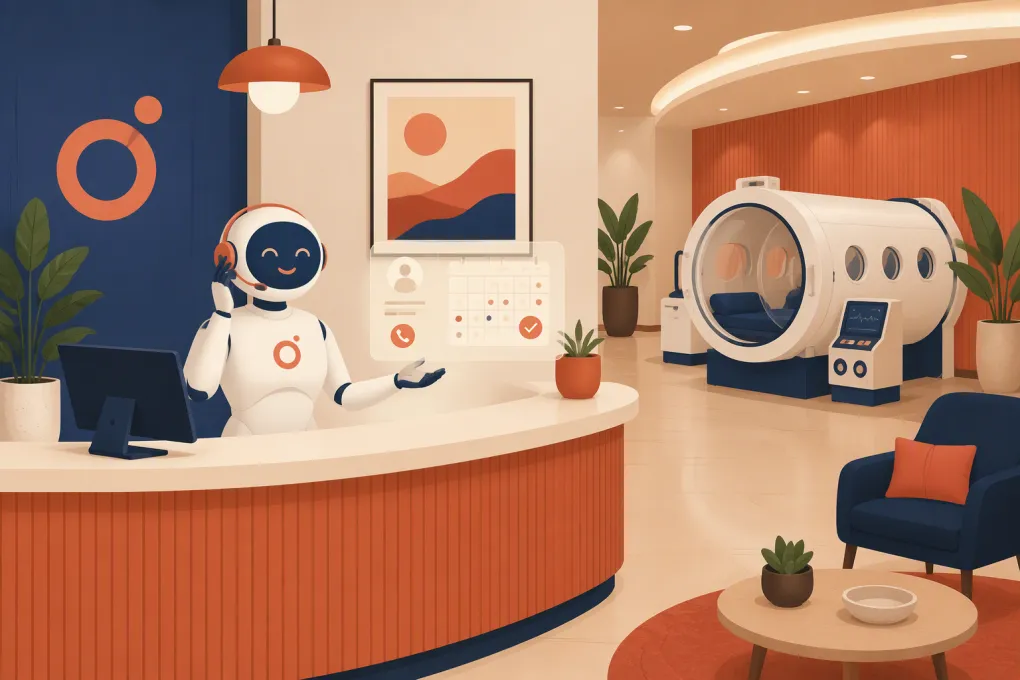
An AI receptionist for hyperbaric oxygen therapy centers can solve a specific operational problem: prospective patients have detailed questions, treatment often starts with a consultation or clearance process, and the front desk cannot answer every call while supporting people already in the facility.
The right system gives callers a fast, consistent response without pretending to be a clinician. It can explain approved administrative information, capture the reason for the inquiry, book the correct next step, follow up, and escalate anything requiring human judgment.
That distinction matters. An HBOT center does not need a generic chatbot making clinical promises. It needs an intake and scheduling agent built around the center’s actual workflows.
See how Fitty can answer HBOT inquiries and book the right next step →
Where hyperbaric centers lose inquiries
A prospective patient may call after a physician recommendation, while researching treatment independently, or while comparing local facilities. The person may not know whether a referral is required, what the first appointment involves, or whether the center works with insurance.
If that call goes unanswered, leaving a voicemail creates more work for both sides. The front desk must call back, identify the original question, determine whether the person is a new or existing patient, and then find an appropriate appointment.
Common breakdowns include:
- Calls arriving during chamber turnovers or patient check-in
- After-hours inquiries waiting until the next business day
- Staff repeatedly answering the same logistical questions
- New leads being booked into treatment slots before consultation or clearance
- Referral and insurance questions going to the wrong employee
- Missed follow-up after someone requests information
- Cancellations leaving schedule gaps that are difficult to refill
An AI receptionist can handle the repetitive coordination around these moments. It should not replace medical screening, informed consent, or clinical decision-making.
What an AI receptionist should handle
Answer calls and messages consistently
The system should respond across the channels the center actually uses, such as phone, text, or website inquiries. It should identify the center, state that it is a virtual assistant when appropriate, and avoid sounding like a medical provider.
Useful topics may include:
- Location, parking, and operating hours
- Whether the facility treats new patients
- How to request an initial consultation
- What records, prescriptions, or referrals the center asks patients to provide
- Accepted payment pathways, based on center-approved language
- Appointment change and cancellation procedures
- General visit preparation instructions approved by the clinical team
Answers should come from a controlled knowledge base. Staff—not the AI vendor—should determine what the assistant is allowed to say.
Route people into the correct appointment type
HBOT scheduling is rarely as simple as selecting any open slot. A center may separate:
- New-patient phone calls
- Clinical consultations
- Physician or provider evaluations
- Existing-patient treatment sessions
- Follow-up visits
- Referral-partner conversations
- Billing or coverage questions
The receptionist needs rules for each path. For example, an uncleared new patient might be offered a consultation rather than a chamber session. An existing patient may be allowed to request a treatment time only within the plan and scheduling rules established by the center.
This protects the schedule from avoidable errors while giving callers an immediate action they can take.
Follow up without relying on staff memory
Many inquiries require more than one interaction. Someone may request information, agree to send a referral, and then become busy. Another person may start booking but stop before confirming.
An AI receptionist can trigger center-approved follow-up messages for situations such as:
- A consultation request that was not scheduled
- Missing administrative paperwork
- An appointment reminder or confirmation
- A cancellation that needs to be rebooked
- A payment reminder, where appropriate
- A post-inquiry check-in asking whether the person still wants help scheduling
Every sequence should have a stop condition. Messages should stop when the patient replies, books, opts out, or needs staff assistance. Persistent automation without those controls creates frustration instead of access.
Keep clinical judgment with clinicians
An AI receptionist can collect information, but it should not determine whether HBOT is medically appropriate. It also should not interpret symptoms, promise outcomes, recommend treatment frequency, or give individualized preparation advice outside approved instructions.
Build explicit escalation rules for:
- Medical or safety questions
- Questions about treatment candidacy
- New or worsening symptoms
- Contraindication or medication concerns
- Requests to interpret a physician’s order
- Complaints about care
- Insurance disputes
- Any statement suggesting an emergency
Emergency language should be direct and approved by the center. The assistant must not attempt to manage an urgent medical situation through an extended automated conversation.
A practical rule is simple: automation owns administrative coordination; qualified staff own clinical decisions.
Design the intake workflow before turning on AI
Software cannot repair an undefined process. Map the path a person should take before configuring the receptionist.
1. Define caller categories
Start with the groups your team encounters most often:
- Prospective self-pay patients
- Referred patients
- Existing patients
- Family members or caregivers
- Referral partners
- Vendors or general business callers
Each category needs a destination, allowed answers, and an escalation owner.
2. Decide what can be booked automatically
Create a list of appointment types and specify:
- Who is eligible to book
- Whether staff approval is required
- Required lead time
- Duration and location
- Which calendar or provider receives the appointment
- What happens if no suitable slot is available
Do not give the AI broader calendar access than the workflow requires.
3. Write approved answers
Build concise answers to the questions staff hear repeatedly. Avoid copying long website pages into a script. Callers need a clear response and a next step.
For coverage questions, the assistant should use careful language. It can explain the center’s process for checking benefits or discussing self-pay options, but it should not guarantee insurance payment.
4. Set human handoff rules
Specify whether the assistant should transfer a live call, create a callback task, send an internal notification, or collect a preferred callback time. Assign ownership so escalations do not disappear into a shared inbox.
Use Fitty to turn repetitive HBOT calls into structured bookings and staff handoffs →
Privacy, consent, and security questions to address
Hyperbaric centers may handle protected health information and other sensitive data. Before allowing any AI system to collect or transmit that information, review the workflow with the people responsible for privacy, security, and legal compliance.
Ask prospective vendors:
- What information is recorded or stored?
- Are calls transcribed?
- Where is data processed and retained?
- Who can access conversations?
- Can retention periods be configured?
- How are recordings, transcripts, and exports deleted?
- Does the vendor use customer conversations to train models?
- What agreements, including a business associate agreement when applicable, are available?
- Which scheduling, CRM, phone, and payment systems receive the data?
- How are user permissions, audit trails, and account access managed?
Collect only what the workflow requires. A first interaction may need contact details and a broad reason for calling, not a detailed medical history. More sensitive intake can be moved into the center’s approved forms and systems.
Consent rules for calls and text messages also depend on how the center communicates and follows up. Obtain appropriate professional guidance rather than assuming that installing software resolves those obligations.
How to evaluate an AI receptionist in a live test
A polished demonstration is not enough. Give the system realistic scenarios based on actual front-desk conversations.
Test whether it can:
- Distinguish a new inquiry from an existing patient
- Offer a consultation instead of an unauthorized treatment slot
- Handle an unclear or incomplete question
- Avoid guaranteeing coverage or clinical results
- Escalate a medical question immediately
- Recognize when a caller asks for a human
- Manage interruptions and corrections during a phone call
- Confirm names, phone numbers, dates, and appointment details
- Stop follow-up after an opt-out or completed booking
- Create a usable record for staff
Review the transcripts and resulting calendar entries. The goal is not merely a natural-sounding conversation. The goal is an accurate operational outcome.
Metrics worth monitoring
Track measures tied to access and staff workload rather than focusing only on call volume:
- Inquiries answered versus missed
- Consultations requested and booked
- Time from first inquiry to staff follow-up
- Appointment confirmations, changes, and cancellations
- Conversations escalated to staff
- Reasons the AI could not complete a request
- Incorrect bookings or routing errors
- Opt-outs and communication complaints
Audit a sample of conversations regularly. Update scripts when services, hours, policies, staffing, or payment processes change.
Where WTF Go and Fitty fit
WTF Go brings lead management, scheduling, follow-up, payments, and operating workflows into one system. Fitty is its AI receptionist and agent, designed to respond around the clock and move inquiries toward a defined next step.
For a hyperbaric center, that next step can be configured around consultation-first scheduling, staff escalation, approved frequently asked questions, reminders, and lead follow-up. The center still controls clinical screening, treatment decisions, privacy policies, and the boundaries of automation.
That combination is the point: faster administrative response without asking clinical staff to surrender judgment.
See how WTF Go and Fitty can support your hyperbaric center’s intake workflow →
Start with one high-friction workflow
Do not automate the entire front desk on day one. Start with a contained workflow, such as after-hours new-patient inquiries or consultation booking.
Document the current process, define approved answers, set escalation rules, and run test conversations. Then review real outcomes before expanding into reminders, rebooking, payments, or referral follow-up.
A well-configured AI receptionist should make the center easier to reach and easier to operate. It should also know exactly when to step aside for a person.
Frequently asked questions
Can an AI receptionist determine whether someone qualifies for hyperbaric oxygen therapy?
No. It can collect basic information and schedule the appropriate consultation, but treatment candidacy and clinical screening should remain with qualified healthcare professionals.
Can an AI receptionist book HBOT appointments automatically?
Yes, when connected to an approved scheduling workflow. Centers should restrict automatic booking by appointment type, patient status, clearance requirements, provider availability, and location.
How should an AI receptionist handle insurance questions?
It can explain the center's benefits-verification or billing process using approved language. It should not guarantee coverage, reimbursement, or the amount a patient will owe.
Is an AI receptionist appropriate for sensitive patient information?
That depends on the vendor, contracts, technical safeguards, and configuration. Review data handling, retention, access controls, integrations, and whether a business associate agreement is available before transmitting protected health information.
What is the best first workflow to automate at an HBOT center?
After-hours inquiry handling or new-patient consultation booking is usually a practical starting point. Both are narrow enough to test while directly addressing missed calls and delayed follow-up.
Keep reading


Run your gym on autopilot with WTF Go
Fitty — your AI receptionist — answers calls and DMs, fills classes, follows up with every lead, and collects dues while you coach.