AI & Automation
AI Receptionist for Hydrotherapy Clinics: Operator Guide
Learn how an AI receptionist for hydrotherapy clinics handles calls, qualifies leads, books visits, follows up, and supports staff without missed inquiries.
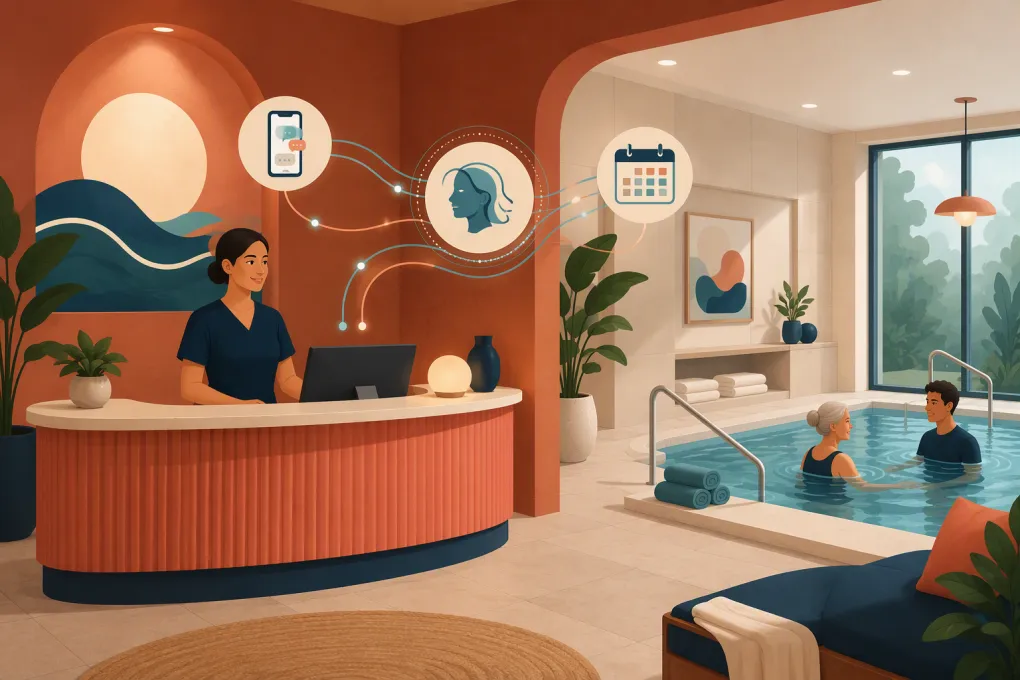 Watch · 20s
A hydrotherapy clinic can deliver an excellent treatment experience and still lose the client before the first appointment. A prospective client calls while the receptionist is helping someone change, a therapist is in the pool, or the front desk has closed for the day. The call goes to voicemail, and the caller moves on.
An AI receptionist gives clinics another way to handle that demand. It can answer common questions, capture lead details, book eligible appointments, send follow-ups, and route sensitive issues to a person. The goal is not to replace clinical judgment. It is to prevent routine front-desk work from interrupting care or disappearing into a voicemail queue.
For hydrotherapy operators, the important question is not whether AI can answer a phone. It is whether the system can follow your actual booking rules without creating confusion, privacy problems, or unsafe promises.
See how Fitty can respond to hydrotherapy inquiries around the clock →
What an AI receptionist should handle
A useful AI receptionist works across the repetitive administrative conversations that surround an appointment. Depending on the system and your configuration, that may include phone, text, website, or social inquiries.
For a hydrotherapy clinic, the core workflows usually include:
- Answering questions about services, hours, location, parking, accessibility, and what to bring
- Explaining the administrative difference between private sessions, group programs, memberships, and introductory visits
- Asking approved qualification questions
- Identifying whether a referral or prior evaluation is required
- Booking appointments against current availability
- Rescheduling or canceling within clinic policy
- Sending confirmations, reminders, directions, and preparation instructions
- Following up with leads who asked about a service but did not book
- Routing clinical, billing, complaint, or emergency-related conversations to staff
- Collecting approved deposits, membership dues, or outstanding balances when the workflow permits it
That last point needs discipline. An AI agent should communicate only the payment rules and amounts available in the clinic’s approved system. It should not improvise coverage estimates, insurance interpretations, or refund decisions.
Why hydrotherapy clinics need a different setup
A generic receptionist script is rarely sufficient for hydrotherapy. The service may sit within physical therapy, rehabilitation, sports recovery, pain management, spa services, or general wellness. Each model has different intake and scheduling requirements.
The caller may not know which service to choose
Someone may ask for aquatic therapy when they actually need an initial evaluation. Another caller may use hydrotherapy to describe a spa circuit, contrast therapy, or a recovery session.
The AI receptionist needs a controlled service map. It should explain options in plain language and ask administrative questions such as:
- Are you looking for rehabilitation, recovery, or general wellness?
- Are you a new or returning client?
- Do you already have a referral or care plan?
- Are you trying to schedule a private appointment or group session?
It should not diagnose the caller or decide whether hydrotherapy is clinically appropriate.
Pool capacity affects scheduling
Availability may depend on more than an open slot on a therapist’s calendar. You may need to account for pool capacity, treatment area, equipment, clinician credentials, water-based class limits, changing-room turnaround, and accessible assistance.
Before allowing automatic booking, document which resources must be available for every appointment type. If the scheduling platform cannot enforce those dependencies, the AI should request the preferred time and send the case to staff for confirmation rather than promising the appointment.
Intake can involve sensitive information
Hydrotherapy inquiries may involve diagnoses, mobility limitations, recent procedures, medications, pregnancy, wounds, or other health information. An AI receptionist should not casually collect all of that in an open-ended conversation.
Decide exactly what the agent may ask, where responses are stored, who can access them, and when the caller must be transferred. If your clinic is subject to HIPAA or another privacy obligation, review the vendor’s data handling, security controls, subcontractors, retention practices, and willingness to sign an appropriate agreement. Do not assume that a product is suitable for protected health information because it uses healthcare-oriented language.
Build the workflow before turning on AI booking
Automation exposes unclear policies quickly. If two staff members would give different answers to the same caller, the AI has no reliable standard to follow.
Start with the following operating decisions.
1. Define each bookable service
For every appointment or class, record:
- Public-facing service name
- Duration and cleanup buffer
- New-client eligibility
- Referral or evaluation requirements
- Staff and facility resources required
- Price or approved pricing language
- Deposit and cancellation rules
- Preparation instructions
- Situations requiring manual review
Keep the public explanation short. The agent needs enough information to guide a booking, not a copy of the clinical protocol.
2. Separate administrative and clinical questions
Create three categories for incoming questions:
The AI can answer: hours, directions, service formats, published prices, appointment availability, cancellation policy, and what to bring.
The AI can collect and route: insurance questions, referral status, accessibility requests, complaints, unusual booking needs, and requests to speak with a clinician.
The AI must escalate immediately: requests for medical advice, reports of an urgent adverse event, emergency language, or anything outside the approved knowledge base.
The escalation response should be explicit. For emergencies, the agent should direct the person to the appropriate emergency service rather than implying that clinic staff are monitoring the conversation in real time.
3. Set booking guardrails
Useful guardrails include minimum lead time, maximum advance booking, required buffers, age restrictions, new-client appointment types, late-cancellation rules, and limits on simultaneous use of the pool.
Test edge cases before launch. Ask what happens when the caller wants a same-day session, has no referral, needs a wheelchair-accessible setup, wants to bring a caregiver, or asks for a service that is unavailable at the selected location.
Explore how WTF Go and Fitty can connect lead response, booking, and follow-up →
A practical call flow for a new inquiry
A strong new-lead flow can be simple:
- Identify the request. Determine whether the person wants rehabilitation, recovery, wellness, a class, or help with an existing appointment.
- Confirm the location. Multi-location operators should establish this before showing availability because services and equipment may differ.
- Apply administrative eligibility rules. Check new-client status, referral requirements, age rules, and whether an evaluation must come first.
- Offer valid next steps. Book an eligible service, schedule an introductory call, or create a staff task.
- Confirm contact details. Repeat the name, phone number, email address, appointment, location, and any approved preparation instructions.
- Trigger follow-up. Send the confirmation immediately and follow up if the prospect does not complete the booking.
Avoid forcing every caller through a long intake. Capture the minimum information needed for the next operational step, then use a secure intake process where appropriate.
Where Fitty fits into clinic operations
Fitty is WTF Go’s AI receptionist and agent for gyms, spas, studios, and wellness businesses. It is built to answer leads, book services or classes, follow up, and collect dues around the clock.
For a hydrotherapy operator, that can mean responding when the front desk is closed, helping a prospect find the appropriate introductory option, recovering an incomplete inquiry, or handling routine scheduling conversations while staff focus on clients in the facility.
The value is strongest when the agent is part of the operating system rather than a disconnected chatbot. Lead details, conversations, bookings, follow-up status, and approved payment workflows should stay visible to the team. Staff need to know what the agent promised, why a conversation was escalated, and what action is due next.
See how Fitty can handle missed hydrotherapy leads without adding another front-desk shift →
How to evaluate an AI receptionist
Do not choose a system based only on a polished demonstration. Test it against your least convenient real-world conversations.
Ask each vendor to show how the product handles:
- Live availability and scheduling conflicts
- Multiple locations with different services
- Appointment resources beyond staff calendars
- New-client versus returning-client rules
- Calls that switch topics midway through the conversation
- Human transfer during and after business hours
- Unanswered or abandoned inquiries
- Conversation logs and staff notifications
- Corrections to inaccurate knowledge-base answers
- Consent, opt-out, call recording, and messaging requirements
- Sensitive information and applicable privacy obligations
- Deposits, memberships, packages, or dues relevant to your model
Also ask what happens when an integration fails. The safe response is usually to capture the request and alert staff, not invent availability or claim that a booking succeeded.
Measure outcomes that affect the front desk
Track the workflow before and after launch. Useful operational measures include:
- Number of calls and messages answered by channel
- Inquiries received outside staffed hours
- Bookings created from new leads
- Conversations escalated to staff
- Leads awaiting follow-up
- Reschedules, cancellations, and no-shows
- Incorrect answers or booking errors found during review
- Common questions that indicate unclear website content
Review conversation samples regularly, especially during the first few weeks and whenever services or policies change. Look for friction: callers repeating themselves, choosing the wrong service, abandoning a long flow, or being routed to staff unnecessarily.
An AI receptionist is not a set-it-and-forget-it employee. It is an operating workflow that needs an owner, a current knowledge base, and a clear escalation path. Set it up that way, and it can give hydrotherapy teams more consistent coverage without asking clinicians to answer every routine call between sessions.
Frequently asked questions
Can an AI receptionist book hydrotherapy appointments automatically?
Yes, if it can access accurate availability and follow your rules for services, resources, referrals, and new-client eligibility. Complex or clinically sensitive requests should be routed to staff.
Can an AI receptionist answer medical questions?
It should not diagnose, recommend treatment, or determine clinical suitability. It can answer approved administrative questions and escalate clinical requests to a qualified team member.
Is an AI receptionist for a hydrotherapy clinic HIPAA compliant?
That depends on the clinic, workflow, vendor, integrations, and data being handled. Review security and privacy practices, data retention, access controls, and whether the vendor will sign an appropriate agreement before sharing protected health information.
Will an AI receptionist replace front-desk staff?
It is better used to cover repetitive inquiries, after-hours demand, booking, and follow-up. Staff remain essential for clinical coordination, exceptions, complaints, complex billing, and sensitive conversations.
What should a hydrotherapy clinic automate first?
Start with missed-call response, frequently asked questions, eligible appointment booking, confirmations, and lead follow-up. Add more complex workflows only after the basic rules and escalation paths are working reliably.
Keep reading

Run your gym on autopilot with WTF Go
Fitty — your AI receptionist — answers calls and DMs, fills classes, follows up with every lead, and collects dues while you coach.