AI & Automation
AI Receptionist for Hormone Replacement Clinics That Works
Learn how an AI receptionist for hormone replacement clinics can answer leads, book consults, protect privacy, and improve follow-up without extra staff.
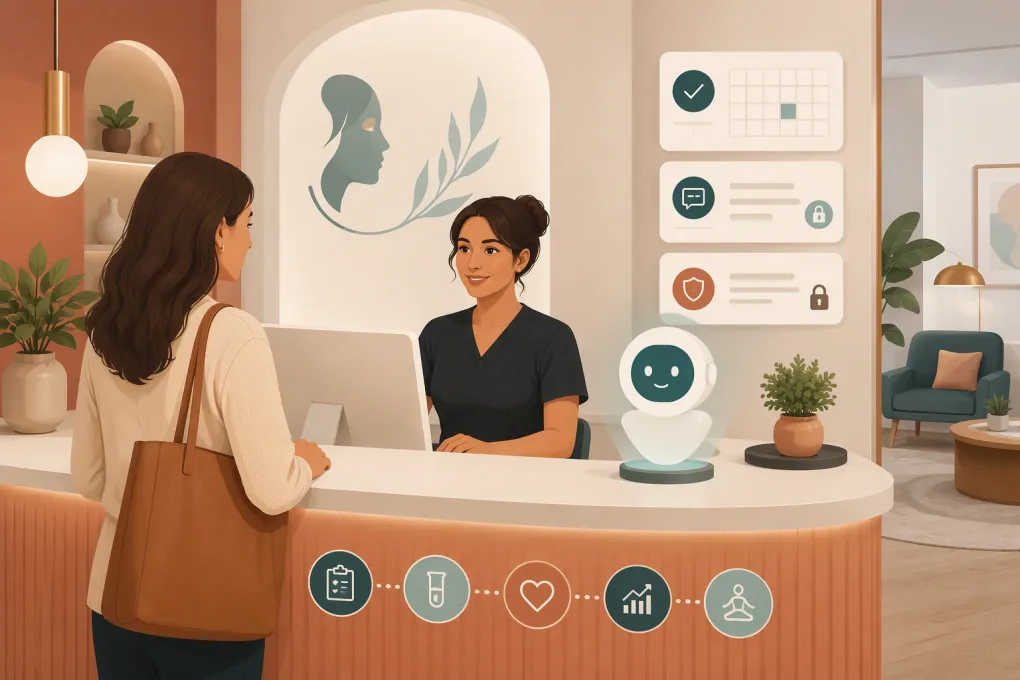 Watch · 20s
A prospective hormone therapy patient rarely starts by completing a perfect online form during office hours. They call between meetings, send a message late at night, ask whether the clinic treats their concern, or abandon the process when nobody answers.
For a hormone replacement clinic, that creates a difficult front-desk workload. Staff must respond quickly while handling appointments, refill requests, billing questions and sensitive patient conversations. An AI receptionist can absorb the repetitive administrative work, but only if it is built around clear clinical boundaries, privacy controls and reliable human escalation.
The goal is not to replace medical judgment. It is to make sure every appropriate inquiry receives a prompt, useful next step.
See how Fitty handles after-hours hormone clinic inquiries and consult booking →
What an AI receptionist should handle
An effective AI receptionist for hormone replacement clinics should manage a defined set of nonclinical workflows. If the vendor cannot explain exactly what happens at each step, the automation is not ready for patient-facing use.
Answer common administrative questions
Many initial contacts involve the same practical questions:
- Which services the clinic offers
- Whether the clinic sees men, women or both
- Location, hours and parking information
- How an initial consultation works
- Whether telehealth appointments are available
- General payment and insurance policies
- What patients should bring to an appointment
- How to reschedule or cancel
The AI should answer from a clinic-approved knowledge base rather than generating policies on its own. Every answer needs an owner, a review date and a fallback when the system is uncertain.
Clinical questions require a different response. If someone asks whether their symptoms mean they need testosterone, estrogen or another treatment, the receptionist should explain that a licensed clinician must assess symptoms, history and appropriate testing.
Capture and route new leads
A useful intake conversation collects only what the clinic needs to determine the next administrative step. That might include:
- Name and preferred contact method
- Whether the person is a new or existing patient
- Service or consultation of interest
- Preferred location or provider
- General scheduling availability
- How the person heard about the clinic
Avoid turning an initial lead conversation into an unnecessary medical questionnaire. The more sensitive information the system collects, the more important its security, retention and access controls become.
The AI should also distinguish between lead types. A prospective patient asking about an initial consultation should not enter the same queue as an existing patient asking about medication or a laboratory order.
Book, reschedule and confirm consultations
Booking is where an AI receptionist becomes operationally valuable. It should be able to show eligible appointment times, apply the correct scheduling rules and place the appointment on the clinic’s actual calendar.
Those rules may include:
- New-patient versus follow-up appointment types
- Provider and location availability
- In-person versus telehealth eligibility
- Required buffers between appointments
- Deposits or cards on file
- Cancellation and rescheduling windows
- Prerequisites that staff must verify
Do not let the AI improvise around unavailable appointments. If the requested slot cannot be booked, it should offer approved alternatives or create a clear staff task.
Follow up without overwhelming patients
Many inquiries do not book during the first conversation. A structured follow-up sequence can remind the prospect to schedule, answer an unresolved administrative question or reconnect them with a person.
Good follow-up is conditional. It should stop when the patient books, opts out, says they are not interested or needs staff assistance. Messages should identify the clinic and provide a simple way to end nonessential communications.
See how Fitty can automate consultation follow-up while preserving human handoffs →
Handle routine payment conversations
An AI receptionist can explain approved payment policies, send a secure payment link or remind someone about an outstanding administrative balance. It should not ask a patient to send card details through an unsecured message.
Payment disputes, hardship requests, insurance interpretation and unusual account questions should move to trained staff. If the clinic offers memberships or recurring programs, the system also needs clear rules for renewals, failed payments, pauses and cancellations.
Keep the AI outside the clinical decision
Hormone care involves symptoms, medications, laboratory results and treatment decisions. Those topics belong with qualified clinical staff.
The AI receptionist should never:
- Diagnose a condition or interpret symptoms
- Recommend a hormone, dosage or supplement
- Determine whether someone is medically eligible for treatment
- Interpret laboratory values
- Change medication instructions
- Promise a treatment outcome
- Minimize urgent or potentially serious symptoms
Build explicit escalation language for clinical requests. A safe response should acknowledge the request, state that the receptionist cannot provide medical advice and route the message to the appropriate clinical team.
Emergency handling also needs a fixed protocol. The system should not attempt to assess or manage an emergency. Clinics should approve clear instructions directing people with emergencies to call 911 or seek appropriate emergency care, while avoiding any suggestion that an automated message is being monitored as an emergency channel.
Privacy and compliance questions to resolve first
An AI tool does not become appropriate for healthcare merely because it can book an appointment. Before connecting it to patient communications, determine whether the workflow involves protected health information and what legal or contractual requirements apply.
Ask each vendor:
- Will it sign a business associate agreement when required?
- Where are call transcripts, recordings and messages stored?
- Is data encrypted in transit and at rest?
- Which employees or subcontractors can access the data?
- Can access be limited by role?
- How are access events and changes logged?
- What is the retention and deletion process?
- Is clinic data used to train shared models?
- How are security incidents reported?
- Can data be exported when the contract ends?
HIPAA is not the only consideration. Texting rules, marketing consent, call-recording laws and state privacy requirements can also affect the workflow. Requirements vary, so clinics should review their setup with qualified compliance or legal advisers rather than relying on a software marketing page.
Map the workflows before switching anything on
Start with three separate paths instead of one universal receptionist script.
New patient inquiry
- Identify the clinic and disclose that the person is interacting with an automated assistant.
- Ask what administrative help they need.
- Answer approved service and policy questions.
- Collect the minimum information required for scheduling.
- Offer eligible consultation times.
- Confirm the booking and send approved preparation instructions.
- Create a staff task if the question falls outside the knowledge base.
Existing patient request
- Verify only what is appropriate for the channel and workflow.
- Categorize the request, such as scheduling, billing, refill or clinical question.
- Complete routine scheduling actions when permitted.
- Route medical and medication requests to the clinical team.
- Tell the patient what happens next without promising a response time the clinic cannot consistently meet.
Urgent or unclear request
- Detect urgent language and stop the standard workflow.
- Display or state the clinic-approved emergency direction.
- Avoid offering clinical guidance.
- Log the interaction and notify the designated team according to clinic policy.
Test these paths with misspellings, vague requests, frustrated callers and repeated questions. A workflow that works only when someone uses the expected wording is not ready.
How to evaluate an AI receptionist
A polished demo matters less than operational fit. Ask the vendor to run real scenarios using your appointment types and policies.
Evaluate:
- Accuracy: Does it stay within the approved knowledge base?
- Scheduling control: Can it enforce provider, service and location rules?
- Escalation: Can it create a visible task with the conversation context attached?
- Channel continuity: Can staff understand what already happened across calls, texts or web inquiries?
- Human takeover: Can an employee step in without forcing the patient to restart?
- Reporting: Can you review booking outcomes, unanswered questions and escalation reasons?
- Administration: Can authorized clinic staff update policies without rebuilding the entire system?
- Integration: Does it work with the calendars, CRM, phone system and payment tools the clinic actually uses?
Fitty, WTF Go’s AI receptionist, is designed to answer leads, book appointments, follow up and support payment workflows around the clock. For a hormone clinic, deployment should still begin with a review of integrations, data handling, required agreements and clinical escalation policies.
Walk through your clinic’s booking, follow-up and escalation workflow with WTF Go →
Roll out in controlled stages
Do not automate every conversation on day one. A staged rollout makes problems easier to find and correct.
Begin with approved FAQs and after-hours lead capture. Review transcripts and identify questions the system could not answer. Next, enable booking for one straightforward consultation type. Add rescheduling, follow-up and payment workflows only after the earlier steps behave reliably.
Track operational measures that expose real performance:
- Calls and messages answered
- Qualified inquiries that reach the booking step
- Appointments booked, rescheduled or canceled
- Conversations transferred to staff
- Unanswered questions by category
- Duplicate or incorrect bookings
- Opt-outs and complaints
- Staff time spent correcting automation errors
Review individual conversations, not just dashboards. A high booking count can conceal poor explanations, unnecessary data collection or bad handoffs.
Assign one operational owner and one clinical or compliance reviewer. The operational owner maintains hours, appointment rules and payment policies. The reviewer approves clinical boundaries, urgent-language handling and sensitive data practices.
The right role for AI in a hormone clinic
An AI receptionist is most useful as the clinic’s administrative front door. It can make the business easier to reach, reduce repetitive work and keep prospective patients moving toward a consultation.
Its value depends on discipline: approved answers, minimal data collection, strict clinical boundaries, dependable scheduling and fast human escalation. Get those pieces right, and automation supports the patient experience without pretending to be the care team.
Frequently asked questions
Can an AI receptionist give hormone therapy advice?
No. It should answer approved administrative questions and route symptoms, medication questions, lab interpretation and treatment decisions to licensed clinical staff.
Can an AI receptionist for a hormone clinic be HIPAA compliant?
It may support HIPAA-regulated workflows if the technology, configuration and vendor relationship meet applicable requirements. Confirm data handling, access controls, retention practices and whether a business associate agreement is required.
Can the AI book new-patient hormone consultations?
Yes, if it is connected to the clinic’s scheduling system and configured with the correct appointment types, providers, locations, prerequisites and payment rules.
What happens when a patient asks an urgent medical question?
The AI should stop the normal workflow, provide clinic-approved emergency directions and avoid clinical advice. The interaction should be logged and escalated according to the clinic’s policy.
Should a clinic replace its front desk with an AI receptionist?
AI is better used to handle repetitive administrative conversations and after-hours inquiries. Staff are still necessary for clinical routing, exceptions, sensitive conversations and complex account issues.
Keep reading


Run your gym on autopilot with WTF Go
Fitty — your AI receptionist — answers calls and DMs, fills classes, follows up with every lead, and collects dues while you coach.