AI & Automation
AI Receptionist for Gymnastics Schools: A Practical Guide
See how an AI receptionist for gymnastics schools answers parent questions, books trials, follows up with leads, and collects overdue tuition securely, 24/7.
 Watch · 20s
A parent sees your gymnastics program after dinner, calls with questions about beginner classes, and gets voicemail. Another submits a trial request on Saturday morning. By the time someone responds, both may have contacted another school.
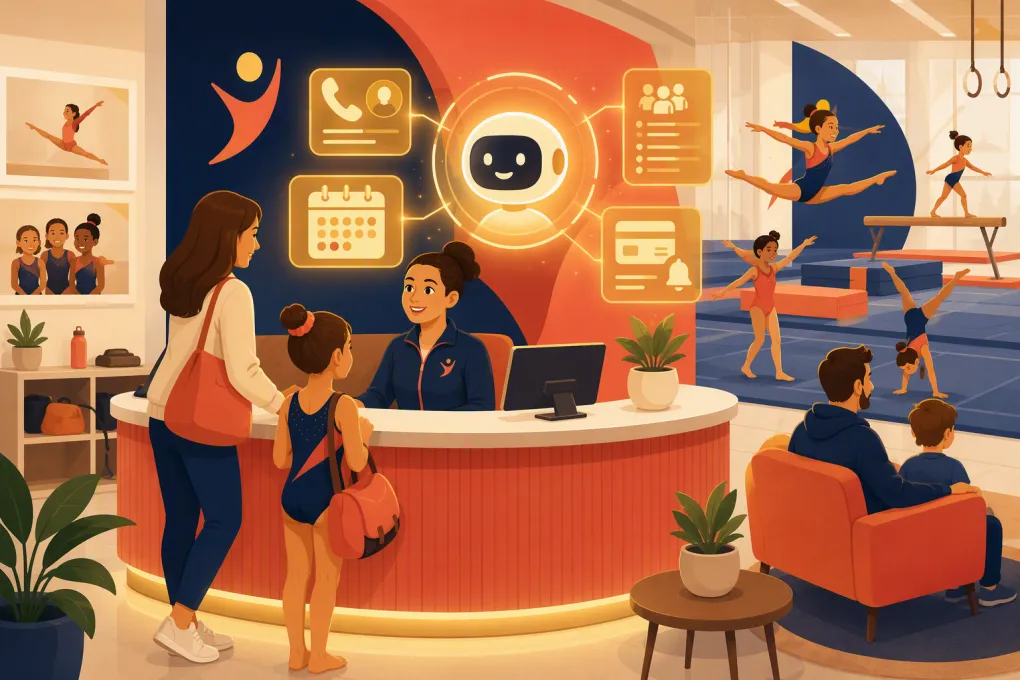
That is the gap an AI receptionist is meant to close. It gives gymnastics schools a consistent first response when coaches are on the floor, the front desk is handling families, or the building is closed. Done well, it can answer routine questions, capture qualified lead information, book trials, follow up, and help collect overdue tuition without pretending that every conversation should be automated.
The goal is not to remove people from a relationship-driven business. It is to remove avoidable delays and repetitive administrative work so your staff can focus on coaching, safety, and parent relationships.
Why gymnastics schools need a different kind of receptionist
Gymnastics inquiries are rarely as simple as asking for business hours. Parents usually need help choosing among programs, understanding requirements, and deciding what happens next.
Common questions include:
- Which class is appropriate for a child’s age and experience?
- Can a beginner join after the session has started?
- Is a trial class available?
- What should the gymnast wear?
- Does the school offer recreational, preschool, tumbling, ninja, team, camp, or open-gym programs?
- Are there sibling discounts, registration fees, or annual membership fees?
- What is the makeup policy?
- How does evaluation or team placement work?
- Is there availability on a particular day?
These questions arrive through phone calls, website forms, text messages, and social channels. They also arrive in bursts: after school, in the evening, before camps, and around registration deadlines.
A conventional voicemail box records demand but does not move it forward. A generic chatbot may answer basic questions but fail to book the correct next step. An effective AI receptionist needs to understand your actual programs, policies, age rules, schedule, and escalation process.
See how Fitty can handle after-hours gymnastics inquiries and trial requests →
What an AI receptionist for gymnastics schools should handle
The best use cases are frequent, structured, and tied to a clear next action.
Answer routine parent questions
An AI receptionist can use an approved knowledge base to answer questions about:
- Hours and location
- Program descriptions
- Age ranges and prerequisites
- Trial-class availability
- Attire and what to bring
- Registration steps
- Published fees and billing policies
- Closures and scheduled breaks
- Camps, clinics, open gyms, and birthday programs
- Makeup, cancellation, and withdrawal policies
Answers should come from information the school controls. The AI should not improvise policies or make promises that staff would not honor.
Qualify leads without creating an interrogation
A useful conversation gathers only what is needed to recommend the next step. For a recreational inquiry, that may include:
- Parent or guardian name and contact information
- Gymnast’s age
- Previous gymnastics experience
- Program of interest
- Preferred days or times
- Whether the family wants a trial, evaluation, or direct enrollment
Keep the process short. If a parent has already explained what they need, the system should not make them repeat it through a rigid questionnaire.
Because gymnastics businesses primarily serve minors, conversations and account actions should be directed to a parent or legal guardian. Avoid collecting unnecessary information about children, and review your data handling, consent, and communication practices with appropriate legal or compliance professionals.
Book trials and evaluations
Speed matters most when the system can turn interest into a confirmed action. Depending on the program, that action might be:
- Booking a beginner trial
- Scheduling a preschool visit
- Requesting a tumbling assessment
- Reserving an evaluation for a gymnast with prior experience
- Joining a waitlist for a full class
- Sending the correct enrollment link
The booking rules must reflect reality. A four-year-old should not be offered a school-age class simply because there is an open spot. A gymnast asking about competitive team placement should be routed to an evaluation or staff member, not automatically enrolled.
Follow up until there is a clear outcome
Many schools respond once and consider the lead handled. But parents are busy, messages get buried, and schedules need to be coordinated with other family activities.
An AI receptionist can follow up after:
- An unanswered inquiry
- A trial request that was not completed
- A booked trial
- A missed trial
- A completed trial with no enrollment
- A waitlist opening
Follow-up should be useful rather than relentless. Each message should provide a specific next step, such as selecting a trial time, asking a question, or completing enrollment. It should also stop when the family declines or opts out.
Build the knowledge base before turning on automation
AI performance depends heavily on the operating information behind it. If your website, front-desk binder, and staff answers all disagree, automation will expose the inconsistency.
Create one approved source covering the following areas.
Programs and eligibility
Document each program’s age range, experience requirements, trial policy, session structure, and enrollment method. Include rules for children close to an age cutoff and explain when staff approval is required.
Schedule and capacity
Separate published class times from real availability. Define what happens when a class is full: offer another time, add the family to a waitlist, or create a staff task.
Pricing and policies
Record tuition frequency, registration fees, discounts, cancellation rules, makeup policies, trial costs, and any notice required for withdrawal. Use the exact language families see in their agreements.
Escalation rules
Specify which situations need a person. Common examples include:
- Injury or safety concerns
- Complaints involving a coach or another child
- Competitive team placement
- Billing disputes
- Refund requests
- Special accommodation discussions
- Custody or authorized-pickup concerns
- Questions the knowledge base cannot answer confidently
The AI should acknowledge the request, gather enough context, and route it to the right person. It should never guess about safety, legal, medical, or sensitive family matters.
Design a lead workflow that actually converts
Software cannot rescue a broken process. Before deployment, map what should happen from the first inquiry through enrollment.
A practical workflow might look like this:
- Respond immediately and identify the parent’s goal.
- Collect the gymnast’s age, experience, and scheduling preferences.
- Recommend an eligible program or appropriate evaluation.
- Offer available trial times or the correct registration path.
- Confirm the booking and send preparation instructions.
- Remind the parent before the visit.
- Follow up after the trial with the enrollment step.
- Escalate questions requiring staff judgment.
Review the wording from a parent’s perspective. Replace internal labels such as “R1” or “Pre-Team B” with plain explanations unless the family already knows the terminology.
See how Fitty answers leads, books classes, and follows up without adding another front-desk shift →
Use AI for tuition follow-up without damaging trust
Overdue-account outreach is repetitive, but it is also sensitive. The AI’s role should be to make the next step easy, not to shame a family or argue about the balance.
A sound dues workflow should:
- Identify the responsible adult rather than contacting a child
- State which account or enrollment needs attention
- Provide an approved payment path
- Explain any published deadline or account policy accurately
- Offer a way to reach staff for disputes or hardship conversations
- Stop automated reminders when payment is resolved or the issue is escalated
Do not place sensitive payment details into ordinary messages. Use your approved payment process, limit account information to what is necessary, and ensure staff can take over when a parent questions a charge.
This is where an AI agent has more operational value than a basic website chatbot. It can keep the follow-up moving across the lead and member lifecycle instead of waiting passively for someone to open a chat window.
What to measure after launch
Do not judge an AI receptionist by how many messages it sends. Track whether it improves outcomes and reduces preventable work.
Useful operating measures include:
- Median time to first response
- Percentage of inquiries that receive a clear next step
- Trials or evaluations booked
- Trial attendance
- Trial-to-enrollment movement
- Leads requiring human follow-up
- Unanswered or incorrectly answered questions
- Waitlist opportunities recovered
- Overdue accounts resolved after reminders
- Opt-outs, complaints, and escalation quality
Review real conversations regularly. Look for wrong class recommendations, awkward phrasing, unanswered policy questions, and points where families abandon the process. Update the knowledge base and workflow rather than assuming the AI will correct itself.
How to evaluate an AI receptionist
Before choosing a system, test it with real gymnastics scenarios rather than a polished demo script.
Ask the vendor or product to handle cases such as:
- A parent seeking a class for twins of different skill levels
- A child who is between published age groups
- A former gymnast who may need an evaluation
- A full Saturday class with weekday openings
- A missed trial that needs rebooking
- A parent disputing a tuition charge
- A question about an injury during class
- An after-hours camp inquiry
Evaluate whether the system can:
- Use your specific program rules
- Recognize when not to answer
- book the correct next step
- Maintain context during the conversation
- Record lead details for staff
- Follow up automatically
- Respect opt-outs and communication preferences
- Support multiple locations without mixing schedules or policies
- Give operators visibility into conversations and outcomes
Also clarify implementation responsibilities. Someone must own the program data, policy approvals, routing rules, and ongoing conversation review. AI reduces workload, but it still needs operational ownership.
Where Fitty fits
Fitty is WTF Go’s AI receptionist and agent for gyms, studios, spas, and wellness businesses. For a gymnastics school, Fitty can act as the always-available layer between parent interest and the next operational step: answering leads, booking classes, following up, and collecting dues.
That means fewer inquiries sitting in voicemail while coaches are teaching and fewer repetitive tasks competing for the front desk’s attention. Your staff remains responsible for coaching decisions, sensitive situations, and relationships that need human judgment. Fitty handles the structured work around them.
For multi-location operators, the same approach also helps standardize lead handling while preserving each location’s schedule, programs, and escalation path.
Explore how WTF Go and Fitty can support your gymnastics enrollment workflow →
An AI receptionist should not make your school sound robotic or put unsafe decisions on autopilot. It should give parents accurate answers, reduce response delays, and make it easier to take the next step. Start with one clean workflow—such as beginner trial booking—measure it closely, and expand only after the process works reliably.
Frequently asked questions
Can an AI receptionist book gymnastics trial classes?
Yes, if it has access to current availability and clear rules for age, experience, and program eligibility. Evaluations or placements requiring coach judgment should be routed to staff.
Can AI answer calls when the gymnastics school is closed?
An AI receptionist can respond after hours, answer approved questions, capture lead details, and move parents toward a trial or enrollment step instead of sending every caller to voicemail.
Should an AI receptionist talk directly with children?
Gymnastics enrollment, billing, and account communication should generally be directed to a parent or legal guardian. Schools should avoid collecting unnecessary information from minors and review applicable privacy and consent requirements.
Will an AI receptionist replace front-desk staff?
It is better used to handle repetitive inquiries, booking, follow-up, and reminders. Staff should remain involved in safety issues, complaints, billing disputes, team placement, and other situations requiring judgment.
What information does the AI need before launch?
It needs accurate program descriptions, age and skill requirements, schedules, availability rules, pricing, policies, booking steps, and clear instructions for when and where to escalate a conversation.
Keep reading


Run your gym on autopilot with WTF Go
Fitty — your AI receptionist — answers calls and DMs, fills classes, follows up with every lead, and collects dues while you coach.