AI & Automation
AI Receptionist for Gym Voicemail: Convert Missed Calls
Learn how an AI receptionist for gym voicemail answers missed calls, qualifies prospects, books trials, and gives staff a practical follow-up workflow.
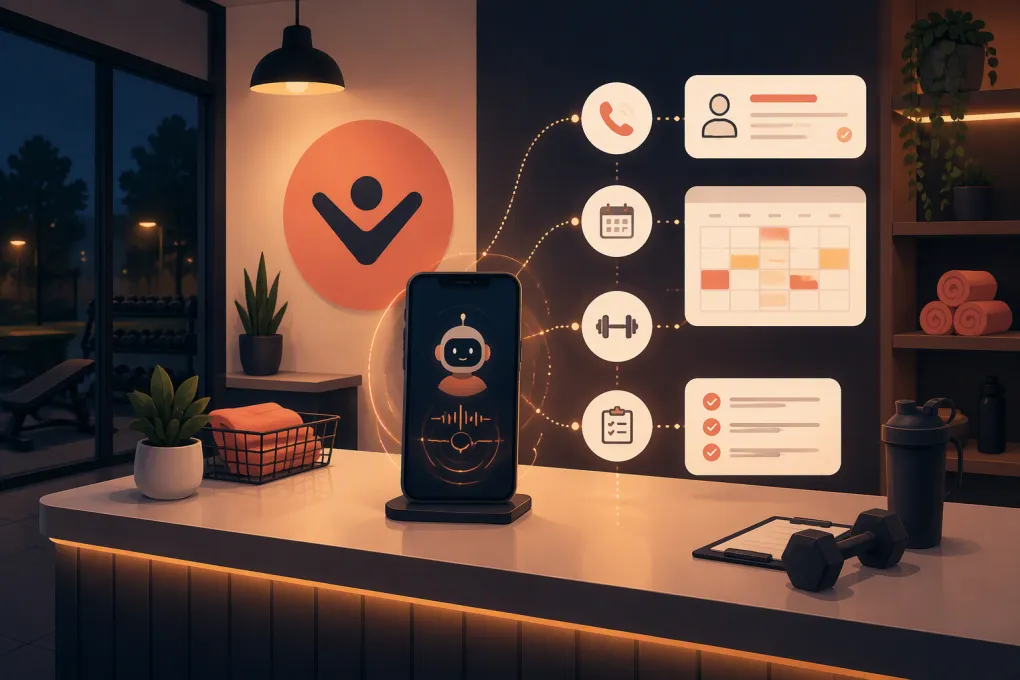 Watch · 20s
A prospective member calls your gym at 7:12 p.m. Your coach is running class, the front desk is empty, and the call rolls to voicemail. The caller may leave a message. They may also call the next gym in the search results.
That is the real problem with gym voicemail. It records demand but does not serve it. A recording cannot answer a pricing question, recommend a beginner class, reserve a trial, or explain what to bring.
An AI receptionist changes the workflow. Instead of treating every unanswered call as a message for tomorrow, it can respond immediately, handle common questions, capture the lead, and move qualified callers toward a booking. The goal is not simply to modernize voicemail. It is to prevent good inquiries from becoming voicemail in the first place.
What an AI receptionist for gym voicemail should do
An AI receptionist is more than voicemail transcription. Transcription tells your team what someone said. A receptionist takes the next appropriate action.
For a gym, studio, or wellness business, that should include:
- Answering calls when staff members are coaching, helping clients, or off the clock
- Identifying whether the caller is a prospect, current member, vendor, or urgent case
- Answering approved questions about hours, amenities, class formats, policies, and location
- Collecting the caller’s name, contact details, interests, and preferred schedule
- Recommending an appropriate class, consultation, tour, or trial
- Booking when the requested service and schedule are available
- Sending relevant confirmations and follow-up messages
- Escalating situations that require a person
- Creating a clear record so staff can see what happened
This is especially useful during predictable coverage gaps: early mornings, evenings, weekends, shift changes, and peak class times. Those are often the same periods when operators cannot stop what they are doing to answer the phone.
See how Fitty handles after-hours gym inquiries and bookings →
Why traditional gym voicemail creates operational drag
Voicemail looks simple, but it creates several separate tasks. Someone must notice the message, listen to it, identify the caller, look up the right information, return the call, leave another message if necessary, and remember to try again.
The workflow breaks in common ways:
Messages lack useful context
A caller may say, “I want information about classes,” without specifying the program, experience level, location, or preferred time. Your employee must start from zero when returning the call.
Follow-up depends on staff memory
Messages written on paper, forwarded by email, or left inside a phone app are easy to overlook. If ownership is unclear, two employees may respond—or nobody does.
The callback arrives at the wrong time
When your employee returns the call, the prospect may be working, driving, or comparing other facilities. The conversation becomes a cycle of missed calls.
Voicemail cannot complete the job
Even a well-recorded greeting cannot inspect availability or book a trial. It tells the caller to wait for the business rather than helping them move forward.
An AI receptionist reduces that drag by having the conversation while intent is active. If the issue cannot be resolved automatically, it should still produce a structured handoff rather than an unorganized recording.
Build the call flow around intent, not a long script
A useful call flow begins by identifying why the person called. Do not make every caller sit through a sales script.
New membership inquiry
The receptionist should collect only the information needed to recommend a next step:
- Which location or program interests you?
- What are you hoping to accomplish?
- Are you new to this type of training or service?
- Which days or times generally work?
- Would you like to book a trial, tour, intro session, or consultation?
Avoid turning the call into an interrogation. Questions should support a recommendation or booking.
Class or appointment question
For schedule questions, the receptionist should clarify the class, date, location, and eligibility requirements. If connected to current availability, it can offer suitable choices and complete the reservation. If not, it should capture the request without promising an opening.
Current member request
Member calls need different handling. Common requests include freezes, cancellations, billing questions, schedule changes, and access problems. The AI can explain approved policies, collect details, or provide a secure next step. Requests involving exceptions, disputes, injuries, or sensitive account changes should go to staff.
Urgent or sensitive issue
Define clear escalation rules for medical concerns, safety incidents, threats, legal questions, charge disputes, and complaints requiring judgment. An AI receptionist should never improvise an emergency response or pretend a manager has approved an exception.
Give the AI a controlled source of truth
An AI phone agent is only as dependable as the operating information behind it. Before launch, create an approved knowledge base covering:
- Facility and staffed hours
- Holiday closures
- Addresses, parking, entrances, and accessibility information
- Class descriptions and experience requirements
- Trial and consultation options
- What clients should bring
- Age restrictions and guardian requirements
- Membership and cancellation policies
- Booking, late-arrival, waitlist, and no-show rules
- Amenities and equipment
- Escalation contacts by location and issue
Assign one person to maintain this information. If a class is removed, a policy changes, or a location closes early, the AI’s source material must be updated alongside your website and booking system.
Do not load the system with vague sales language. Give it direct, operational answers. For example, “Beginners may attend the fundamentals class; arrive early for an orientation” is more useful than “We welcome everyone on their fitness journey.”
Connect the conversation to an actual next step
A pleasant phone conversation is not the outcome. The outcome is a completed booking, a resolved request, or a well-defined staff task.
Your AI receptionist should connect the caller’s intent to the systems your team uses. Depending on your setup, that may mean:
- Booking the correct class, tour, or appointment
- Creating or updating a lead record
- Sending a confirmation with time, address, and preparation instructions
- Assigning an unresolved issue to the right employee
- Scheduling follow-up when the caller is not ready to book
- Providing a secure route for an outstanding payment
Fitty is built around this operational gap. It can answer leads, book classes, follow up, and help collect dues around the clock, so the call does not end as an isolated voicemail that staff must manually reconstruct.
Explore how Fitty turns missed-call intent into bookings and follow-up →
Set guardrails before turning it on
Automation needs boundaries. Document what the receptionist may say, what it may do, and what requires human approval.
Pricing and promotions
Give the AI current, approved offers and eligibility rules. It should not invent discounts, negotiate, or quote an old promotion. If your pricing requires an assessment, say so clearly and route the caller to that step.
Payments
Do not collect card details inside ordinary recordings, transcripts, or staff notes. Use a payment process designed for secure handling, such as directing the member to an approved payment flow. Limit the information exposed in call summaries.
Recording and messaging consent
Call-recording disclosure requirements vary by jurisdiction. Automated calls and texts can also trigger consent and communication rules depending on their purpose and implementation. Review your configuration, disclosure language, opt-out process, and retention practices with qualified counsel rather than copying another gym’s setup.
Human escalation
Create named owners for sales, billing, membership changes, complaints, and facility emergencies. Include coverage rules so “transfer to a manager” does not become another dead end after hours.
Use voicemail as a fallback, not the primary workflow
Some calls should still reach voicemail. A caller may refuse to speak with an automated receptionist, call about an unusual issue, or reach the business during an outage. Build a fallback process for those cases.
A practical voicemail greeting is short:
You have reached [gym name]. Please leave your name, phone number, reason for calling, and preferred callback time. For schedule and booking requests, include the class or service you are interested in. Do not leave payment card or medical information in your message.
Then define an internal service routine:
- Route every message into one shared queue
- Assign a responsible role for each shift
- Label the message by location and intent
- Record every callback attempt
- Use text or email only when permission and your communication rules allow it
- Close the task only after resolution or a documented handoff
The AI and voicemail workflows should share the same ownership model. Otherwise, automated calls are organized while fallback messages remain scattered.
Measure whether the system improves the front desk
Do not judge an AI receptionist by how human it sounds. Judge it by whether it produces accurate, useful outcomes.
Track metrics tied to your operation:
- Calls answered versus sent to fallback voicemail
- Qualified inquiries captured
- Trials, tours, classes, or consultations booked
- Booking completion and show rates
- Unresolved calls requiring staff action
- Time to human follow-up
- Incorrect answers or failed booking attempts
- Opt-outs and caller complaints
- Dues issues resolved through approved workflows
Review call outcomes regularly during rollout. Look for repeated questions the AI cannot answer, confusing policy language, unavailable appointment types, and escalation tasks with no owner. Fix the workflow rather than simply rewriting the greeting.
For multi-location businesses, report by location. One site may have outdated hours or a broken handoff even when the overall system appears healthy.
A practical rollout plan
Start with a narrow, high-value use case instead of automating every call on day one.
- Audit recent call reasons. Group them into prospects, schedules, bookings, billing, membership service, vendors, and sensitive issues.
- Choose the first coverage window. After-hours and overflow calls are usually easier to isolate than replacing every front-desk interaction.
- Build approved answers. Use current policies and plain language.
- Connect one conversion path. Start with a trial, tour, intro class, or consultation your team already knows how to fulfill.
- Define escalation ownership. Every unresolved category needs a person or role.
- Test realistic calls. Include accents, background noise, interruptions, vague questions, rescheduling, and callers who change their minds.
- Review outcomes weekly. Correct source information, booking logic, and handoffs based on actual call patterns.
- Expand carefully. Add member service and payment workflows only after the core lead flow is dependable.
A gym does not need a more polished way to store missed opportunities. It needs a reliable way to answer, qualify, book, and follow up when staff cannot reach the phone. That is the operational value of an AI receptionist for gym voicemail: fewer dead ends for callers and fewer manual recovery tasks for your team.
Frequently asked questions
Can an AI receptionist replace gym voicemail completely?
It can answer many calls before they reach voicemail, but voicemail should remain as a fallback for unusual requests, outages, and callers who prefer to leave a message.
Can an AI receptionist book gym trials and classes?
Yes, when it has access to the appropriate booking workflow, availability, eligibility rules, and current class information. It should never promise a spot without verified availability.
What happens when the AI cannot answer a caller's question?
It should collect the relevant details, explain the next step, and create a structured handoff for the correct employee. Sensitive or high-risk issues should be escalated immediately according to predefined rules.
Is an AI receptionist useful for a small independent gym?
Yes. Small teams often have the largest phone coverage gaps because coaches also handle sales and operations. Starting with after-hours and overflow calls can reduce missed inquiries without changing every front-desk process.
How is an AI receptionist different from voicemail transcription?
Transcription converts a message into text. An AI receptionist can hold a conversation, answer approved questions, collect structured lead details, book eligible services, and initiate follow-up.
Keep reading
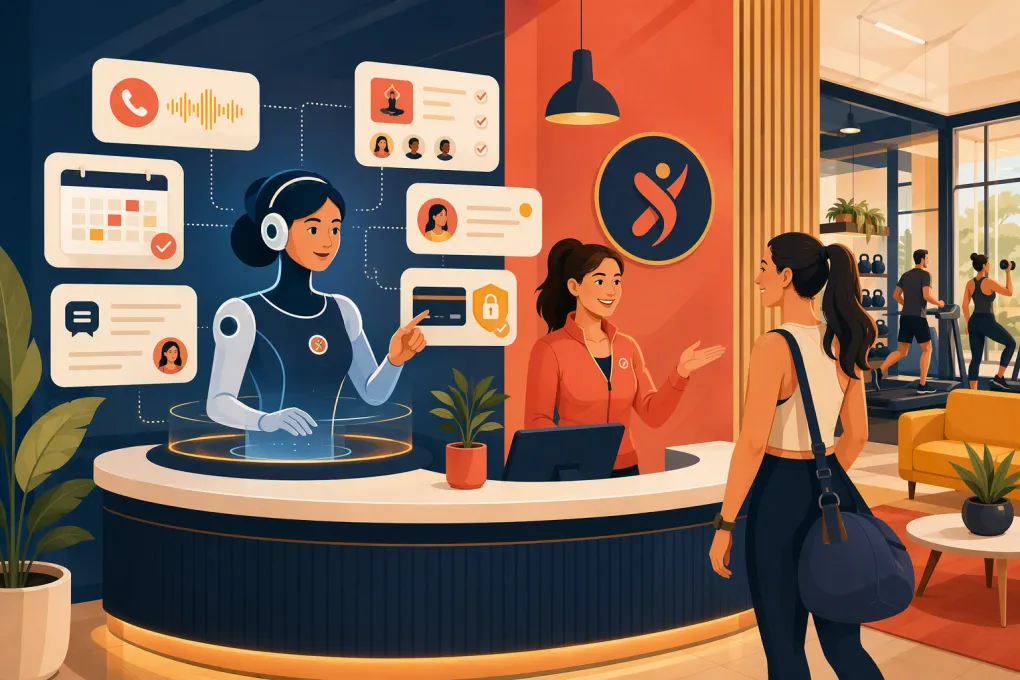

Run your gym on autopilot with WTF Go
Fitty — your AI receptionist — answers calls and DMs, fills classes, follows up with every lead, and collects dues while you coach.