AI & Automation
AI Receptionist for Fitness Studio Trial Bookings Guide
Learn how an AI receptionist for fitness studio trial bookings captures leads, answers questions, schedules visits, and handles follow-up around the clock.
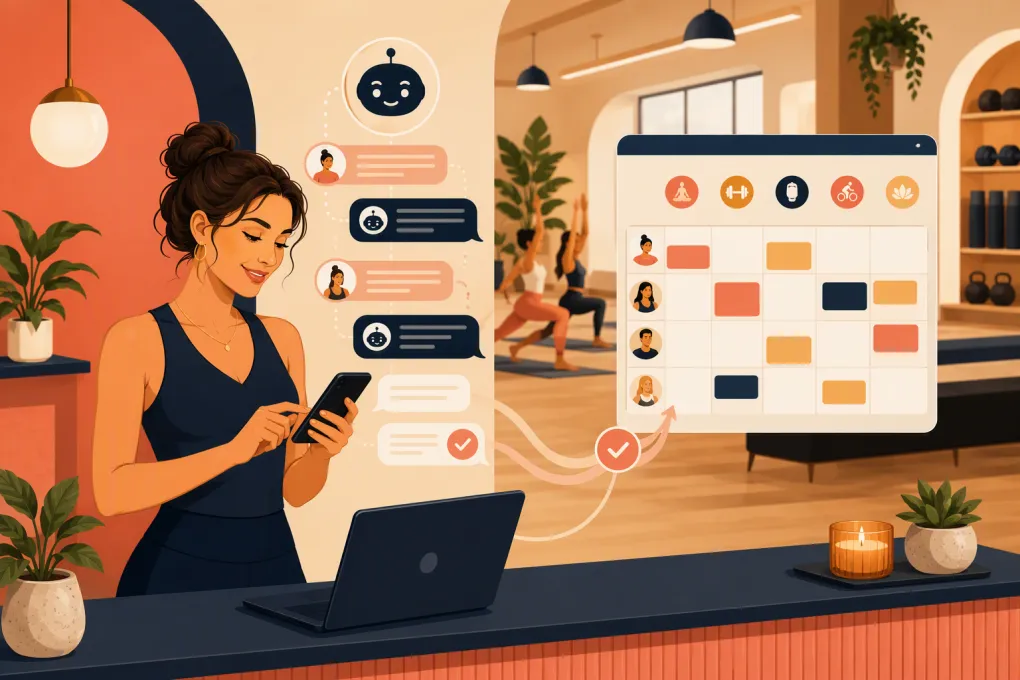 Watch · 20s
A prospective member finds your studio at 8:40 p.m. They want to know whether beginners are welcome, what to bring, and whether Saturday’s class has space. If the answer waits until tomorrow, that lead may keep searching and book somewhere else.
This is the practical case for an AI receptionist for fitness studio trial bookings. It is not about replacing every front-desk interaction. It is about handling the repetitive, time-sensitive work between initial interest and a confirmed visit: answering common questions, finding the right trial, booking it, sending instructions, and following up when the prospect goes quiet.
For an owner, the goal is not simply more automation. The goal is a booking process that responds consistently without creating confusion for staff or prospects.
See how Fitty turns unanswered trial inquiries into booked visits →
Where fitness studio trial bookings break down
Most studios do not have a lead shortage at every hour of the day. They have a response and follow-up problem.
Trial inquiries arrive through website forms, phone calls, texts, social campaigns, referrals, and walk-in questions. Staff may be coaching, checking in members, cleaning equipment, or handling an upset customer when those inquiries arrive. Even when someone replies, the conversation can stall over basic logistics.
Common failure points include:
- A lead asks a question outside staffed hours and receives no response.
- The first reply says someone will call later instead of offering a booking.
- Staff send a schedule link without helping the lead choose a class.
- The prospect selects a session that is inappropriate for a beginner.
- Waivers, arrival instructions, or cancellation rules are not explained.
- A lead says they need to check their calendar and receives no follow-up.
- The studio books the trial but does not remind the prospect to attend.
- No one owns the follow-up after a missed trial.
An AI receptionist can cover these gaps, but only when it is connected to a clear operating process. A chatbot that gives generic answers without calendar access or escalation rules simply creates another inbox to monitor.
What an AI receptionist should do from inquiry to visit
A useful AI receptionist moves the prospect toward a specific next step. For trial bookings, the workflow should cover five stages.
| Stage | What the AI receptionist should handle | When staff should step in |
|---|---|---|
| Initial response | Greet the lead, identify the service of interest, and answer approved questions | Complaints, medical concerns, or unusual requests |
| Trial selection | Recommend an appropriate class, appointment, or intro session based on experience and availability | Complex programming or accessibility needs |
| Booking | Collect required details, confirm availability, and reserve the trial | Overrides, exceptions, or full-session requests |
| Pre-visit follow-up | Send confirmations, directions, preparation details, and reminders | Personal outreach for high-intent or special-case leads |
| Post-booking follow-up | Respond to cancellations, missed visits, or unanswered conversations | Sales conversations requiring judgment or negotiation |
The AI should also write the conversation and booking status back to the same customer record used by the team. Otherwise, staff may call someone who has already booked, ask questions the prospect already answered, or miss an important handoff.
Design the trial offer before automating it
Automation exposes messy offers. Before deploying an AI receptionist, define exactly what a new lead can book.
Choose a clear entry point
Decide whether the primary offer is:
- A free trial class
- A paid introductory class
- A consultation
- An assessment
- A short trial period
- An introductory appointment followed by a class
Avoid giving the AI several nearly identical offers without selection rules. If beginners must attend an orientation before joining a regular class, make that sequence explicit.
Set eligibility and scheduling rules
Document which sessions can accept first-time visitors. Include:
- Minimum age requirements
- Experience or skill prerequisites
- Class capacity rules
- Booking cutoffs
- Required consultations or waivers
- Restrictions on repeated trial use
- Location-specific availability
- Services that require staff approval
These rules protect the customer experience. A first-timer should not arrive for an advanced session because the booking system showed an open spot.
Standardize the essential answers
Build an approved knowledge base covering the questions staff repeatedly answer:
- What should I wear or bring?
- How early should I arrive?
- Is this suitable for beginners?
- Where do I park?
- Can I bring a friend?
- What happens if I need to cancel?
- Are mats, towels, gloves, or other equipment provided?
- What does the trial include?
- What happens after the trial?
Keep answers direct. The AI should not bury a booking link beneath several paragraphs of studio history.
See how Fitty answers trial questions and books classes 24/7 →
Build a conversation that qualifies without interrogating
Trial booking flows often ask for too much information too early. The prospect should not feel as though they are applying for a loan just to try a class.
Collect only what is needed to recommend and confirm the visit. A practical sequence might be:
- Ask what service, class type, or goal brought them in.
- Ask whether they are new to that activity if experience affects class selection.
- Offer suitable times from live availability.
- Collect the contact details required to complete the booking.
- Confirm the location, date, time, and trial terms.
- Send preparation and arrival instructions.
Sensitive health questions should not be improvised by an AI system. If a prospect mentions an injury, pregnancy, a medical condition, or uncertainty about whether an activity is safe, route the conversation to a qualified person and avoid making medical recommendations.
The same applies to pricing exceptions, refund disputes, accessibility requirements, and requests that fall outside documented policy. Good automation knows when to stop automating.
Make the booking confirmation operationally complete
A calendar event is not a complete confirmation. The prospect needs enough information to arrive confidently, and the team needs enough context to deliver a good first visit.
Every confirmation should include:
- Studio name and exact location
- Class or appointment name
- Date, time, and expected duration
- Recommended arrival time
- What to wear or bring
- Parking or entry instructions
- Waiver or intake form link, when applicable
- Rescheduling or cancellation method
- A clear way to ask another question
Internally, the record should show the lead source, selected offer, conversation history, booking status, and any relevant notes. For multi-location operators, verify that the location in the conversation matches the location on the reservation and confirmation.
Test the full customer journey on a phone. Owners often review automation from a desktop dashboard while prospects experience it through short text messages and mobile booking pages.
Follow up without sounding robotic
Most trial-booking conversations do not follow a straight line. A lead may stop responding after asking about times, abandon the booking screen, cancel, or miss the visit.
Create follow-up paths for each status rather than sending the same message to everyone.
Interested but not booked
Reference the class or goal discussed and offer a concrete next step. For example, ask whether the prospect would prefer a weekday evening or weekend option instead of sending a vague check-in.
Booked but not yet attended
Send the information needed to reduce uncertainty. The message should make rescheduling easy rather than pressuring someone who has a legitimate conflict.
Canceled or missed trial
Offer an appropriate rebooking path. If the person repeatedly cancels, has a complaint, or explains a personal barrier, assign the conversation to a staff member.
Attended trial
The next message should match the studio’s sales process. That may mean offering a membership consultation, sharing the recommended plan, answering pricing questions, or collecting an approved payment through a secure workflow.
Fitty is built for this kind of continuous lead and member handling: answering inquiries, booking classes, following up, and collecting dues without requiring the front desk to watch every conversation. The staff still owns exceptions and relationship-building; the system keeps routine work moving.
See WTF Go’s AI trial-booking workflow in action →
Set firm guardrails for AI, payments, and messaging
An AI receptionist should operate from approved information, not invent answers. Establish clear boundaries before launch:
- Define which offers and prices it may present.
- Prevent unapproved discounts or policy exceptions.
- Route uncertain answers to a person.
- Use secure, approved payment workflows rather than requesting card details in open conversation.
- Limit access according to staff roles.
- Review conversation logs for accuracy and recurring questions.
- Publish a clear privacy policy describing how customer information is handled.
For automated calls or text messages, obtain and record appropriate consent, identify the business, provide required opt-out handling, and respect applicable quiet-hour rules. US requirements can vary by channel, message type, and jurisdiction, so operators should have their process reviewed by qualified counsel rather than relying on software alone for compliance.
Measure the stages that reveal the real problem
Do not judge the system only by total trial bookings. Track the full path so you can see where prospects are getting stuck.
Useful operating measures include:
- Inquiry volume by source and location
- Time from inquiry to first response
- Percentage of inquiries that reach a booking decision
- Booked trials by class, offer, and location
- Reschedules, cancellations, and missed visits
- Escalations to staff and their reasons
- Trial attendance
- Post-trial next steps and completed enrollments
- Opt-outs and negative feedback
Review conversation samples alongside the dashboard. A booking total will not tell you that prospects repeatedly misunderstand parking, cannot find beginner sessions, or are being offered inconvenient times.
Use those findings to improve staffing, scheduling, website copy, and the trial itself. The AI receptionist should become a source of operational insight, not just a message responder.
A practical launch checklist
Start with one documented trial journey before attempting to automate every service.
- Map the current path from inquiry to attendance.
- Select the trial offer and eligible sessions.
- Write approved answers to common questions.
- Connect live scheduling and customer records.
- Define required contact fields and consent records.
- Create confirmation, reminder, and rebooking messages.
- Document escalation triggers and staff ownership.
- Test normal bookings, full classes, cancellations, and unusual questions.
- Train staff to read the conversation history before taking over.
- Review results and transcripts regularly after launch.
The best AI receptionist for fitness studio trial bookings is not the one that talks the most. It is the one that makes the correct next step easy, preserves context for your team, and reliably hands off situations that require human judgment.
Frequently asked questions
Can an AI receptionist book fitness studio trials after hours?
Yes. When connected to current class or appointment availability, it can answer approved questions, offer suitable times, and confirm a trial outside staffed hours.
Will an AI receptionist replace front-desk staff?
It should handle repetitive inquiries and booking tasks while routing exceptions, sensitive questions, complaints, and relationship-driven conversations to staff.
What information should the AI collect from a trial lead?
Collect only what is needed to recommend and confirm the trial, such as service interest, relevant experience, preferred time, name, and approved contact details.
Can an AI receptionist follow up with trial no-shows?
Yes. It can send an approved rebooking message and offer available alternatives, while escalating repeated cancellations or customer concerns to the team.
How should a studio evaluate an AI trial-booking system?
Check scheduling accuracy, customer-record integration, escalation controls, consent handling, reporting, multi-location support, and how easily staff can review and take over conversations.
Keep reading

Run your gym on autopilot with WTF Go
Fitty — your AI receptionist — answers calls and DMs, fills classes, follows up with every lead, and collects dues while you coach.