AI & Automation
AI Receptionist for Dance Studio Tuition Inquiries: Guide
Learn how an AI receptionist for dance studio tuition inquiries can answer fee questions, qualify families, book trials, and follow up 24/7 without delays.
 Watch · 20s
A parent asks about ballet tuition at 8:47 p.m. They also want to know whether there is a registration fee, what their child should wear, and whether Tuesday’s class has space. By the time your front desk responds the next morning, that parent may already have booked a trial somewhere else.
An AI receptionist for dance studio tuition inquiries closes that response gap. It can give parents approved pricing information, ask the questions needed to recommend a class, book a trial, and continue the conversation after your staff has gone home.
The important word is approved. A useful AI receptionist should not improvise tuition, promise availability it cannot verify, or bury fees. It needs accurate studio data, clear guardrails, and a defined route to a human when the situation requires judgment.
See how Fitty handles dance studio inquiries after hours →
What an AI receptionist should handle for your studio
A dance studio inquiry rarely consists of one question. “How much is tuition?” often means the parent is also evaluating schedule, age fit, commitment level, dress requirements, performance obligations, and the total cost of enrollment.
A properly configured AI receptionist should be able to:
- Answer common tuition and fee questions from an approved rate sheet
- Explain whether tuition is monthly, session-based, or charged on another schedule
- Identify the dancer’s age, experience, preferred style, and location
- Recommend appropriate classes based on your rules
- Check current class or trial availability when connected to your schedule
- Book an introductory class, assessment, or studio tour
- Send registration and payment links
- Follow up with families that have not completed the next step
- Escalate placement, exception, refund, and sensitive billing questions to staff
This is more than placing a chatbot on your website. The receptionist needs to move the family from a pricing question to a clear, appropriate action.
Build a reliable tuition knowledge source first
AI cannot fix a disorganized pricing structure. Before turning on automated answers, create one controlled source of truth for every program and location.
Document the full cost, not only the headline rate
For each class or program, record:
- Class name, style, age range, and level
- Location, day, time, and session dates
- Tuition amount and billing cadence
- Registration or membership fees
- Costume, recital, competition, or performance fees
- Required deposits
- Trial class policy and price, if applicable
- Sibling, multi-class, or other approved discounts
- Withdrawal, makeup, refund, and cancellation policies
- Current promotions and their expiration dates
Parents become frustrated when they receive a tuition number and discover mandatory charges later. Your AI receptionist should clearly distinguish recurring tuition from one-time or event-specific expenses.
Avoid vague language such as “classes start at” unless the assistant immediately explains which class qualifies and asks enough questions to provide the relevant price. If tuition depends on placement, competition team status, or hours per week, the AI should say so rather than guess.
Assign an owner to pricing updates
One person should be responsible for updating the AI whenever tuition, schedules, discounts, or policies change. For a multi-location studio, assign location-specific rates and rules rather than letting the system assume that every branch operates identically.
Set a recurring review on your operating calendar. Also trigger an immediate review before registration periods, summer programs, recital season, and any tuition increase.
Design the conversation around parent intent
A good tuition conversation should feel direct. Do not force a parent through ten qualification questions before answering a basic price question.
1. Identify the relevant program
Ask only for details that change the answer:
- Dancer’s age
- Dance style or program of interest
- Beginner or prior experience
- Preferred location
- Schedule constraints
If the parent asks about a specific class, answer that question first and then confirm eligibility.
2. Give a complete, readable answer
A useful response might follow this structure:
Tuition for the selected class is [approved amount] billed [billing schedule]. There is also a [fee type] of [approved amount]. [Costume or performance fee explanation, if applicable.] Would you like me to check trial availability for your dancer’s age group?
The bracketed fields must come from your studio’s current records. The AI should never calculate an unofficial discount or infer a fee that is not documented.
3. Offer one clear next step
After answering, move the conversation forward with the most relevant action:
- Book a trial class
- Schedule a placement evaluation
- Reserve a studio tour
- Start registration
- Join a waitlist
- Request a staff callback
Do not offer every possible option at once. A parent asking about beginner tap should not have to choose among six unrelated calls to action.
4. Follow up based on what happened
Follow-up should reflect the family’s actual status. Examples include:
- Inquiry answered but no trial booked
- Trial booked but registration incomplete
- Trial completed but no enrollment decision recorded
- Payment link sent but not completed
- Requested class full, with an appropriate alternative available
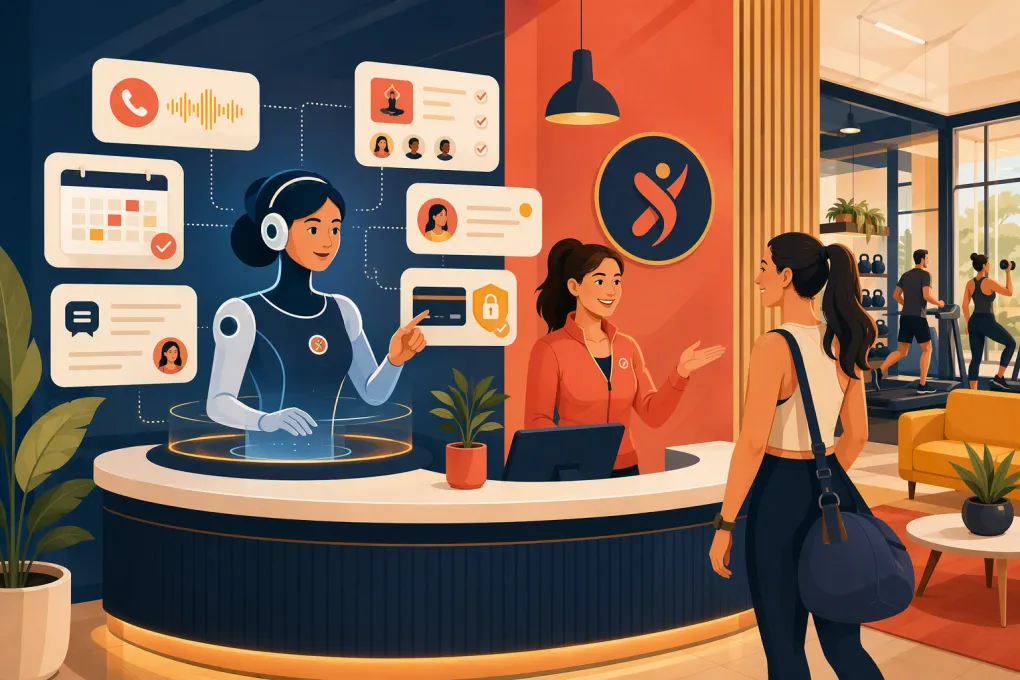
Fitty, WTF Go’s AI receptionist, is built to answer leads, book classes, follow up, and collect dues around the clock. That allows your team to concentrate on teaching, parent relationships, and situations that genuinely need a person.
See how Fitty can turn tuition questions into booked trials →
Establish firm escalation rules
Automation works best when it knows its limits. Define the subjects that always go to a manager or designated staff member.
Typical escalation categories include:
- Customized competition-team pricing
- Placement decisions requiring instructor review
- Scholarship or financial hardship requests
- Disputed charges and refund requests
- Medical, accessibility, or safety concerns
- Custody or authorized-pickup issues
- Exceptions to age, attendance, or withdrawal policies
- Angry or distressed messages
The handoff should preserve the conversation history. Parents should not have to repeat the dancer’s age, requested class, and original question after a staff member takes over.
Set internal ownership as well. Decide whether billing goes to an office manager, placement questions to an instructor, and policy exceptions to the owner. AI can identify and route the issue, but your team still needs a dependable response process.
Handle payments and family data carefully
Tuition conversations involve contact information, student details, and sometimes payment activity. Collect only what is needed to serve the inquiry.
Use a secure hosted checkout or payment link rather than asking a parent to type full card details into an ordinary chat. Keep billing communication directed to the responsible adult, not the child. Control staff access to conversation records and remove access promptly when employees leave.
If you use automated calls or text messages, obtain appropriate consent, identify the studio, provide a practical opt-out method, and honor opt-outs. Requirements can vary by channel, message type, and jurisdiction, so review your workflow with qualified legal counsel rather than treating software settings as legal advice.
Test the receptionist before sending it live
Build a test sheet using real questions your staff receives. Include straightforward requests and difficult edge cases.
Test questions should cover:
- “How much is ballet for a five-year-old?”
- “Are costumes included?”
- “Can my two children get a sibling discount?”
- “We have dance experience. Which level should we choose?”
- “Can you waive the registration fee?”
- “The class I want is full. What else is available?”
- “I was charged after withdrawing.”
- “Can I pay you here in the chat?”
Check whether each answer uses the correct location, age group, session, billing cadence, and fee policy. Confirm that the AI escalates disputes and exceptions instead of inventing an answer.
Run another test whenever you change pricing or launch a new term. A technically functioning receptionist with old tuition data creates more work than it removes.
Measure outcomes that affect enrollment
Do not judge an AI receptionist only by the number of messages it sends. Review whether it improves the path from inquiry to paid enrollment.
Useful operating measures include:
- Median first-response time by channel and time of day
- Percentage of tuition inquiries receiving a complete answer
- Inquiry-to-trial booking rate
- Trial attendance and no-show status
- Trial-to-registration progression
- Payment-link completion
- Human handoff volume and reasons
- Incorrect-answer reports
- Follow-up opt-outs
- Leads with no recorded next step
Read a sample of conversations each week, especially lost leads and escalations. Look for repeated confusion about fees, policies, or class selection. Those patterns can reveal problems in your offer and front-desk process, not just in the AI.
A practical launch plan
Start with one high-volume workflow instead of automating every parent interaction at once.
- Choose a program with clear pricing and placement rules.
- Load the current tuition, fees, schedule, policies, and FAQs.
- Connect the correct booking, registration, and payment destinations.
- Define human handoff topics and staff ownership.
- Test common questions and edge cases.
- Launch on one or two channels.
- Review conversations daily during the initial rollout.
- Expand only after answers and routing are dependable.
The goal is not to remove your front desk. It is to stop making staff repeatedly type the same tuition answers while high-value leads wait unattended. With clear studio data and disciplined escalation, an AI receptionist can provide fast answers without sacrificing accuracy or the personal experience families expect.
Explore WTF Go and put Fitty on your dance studio’s front desk →
Frequently asked questions
Can an AI receptionist quote different tuition rates by class and location?
Yes, if it is configured with current, location-specific pricing and rules. It should ask for the details that affect tuition and avoid quoting a price when placement or staff approval is required.
Can an AI receptionist book dance trial classes?
It can book trials when connected to the studio’s scheduling workflow and given rules for age, level, capacity, and eligibility. Complex placement decisions should still be escalated to staff.
Should parents pay tuition through an AI chat?
The receptionist can send a secure payment or checkout link and follow up on incomplete payments. Parents should not be asked to enter full card details into an unsecured conversation.
Will an AI receptionist replace dance studio front-desk staff?
It is better used to handle repetitive inquiries, booking, follow-up, and routine payment reminders. Staff remain important for placement, disputes, policy exceptions, and sensitive family conversations.
How often should tuition information be updated?
Update it whenever pricing, schedules, fees, promotions, or policies change. Studios should also review the information before each major registration period or new session.
Keep reading


Run your gym on autopilot with WTF Go
Fitty — your AI receptionist — answers calls and DMs, fills classes, follows up with every lead, and collects dues while you coach.