AI & Automation
AI Receptionist for Dance School Enrollment Inquiries Guide
Learn how an AI receptionist for dance school enrollment inquiries can answer families, qualify leads, book trials, and follow up around the clock—reliably.
 Watch · 20s
A parent finds your dance school at 8:47 p.m. Their child wants ballet, but they are unsure which level fits, whether a trial is available, what shoes are required, and how much enrollment costs. They submit a form or start a message. If your team answers the next afternoon, that family may already be speaking with another school.
This is the real job of an AI receptionist for dance school enrollment inquiries: not simply sending instant replies, but moving an interested family from first question to the correct next step without creating more front-desk work.
For dance schools, that next step could be a trial class, placement assessment, studio tour, waitlist, registration link, or conversation with an experienced staff member. The AI needs to recognize the difference.
See how Fitty can answer dance enrollment inquiries after hours →
Why dance school enrollment inquiries are difficult to automate
Dance enrollment has more variables than a basic appointment request. Families often do not know what they should book, and the right recommendation can depend on:
- The dancer’s age or date of birth
- Dance style and goals
- Previous training
- Current skill level
- Preferred days and times
- School location
- Class capacity
- Whether the term has already started
- Performance or competition expectations
- Placement and prerequisite policies
Parents may also ask several questions in one message. A typical inquiry might combine tuition, dress code, sibling scheduling, trial availability, and whether a child can join mid-session.
A generic chatbot usually treats these as isolated questions. A useful AI receptionist keeps the enrollment objective in view while gathering the information needed to recommend a safe, sensible next step.
What an AI receptionist should handle
The goal is not to let AI make every enrollment decision. The goal is to automate repeatable conversations and route exceptions to the right person.
Answer common questions consistently
Your AI receptionist should have access to approved information about:
- Programs, styles, and age ranges
- Studio locations and operating hours
- Current class schedules
- Tuition structure and registration fees
- Trial class policies
- Dress codes and required footwear
- Term dates, holidays, and recital commitments
- Cancellation, makeup, and refund policies
- Parking, arrival, and check-in instructions
Answers should come from maintained school information, not guesses. If a policy is unclear or missing, the AI should say that a staff member needs to confirm it.
Qualify the family without interrogating them
Qualification should feel like helpful guidance. Ask only for information that changes the recommendation.
A practical sequence is:
- Which dancer are you looking to enroll, and what is their age group?
- Which dance style or program interests them?
- Have they taken classes before?
- Which days, times, and location could work?
- Would you like to book a trial or request placement guidance?
Do not force every lead through the same questionnaire. A parent asking for an adult beginner tap class does not need questions designed for a competitive youth dancer.
Book the correct next step
An AI receptionist can help families book a trial class, introductory lesson, consultation, or placement assessment based on your rules.
The booking workflow should account for:
- Age and prerequisite restrictions
- Real class availability
- Trial eligibility
- Capacity or waitlist status
- Minimum notice requirements
- Location and instructor assignment
- Whether staff approval is required
For uncertain levels, the AI should avoid making a definitive placement. Booking an assessment or collecting details for the program director is safer than putting a dancer into the wrong class.
Follow up until the inquiry is resolved
Many enrollment leads do not convert in a single conversation. A parent may need to compare schedules, check with another caregiver, or wait until after the trial.
Useful follow-up moments include:
- After an inquiry receives an answer but no trial is booked
- Before a scheduled trial or assessment
- After a missed trial
- After the trial, with the appropriate enrollment step
- When a waitlisted class opens
- Before a registration deadline identified by the school
Follow-up should stop when the family enrolls, declines, opts out, or needs human assistance. Repeated messages without context will damage trust rather than improve enrollment.
A practical enrollment workflow
Build the workflow around decisions, not around a long script.
| Inquiry stage | AI receptionist action | Human involvement |
|---|---|---|
| New inquiry | Respond, identify program interest, and gather essential details | Not usually needed |
| Straightforward class match | Explain the option and offer an eligible trial or next step | Review only if required by policy |
| Uncertain skill level | Offer a placement assessment or collect details | Teacher or program director decides placement |
| Full class | Explain availability and offer a waitlist or suitable alternative | Staff handles unusual capacity requests |
| Policy question | Answer from approved school information | Escalate missing or disputed policy details |
| Trial booked | Confirm logistics and send reminders | Instructor delivers the trial experience |
| Trial completed | Follow up with the approved enrollment path | Staff handles sensitive feedback or objections |
| Payment issue | Provide the correct payment path or collect an authorized due | Staff handles disputes and account exceptions |
This structure gives families immediate help while protecting the decisions that require teaching judgment or management approval.
How to prepare your dance school for AI enrollment
AI performance depends heavily on the operating information behind it. Automating a disorganized process only makes the confusion faster.
Create one approved source of truth
Gather the information your front desk currently uses across spreadsheets, emails, documents, and staff memory. Resolve conflicting versions before adding automation.
At minimum, document:
- Class names, descriptions, ages, and prerequisites
- Which classes allow trials
- Placement rules
- Capacity and waitlist procedures
- Tuition and fee explanations
- Enrollment links and deadlines
- Dress code by class
- Recital or performance obligations
- Escalation contacts by issue
Assign one person to own updates. When a schedule or policy changes, the AI’s information should be updated as part of the same operational change.
Define clear escalation rules
List the situations where the AI must stop and involve a person. Examples include:
- Injury, accessibility, or medical accommodation questions
- Complaints involving a teacher or another student
- Billing disputes and refund exceptions
- Advanced or competitive team placement
- Custody or authorized-pickup concerns
- Requests that conflict with school policy
- Any question the AI cannot answer confidently from approved information
The handoff should include the conversation history and information already collected so the parent does not have to start over.
Protect family and student information
Dance schools frequently communicate with parents about children, so data collection should be deliberate.
Collect only what is needed for the enrollment step. Avoid asking for sensitive medical details in a general inquiry conversation. Direct accommodation or health-related matters to an appropriate staff process.
Your school should also maintain clear privacy notices, access controls, retention practices, and documented consent procedures for automated texts or calls. Make opt-out requests easy to honor, and review applicable requirements with qualified counsel rather than treating software settings as legal advice.
Explore how WTF Go and Fitty can manage inquiries, bookings, follow-up, and dues in one workflow →
What the AI should sound like
A dance school receptionist needs to be warm without becoming vague or overly casual. Families want confidence that the school is organized and attentive.
Good responses should:
- Answer the question before asking for more information
- Use the class names your school actually uses
- Explain why a placement assessment may be needed
- Set accurate expectations about availability
- Keep messages short enough to scan on a phone
- Identify when a staff member will take over
For example, instead of saying that a beginner class is perfect, the AI could say:
Based on the age and experience you shared, Beginner Ballet A may be the best starting point. I can show you available trial times, or arrange placement guidance if you would prefer the school to confirm the level first.
That language helps the family move forward without pretending the AI can evaluate dance technique.
Measure enrollment outcomes, not message volume
Fast responses matter, but speed alone does not tell you whether the system is working. Track the complete path from inquiry to enrollment.
Useful measures include:
- Time to first meaningful response
- Percentage of inquiries that reach a defined next step
- Trial or assessment bookings
- Trial attendance
- Enrollment after trial
- Unresolved conversations
- Human takeover reasons
- Incorrect or outdated answers
- Opt-outs and complaints
Review conversation samples regularly. Look for recurring questions the AI cannot answer, classes families struggle to understand, and places where the workflow stalls.
Those findings can improve more than the AI. They may reveal unclear program names, missing website information, inconvenient trial options, or inconsistent front-desk policies.
Where Fitty fits in the enrollment process
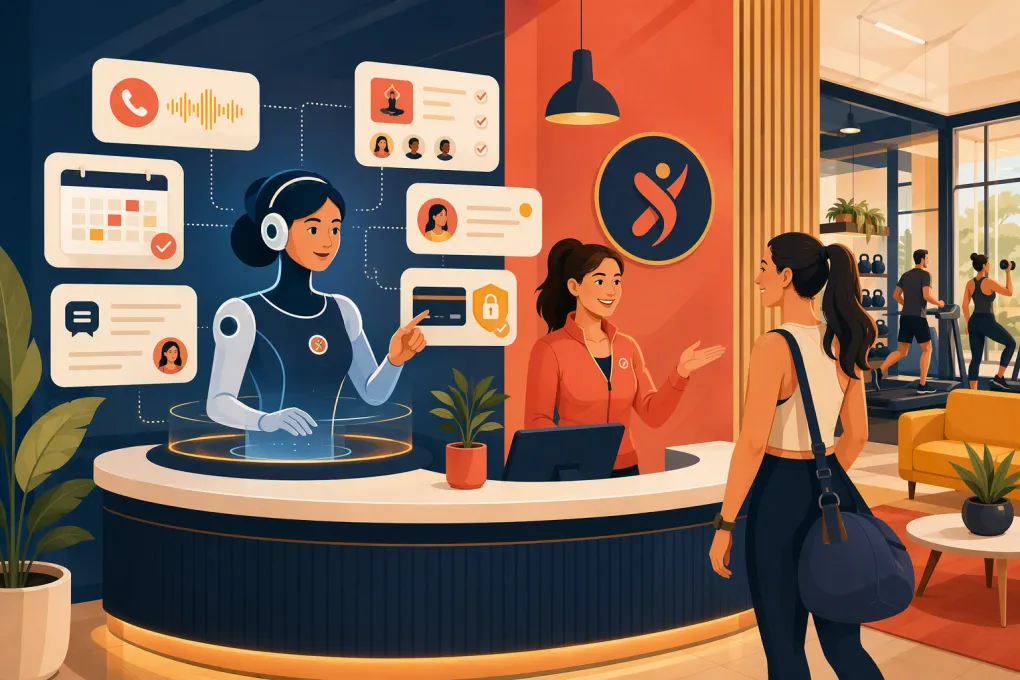
Fitty is the AI receptionist inside WTF Go, an operating system built for gyms, studios, spas, and wellness businesses. For a dance school, Fitty can serve as the always-available front line for lead questions, class booking, follow-up, and dues collection.
The practical advantage is continuity. The inquiry does not have to live in one tool, the booking in another, and the follow-up on a staff member’s personal checklist. Fitty can help move the family through the workflow while your team handles instruction, placement decisions, parent relationships, and exceptions.
That does not mean removing people from enrollment. It means reserving staff attention for conversations where their experience changes the outcome.
See how Fitty can turn dance school questions into booked next steps →
Start with one enrollment path
Do not automate every program on day one. Choose a high-volume, low-complexity path such as beginner youth classes, adult introductory classes, or trial requests.
Document the rules, load approved answers, define the handoffs, and test the workflow using real questions your school has received. Include difficult scenarios: a full class, an unclear level, siblings in different age groups, a mid-term request, and a refund question.
Once the workflow answers accurately and hands off cleanly, expand it to additional programs. A controlled rollout is easier to improve and less likely to create confusion for families or staff.
The strongest AI receptionist is not the one that talks the most. It is the one that gives accurate answers, books valid next steps, follows through, and knows when your team should take over.
Frequently asked questions
Can an AI receptionist enroll students directly into dance classes?
It can handle straightforward enrollments when class eligibility, capacity, and payment rules are clear. Placement-based, advanced, or exception cases should be routed to qualified staff.
Can AI determine a dancer’s correct skill level?
AI can gather training history and suggest the next administrative step, but it should not replace a teacher’s technical assessment. Uncertain students should be booked for a trial or placement evaluation.
Will an AI receptionist work outside normal studio hours?
Yes. An AI receptionist such as Fitty can answer lead questions, support booking, and follow up when the front desk is closed, subject to the workflows and information configured by the school.
What information should a dance school provide to the AI?
Provide current schedules, age ranges, prerequisites, trial rules, tuition explanations, dress codes, enrollment links, policies, and clear escalation instructions. Assign an owner to keep that information current.
Does an AI receptionist replace dance school front-desk staff?
It is better used to absorb repetitive inquiries and follow-up. Staff should remain responsible for sensitive family issues, placement judgment, complaints, billing disputes, and policy exceptions.
Keep reading


Run your gym on autopilot with WTF Go
Fitty — your AI receptionist — answers calls and DMs, fills classes, follows up with every lead, and collects dues while you coach.