AI & Automation
AI Receptionist for Cupping Therapy Clinics That Converts
See how an AI receptionist for cupping therapy clinics can answer questions, book sessions, follow up with leads, and reduce front-desk workload 24/7.
 Watch · 20s
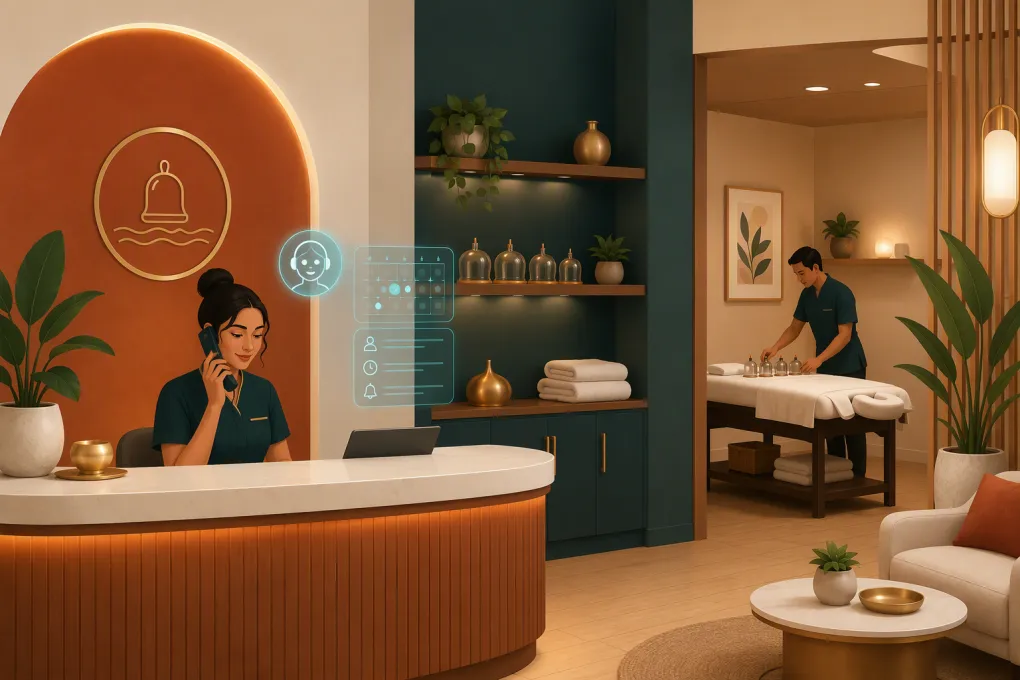
A potential client finds your cupping clinic after dinner. They want to know whether cupping is appropriate for their goal, how long a session takes, and whether you have an opening tomorrow. If nobody answers, that person may call the next clinic on the list.
That is the operational problem an AI receptionist can solve. It gives prospects an immediate response, handles routine scheduling conversations, and keeps following up when your practitioners and front desk are unavailable. The important part is configuring it for the realities of cupping therapy—not treating it like a generic chatbot.
What an AI receptionist should do for a cupping clinic
An AI receptionist is a voice and messaging agent that handles defined front-desk workflows. Depending on the system and setup, clients can interact with it by phone, text, website chat, or another supported channel.
For a cupping therapy clinic, its core jobs should include:
- Answering calls during treatments, lunch breaks, and after hours
- Explaining services using clinic-approved language
- Identifying whether someone is a new or returning client
- Booking the correct session type, practitioner, room, and duration
- Sending intake, preparation, and confirmation instructions
- Following up with leads who asked questions but did not book
- Rescheduling or canceling appointments under your policies
- Collecting deposits or sending secure payment links when supported
- Escalating medical, safety, complaint, or billing questions to a person
The goal is not to remove people from the client experience. It is to remove avoidable delays and repetitive administrative work while preserving a clear path to a qualified human.
See how Fitty handles after-hours cupping inquiries and booking →
Why cupping inquiries require more than basic call answering
Cupping prospects often need education before they are ready to schedule. Some have received cupping before, while others are concerned about marks, discomfort, clothing, preparation, or whether a service fits their situation.
A basic answering service can take a message. A properly configured AI receptionist can move the conversation forward without drifting into diagnosis or treatment advice.
It must distinguish between services
Your clinic may offer several services that sound similar to an unfamiliar caller, such as:
- Standalone cupping sessions
- Cupping added to massage or bodywork
- Sports recovery appointments
- Facial cupping
- Dry cupping or other clinic-specific modalities
- Initial consultations and follow-up sessions
Each may have a different duration, price, practitioner requirement, room requirement, or intake process. The receptionist should ask a short sequence of questions and offer only eligible appointment types.
For example:
- Have you visited this clinic before?
- Are you looking for a standalone session or an add-on to another service?
- Is there a practitioner you prefer?
- What day or time range works for you?
- Are you ready to reserve the appointment now?
That is more useful than sending every caller to a generic booking page and expecting them to interpret the menu correctly.
It must stay inside a safe scope
An AI receptionist should not determine whether cupping is medically appropriate, diagnose symptoms, or promise clinical outcomes. Build explicit boundaries into its instructions.
When someone describes a health condition, medication concern, pregnancy, recent procedure, skin issue, or possible contraindication, the agent should avoid offering an opinion. It can explain that a practitioner must review the situation and then collect contact details, route the call, or arrange a consultation.
The same applies to urgent or emergency language. The system needs a predefined response and escalation policy rather than attempting to continue a sales conversation.
Build the booking workflow around clinic capacity
Many scheduling failures are configuration failures. If an AI receptionist can see open times but does not understand operational constraints, it can create appointments your team cannot deliver.
Map these rules before going live:
| Booking rule | What to define |
|---|---|
| Service duration | Treatment time plus consultation, cleanup, and room turnover |
| Practitioner eligibility | Which team members can perform each service or add-on |
| Resource requirements | Treatment rooms, equipment, or other limited resources |
| New-client rules | Whether an intake or consultation is required first |
| Buffers | Time needed before or after specific services |
| Add-ons | Which services can be combined and how duration changes |
| Deposits | When payment is required and what happens if it fails |
| Cancellation policy | Cutoff, fee language, and exceptions requiring staff review |
| Multi-location access | Which practitioners and services are available at each clinic |
Test the difficult scenarios, not just the easy booking. Ask what happens if a client wants two services together, needs a same-day appointment, requests a practitioner who is unavailable, or tries to book at one location using a package purchased elsewhere.
An effective system should either complete the booking correctly or recognize when staff intervention is necessary.
Turn common questions into approved answers
Your AI receptionist needs a controlled knowledge base. Start with the questions your team already receives by phone, text, email, and social media.
Useful topics include:
- What each cupping service includes
- Session length and published pricing
- What clients should wear
- Clinic-approved preparation and aftercare guidance
- Your policy on visible marks and client consent
- Age requirements and guardian policies
- Parking, accessibility, and arrival instructions
- Membership, package, gift card, and insurance policies
- Cancellation, late-arrival, and no-show rules
- Practitioner credentials and service availability
Write answers in plain language and keep them consistent with what practitioners say in person. Avoid unqualified claims such as guaranteeing pain relief, detoxification, faster healing, or a specific clinical result.
Assign one person to own the content. Review it whenever services, prices, policies, hours, or staff availability change. An AI agent using old information can create more work than a missed call.
Use follow-up to recover undecided leads
Many prospects will ask a question without booking immediately. The receptionist should record the inquiry and trigger a reasonable follow-up sequence rather than losing the conversation.
A practical workflow might include:
- An immediate answer to the original question
- A direct booking option for the relevant service
- A later reminder if the person has not scheduled
- A final message offering staff help or a consultation
- An immediate stop when the person opts out or says they are not interested
Keep the message specific. “Would you like the next available appointment for a standalone cupping session?” is more actionable than “Just checking in.”
Fitty, WTF Go’s AI receptionist, is designed to answer leads, book services, follow up, and support payment collection around the clock. That gives operators one workflow instead of separate tools for missed calls, scheduling reminders, and lead chasing.
See how Fitty can follow up with unbooked cupping leads →
Protect client data and consent
Cupping businesses may collect health-related information during intake. Before choosing an AI receptionist, determine what information will pass through it, where that information is stored, and which vendors can access it.
Ask prospective providers about:
- Data retention and deletion controls
- User permissions and staff access
- Encryption and account security
- Call recording and transcription settings
- Whether a business associate agreement is available if your organization requires one
- How information moves into your scheduling, CRM, or client record system
- Whether payment details are handled through a secure payment provider
Do not ask clients to send full card information through ordinary text messages. Use a secure checkout or hosted payment link.
Automated calling and texting also require attention to consent, opt-outs, do-not-call obligations, and applicable federal and state rules. Call-recording disclosure requirements vary by jurisdiction. Get appropriate legal guidance for your operation rather than assuming the software provider handles every compliance decision for you.
Measure whether the receptionist is actually working
Do not judge the system by how human it sounds. Judge it by whether it completes useful work accurately.
Review these operational indicators:
- Answered versus missed inbound conversations
- Qualified inquiries that become booked appointments
- Bookings completed without staff intervention
- Escalations and the reasons behind them
- Incorrect answers or booking attempts
- Leads awaiting staff follow-up
- Cancellations, reschedules, and deposit issues
- Opt-outs and client complaints
During the first few weeks, review transcripts or call summaries frequently where legally permitted. Look for recurring phrases the agent misunderstands, questions missing from the knowledge base, and situations that should escalate sooner.
Create a simple weekly maintenance routine: inspect failed conversations, update one weak answer, verify calendars and services, and test the booking path as if you were a new client.
A practical rollout plan
Start narrow rather than automating the entire front desk at once.
Phase 1: After-hours and missed calls
Let the agent answer common questions, capture contact details, and book standard appointments when staff cannot respond. Route complex or sensitive situations for follow-up.
Phase 2: Lead follow-up
Add consent-based follow-up for callers and web leads who did not complete a booking. Monitor frequency and opt-outs carefully.
Phase 3: Existing-client workflows
Once booking accuracy is reliable, add confirmations, rescheduling, cancellation-policy explanations, package questions, and secure payment requests where appropriate.
Before launch, run test conversations covering new clients, returning clients, service add-ons, unavailable practitioners, contraindication questions, complaints, emergencies, cancellations, and payment failures. Every test should have a defined expected outcome.
Choosing the right AI receptionist
Look beyond a polished voice demonstration. A cupping clinic needs operational fit.
Ask whether the platform can:
- Work with your actual calendar and client records
- Follow service, practitioner, room, and location rules
- Handle both calls and written follow-up where needed
- Transfer or escalate conversations with context
- Use only approved answers for clinical-adjacent questions
- Support deposits or payment links without exposing card data
- Report on bookings, unresolved leads, and failed workflows
- Scale across locations without mixing availability or policies
Also ask who configures the workflows, how changes are made, and what happens during an outage or integration failure. The best AI receptionist is not the one with the longest feature list. It is the one your team can supervise, correct, and trust with real client conversations.
Explore WTF Go and Fitty for your cupping clinic’s front desk →
Frequently asked questions
Can an AI receptionist book cupping therapy appointments?
Yes, if it is connected to the clinic’s scheduling workflow and configured with service durations, practitioner eligibility, room availability, buffers, and new-client rules.
Should an AI receptionist answer medical questions about cupping?
It can provide clinic-approved general information, but it should not diagnose, determine suitability, or promise results. Health conditions, contraindication concerns, and urgent issues should be escalated.
Can an AI receptionist collect deposits for cupping sessions?
It can initiate deposit collection when supported, preferably through a secure hosted payment link or compliant payment provider rather than requesting card details through ordinary text.
Does a cupping clinic need a HIPAA-compliant AI receptionist?
That depends on the clinic’s legal status, the information being handled, and how vendors process it. Ask about security, data retention, access controls, and business associate agreements, then obtain qualified compliance advice.
How should a clinic test an AI receptionist before launch?
Test routine bookings plus difficult cases such as add-ons, unavailable practitioners, health questions, emergencies, cancellations, complaints, and payment failures. Confirm that each scenario books correctly or escalates to staff.
Keep reading

Run your gym on autopilot with WTF Go
Fitty — your AI receptionist — answers calls and DMs, fills classes, follows up with every lead, and collects dues while you coach.