AI & Automation
AI Receptionist for Cosmetic Injectors: A Practical Guide
Learn how an AI receptionist for cosmetic injectors can capture leads, answer treatment questions, book consults, follow up, and protect valuable staff time.
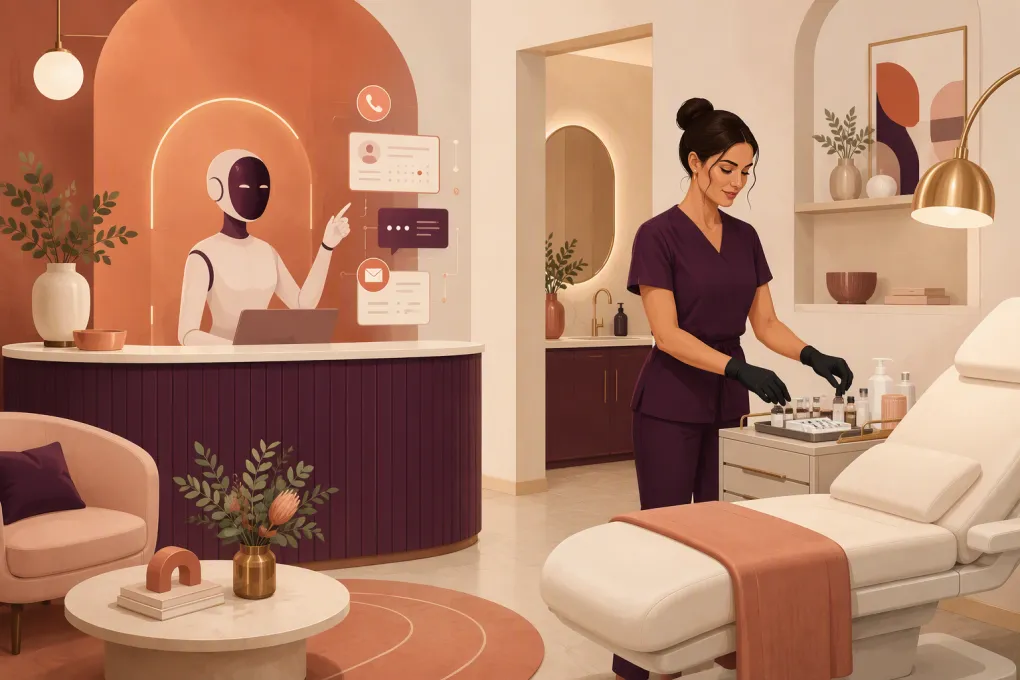 Watch · 20s
A prospective patient sees your before-and-after content at 9:40 p.m. and wants to know three things: whether you offer the treatment they are considering, what it generally costs, and when they can come in. If nobody responds until the next business day, that interest may already have moved to another injector.
An AI receptionist for cosmetic injectors closes that response gap. It can handle common questions, capture lead details, guide prospects toward the correct consultation, follow up, and escalate sensitive issues to a qualified person. The objective is not to replace clinical judgment. It is to remove repetitive front-desk work while making it easier for serious prospects to take the next step.
See how Fitty can handle after-hours inquiries for your aesthetics business →
What an AI receptionist should actually do
A useful AI receptionist is more than a website chatbot. It should support the operational steps between initial interest and a completed appointment.
For a cosmetic injector, those steps commonly include:
- Answering calls or messages outside staffed hours
- Explaining which services the practice offers
- Sharing published starting prices, ranges, or consultation policies
- Capturing the prospect’s name, contact information, goals, and preferred timing
- Directing clinical questions to an injector rather than improvising an answer
- Booking the appropriate consultation or appointment type
- Sending confirmations, reminders, and preparation instructions approved by the practice
- Following up with leads who did not book
- Re-engaging established patients when they are due to consider another visit
- Routing urgent post-treatment concerns to the designated clinical contact
The difference between a useful system and a frustrating one is how closely these actions reflect your real operating rules.
Start with the patient journey, not the technology
Before configuring AI, document what should happen when a new lead contacts the business. Keep the first version simple.
1. Identify the reason for the inquiry
The receptionist should determine whether the person is:
- Exploring a treatment for the first time
- Comparing services or providers
- Looking for pricing
- Ready to schedule
- Rescheduling an existing appointment
- Asking about pre- or post-treatment instructions
- Reporting a possible adverse reaction or urgent concern
Each intent requires a different workflow. A pricing question can receive approved general information. A possible complication requires immediate escalation under your clinical protocol.
2. Capture only useful information
Do not turn the first interaction into a lengthy intake form. Ask for what the team needs to continue the conversation, such as:
- Name
- Preferred phone number or email
- Service of interest
- General treatment goal
- New or established patient status
- Preferred location, provider, day, or time
- How the person heard about the practice, if that matters to your reporting
Detailed medical history and informed consent belong in the appropriate intake process, not in a casual lead conversation.
3. Give the lead a clear next step
Every conversation should end with one of four outcomes:
- An appointment or consultation is booked.
- The lead receives a booking link with a defined follow-up sequence.
- A staff member or injector is assigned to respond.
- An urgent concern is escalated according to the practice’s protocol.
“Someone will get back to you” is not a workflow unless someone is assigned, notified, and given a response deadline.
Build an approved answer library
Cosmetic treatment inquiries sit close to clinical decision-making, so the AI needs clear boundaries. Create an answer library using language reviewed by the owner, medical director, or appropriate clinical lead.
Useful topics include:
- Services offered at each location
- Consultation requirements
- Provider availability
- Published pricing and deposit policies
- Membership or package rules
- Accepted payment methods
- Cancellation and rescheduling policies
- General appointment length
- General downtime descriptions approved by the practice
- Pre-appointment instructions
- Location, parking, and accessibility information
- Whether the practice treats new patients for a particular service
The AI should not diagnose, determine candidacy, promise results, recommend prescription treatment, or provide individualized medical advice. Instead, it can say that treatment suitability is determined by a qualified provider during consultation and offer to schedule that consultation.
Avoid feeding the system aspirational marketing copy that staff would not use in a real conversation. Clear, specific answers build more confidence than exaggerated claims.
Configure booking rules that protect the schedule
Direct booking is valuable only when the AI books the correct service, duration, provider, and location. Write down your scheduling rules before switching it on.
Define appointment types precisely
Separate options such as:
- New-patient aesthetics consultation
- Established-patient follow-up
- Neuromodulator appointment
- Dermal filler consultation
- Skin consultation
- Treatment review or post-procedure check
Do not let a vague “injectables appointment” bypass a required consultation or land in a time slot that is too short.
Add operational constraints
Your booking logic may need to account for:
- Which providers perform each service
- Which services are available at each location
- New-patient consultation requirements
- Minimum or maximum booking windows
- Buffers between treatment types
- Provider-specific schedules
- Deposit requirements
- Policies for late cancellations or previous no-shows
- Circumstances that require staff approval
Test edge cases before launch. Ask what happens if a prospect requests a service unavailable at that location, wants a same-day appointment, has an existing booking, or refuses a required consultation.
See how WTF Go and Fitty can turn injector inquiries into structured booking workflows →
Use follow-up without sounding automated
Many prospects do not book during the first conversation. They may be checking availability, waiting for payday, comparing providers, or feeling uncertain about treatment. A disciplined follow-up process keeps the inquiry from disappearing into a shared inbox.
A practical sequence might include:
- An immediate message containing the promised information or booking path
- A short follow-up asking whether the person still wants help scheduling
- A later check-in that offers a consultation rather than pushing a treatment
- A final message that closes the loop and explains how to reconnect
The wording should match the person’s original question. Someone who asked about lip filler should not receive a generic promotion for every service the practice offers.
Give leads an easy way to opt out of marketing messages. For calls and texts, review consent, identification, opt-out, and recordkeeping requirements with qualified counsel. Federal and state rules can apply differently depending on the channel, message type, and how consent was obtained.
Create hard escalation rules for clinical and sensitive issues
An AI receptionist must know when to stop automating. Build explicit escalation categories rather than relying on the system to infer urgency from context alone.
Escalate conversations involving:
- Possible post-treatment complications
- Severe or rapidly worsening symptoms
- Requests for diagnosis or individualized medical advice
- Medication questions
- Pregnancy, allergies, or medical conditions affecting treatment decisions
- Threats, harassment, or safety concerns
- Refund demands or formal complaints
- Requests involving records, privacy, or consent disputes
- Anything the AI cannot answer confidently from approved information
The practice should define who receives each escalation, how they are alerted, and what the AI tells the patient while they wait. Emergency language should be written and approved by clinical leadership. The AI should never create its own emergency instructions.
Address privacy and compliance before launch
Cosmetic practices vary in structure. Some are medical practices, some operate within med spas, and some use separate entities for clinical and non-clinical functions. Your obligations depend on the data collected, how the business is organized, and which vendors handle the information.
Before choosing or deploying a system, ask:
- What information does the AI collect and retain?
- Where is conversation data stored?
- Who can access transcripts and lead records?
- Can retention periods and permissions be controlled?
- Does the vendor use conversation data to train models?
- What happens when a patient asks to access or delete information?
- Is a business associate agreement available when required?
- How are payment details handled?
- Can staff review the exact conversation behind an escalation?
HIPAA may apply when protected health information is handled by a covered entity or business associate, but not every aesthetics business has the same legal status. Do not treat “HIPAA compliant” as a substitute for evaluating your specific workflow with qualified privacy and healthcare counsel.
Also decide whether the AI will identify itself as an automated assistant. Disclosure rules vary, but straightforward identification can prevent confusion and set an appropriate expectation for the conversation.
Measure operational outcomes, not conversation volume
A high number of AI conversations does not prove the system is helping. Track whether it creates better business outcomes and reduces avoidable staff work.
Useful measures include:
- New inquiries captured by source and time of day
- Percentage of qualified inquiries that book
- Time from first inquiry to first response
- Appointments booked outside staffed hours
- Leads awaiting human follow-up
- Escalations by reason
- Booking errors requiring staff correction
- Cancellations and no-shows by appointment type
- Unanswered questions that should be added to the approved library
- Staff time spent on repetitive calls and messages
Review transcripts regularly during the first weeks. Look for incorrect assumptions, awkward wording, missing policies, and recurring questions. The goal is controlled improvement, not unattended automation.
A practical rollout plan
Start with one narrow workflow rather than automating every patient interaction at once.
Phase 1: Information and lead capture
Load approved business information, service descriptions, policies, hours, locations, and escalation rules. Let the AI answer common questions and capture contact details while staff retain control of booking.
Phase 2: Consultation booking
Connect the scheduling workflow after appointment types, provider rules, and buffers have been tested. Begin with consultations or another low-complexity appointment category.
Phase 3: Follow-up and reactivation
Add permission-aware follow-up for unbooked leads and established patients. Keep clinical recommendations out of automated reactivation messages.
Phase 4: Ongoing quality control
Assign one owner for the answer library. Update it whenever prices, schedules, providers, policies, locations, or treatment offerings change.
WTF Go gives wellness and aesthetics operators one place to manage the business, while Fitty works as the always-available AI receptionist handling inquiries, follow-up, and booking activity. That combination matters because an AI conversation is only useful when it connects to an accountable operating workflow.
Explore Fitty for cosmetic injector lead response and follow-up →
The standard to aim for
The best AI receptionist does not pretend to be an injector. It handles the administrative work immediately, communicates within approved boundaries, and brings in a qualified person when judgment is required.
For cosmetic injectors, that means fewer leads buried in voicemail, fewer repetitive pricing exchanges, cleaner booking handoffs, and more consistent follow-up. Start with accurate information and strict escalation rules. Automation comes after the workflow is safe, clear, and worth repeating.
Frequently asked questions
Can an AI receptionist book cosmetic injection appointments?
Yes, if it is connected to the scheduling workflow and configured with the correct provider, location, appointment type, consultation, and deposit rules. Complex or clinically sensitive requests should be routed to staff.
Can an AI receptionist answer questions about Botox or fillers?
It can provide practice-approved general information about offered services, pricing policies, consultations, and scheduling. It should not diagnose, determine candidacy, promise outcomes, or give individualized medical advice.
Is an AI receptionist for cosmetic injectors HIPAA compliant?
That depends on the practice’s legal status, the data being handled, and the vendor’s safeguards and agreements. Review storage, access, retention, training use, and business associate agreement availability with qualified counsel.
What happens if a patient reports a complication?
The AI should stop the normal workflow and follow a clinician-approved escalation protocol. It should notify the designated clinical contact and provide only the interim or emergency language authorized by the practice.
Will an AI receptionist replace front-desk staff?
It is better used to absorb repetitive inquiries, after-hours response, booking, and follow-up. Staff remain essential for clinical escalation, exceptions, complaints, relationship management, and judgment-heavy situations.
Keep reading

Run your gym on autopilot with WTF Go
Fitty — your AI receptionist — answers calls and DMs, fills classes, follows up with every lead, and collects dues while you coach.