AI & Automation
AI Receptionist for Breathwork Studios: Practical Guide
Learn how an AI receptionist for breathwork studios handles inquiries, books sessions, follows up with leads, and collects payments around the clock reliably.
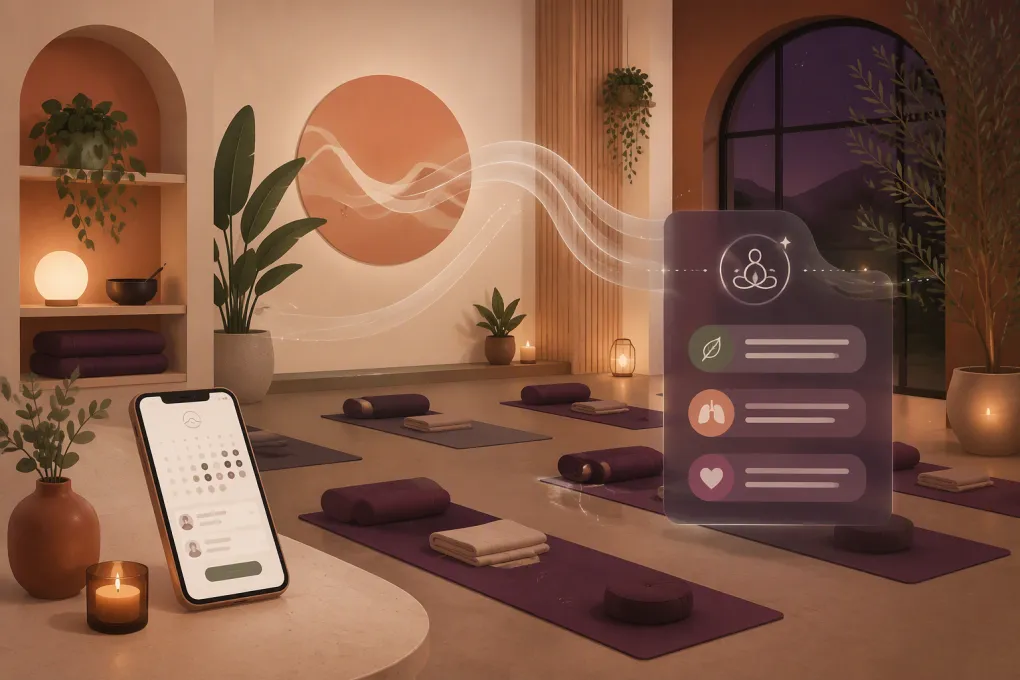 Watch · 20s
A potential client discovers your breathwork studio at 9:30 p.m. They are interested but unsure what to book, whether beginners are welcome, what to bring, and how intense the session will be. If they have to wait until your front desk opens, that interest can cool quickly.
An AI receptionist for breathwork studios can answer routine questions immediately, guide the person toward the right session, complete the booking, and follow up if they stop halfway through. It can also reduce the administrative load on facilitators who should be preparing the room, supporting clients, or leading sessions—not repeatedly checking an inbox.
The key is not simply adding a chatbot. Breathwork requires a more careful operating model than a basic fitness class. Your AI receptionist needs accurate service information, clear safety boundaries, and defined rules for when a human facilitator must take over.
See how Fitty handles breathwork inquiries and booking follow-up →
What an AI receptionist should handle
The best automation starts with high-volume, low-risk conversations. These are questions where the answer should be consistent regardless of which team member is working.
For a breathwork studio, those conversations commonly include:
- Class schedules and current availability
- Beginner-friendly session recommendations
- Differences between group, private, virtual, and workshop formats
- Session length and arrival instructions
- Clothing, equipment, parking, and studio access
- Pricing, memberships, packages, and expiration policies
- Cancellation, rescheduling, and late-arrival policies
- Facilitator profiles and session styles
- Booking links and payment steps
- Waitlist registration
- Post-inquiry follow-up
- Upcoming payment or membership reminders
A capable AI receptionist should do more than paste a link into every conversation. It should identify what the lead wants, answer the immediate question, and move that person toward a clear next action.
For example, someone asking, “Is breathwork suitable for a complete beginner?” needs a direct answer based on your studio’s approved language. The next step might be recommending an introductory group class or offering a conversation with a facilitator if the person mentions a health concern.
Build the booking conversation around intent
Not every lead should enter the same sequence. Breathwork clients may be seeking stress support, a first-time wellness experience, private instruction, a recurring practice, or a group event. Your receptionist needs to recognize those differences without diagnosing the person or making therapeutic promises.
First-time group session
Keep the qualification process short. Ask only what is needed to recommend and book the session:
- Is this their first breathwork session?
- Do they prefer an in-studio or virtual experience?
- Which days or times work for them?
- Do they have a relevant concern that requires facilitator review?
Then present one or two suitable options rather than the entire calendar. Too many choices can turn a simple booking into another research task.
Private session inquiry
Private-session leads often need more context before committing. The AI can collect:
- Preferred date range
- In-person or virtual preference
- General goals, using non-clinical language
- Whether the booking is individual, couples, or small group
- Any accessibility needs
- Whether they want a facilitator consultation first
The assistant can then book an available service or route the request to the appropriate facilitator.
Corporate or private group event
These inquiries usually require custom coordination. Instead of attempting to finalize every detail, the AI should gather the basics:
- Organization or group name
- Estimated attendance
- Preferred date and location
- On-site or virtual format
- Event purpose
- Contact information
- Budget range, if your sales process uses one
That gives your team a structured lead instead of an email that only says, “Can you send pricing?”
Safety boundaries are not optional
Breathwork practices vary, and some sessions may involve intense breathing techniques. An AI receptionist should never determine medical suitability, interpret symptoms, or override your studio’s screening process.
Create an approved safety response that does three things:
- Clearly states that the assistant cannot provide medical advice.
- Shares your studio’s established participation and screening guidance.
- Routes uncertain or higher-risk situations to a qualified human.
Define escalation triggers in advance. These may include a prospect mentioning pregnancy, a cardiovascular condition, seizures, recent surgery, severe respiratory concerns, fainting, acute mental health distress, or another issue covered by your studio’s policies. Your list should be reviewed by the professionals responsible for your programming and risk procedures.
The AI should also recognize urgent language. It must not present a class booking as an answer to an emergency or crisis. Your approved response should direct the person toward appropriate emergency or crisis support while alerting a designated team member when your process requires it.
Automation does not replace waivers, informed consent, facilitator judgment, or emergency procedures. It makes sure routine communication stays consistent while sensitive cases reach a person.
The follow-up workflows worth automating
Many studios focus on the first reply but overlook what happens afterward. A useful AI receptionist maintains momentum without sending endless generic reminders.
Unfinished booking
If someone asks about a session but does not book, follow up with the specific class or service discussed. Include the date, availability when applicable, and a direct booking action.
A practical sequence could include:
- An immediate answer with the recommended session
- A later reminder addressing the original question
- A final check-in offering another time or human help
Stop the sequence when the person books, declines, unsubscribes, or needs staff attention.
First-session preparation
After booking, send the operational details clients commonly need:
- Arrival time
- Studio address and entry instructions
- What to wear or bring
- Food or hydration guidance approved by your team
- Cancellation policy
- Waiver or intake requirements
- How to contact the studio with a concern
This reduces last-minute questions and gives clients a more confident first experience.
No-show and cancellation recovery
A no-show does not always mean the person lost interest. The receptionist can acknowledge the missed session, restate the relevant policy, and offer eligible rebooking options. If a client disputes a charge or describes a sensitive situation, route the conversation to staff instead of forcing an automated resolution.
Package and membership follow-up
Automation can remind clients about upcoming dues, failed payments, expiring packages, or unused sessions according to your policies. The language should be factual and helpful, not threatening. Give the client a direct way to pay, update their information, or reach your team.
See how Fitty follows up with leads and helps collect studio dues →
How to prepare your studio before turning on AI
An AI receptionist is only as reliable as the operating information behind it. If your policies are scattered across staff messages and outdated web pages, automate the cleanup before automating the conversation.
Build a single source of truth covering:
Services and schedules
Document every bookable format, its duration, capacity, location, facilitator, prerequisites, and intended experience. Clarify which offerings are appropriate for beginners and which require prior experience or approval.
Pricing and policy rules
List current drop-in options, packages, memberships, promotions, refund rules, cancellation windows, waitlist behavior, and late-arrival policies. Remove expired offers so the AI cannot repeat them.
Approved language
Decide how your studio describes breathwork and its potential benefits. Avoid guarantees and unsupported health claims. Give the AI phrases it may use, phrases it should avoid, and examples of questions that require escalation.
Ownership and escalation
Assign a person or role to each category of exception: safety questions, billing disputes, event inquiries, private-session matching, complaints, and technical booking problems. Set expectations for when staff will review escalated conversations.
Booking access
Test the complete path from inquiry to confirmation. Verify availability rules, service assignments, payment requirements, waivers, reminders, time zones, and waitlists. A friendly conversation cannot compensate for an inaccurate calendar.
What to measure after launch
Do not judge the receptionist solely by how many messages it sends. Track whether it improves the operating outcomes that matter.
Useful measures include:
- Median time to first response
- Inquiry-to-booking conversion by service type
- Number of bookings completed without staff intervention
- Abandoned inquiries recovered through follow-up
- Escalation volume and reason
- Incorrect-answer reports
- No-show and cancellation patterns
- Outstanding payment conversations resolved
- Staff time spent on repetitive inquiries
Review actual conversations regularly, especially during the first weeks and after any schedule, pricing, or policy change. Look for dead ends, unclear recommendations, excessive questioning, and cases escalated too late.
Update the knowledge base whenever you change a class, facilitator, membership, location, or participation requirement. Treat AI quality control as an operating process, not a one-time setup project.
Where Fitty fits in a breathwork studio
Fitty is WTF Go’s AI receptionist and agent for gyms, studios, spas, and wellness businesses. It is designed to answer leads, book classes, continue follow-up, and help collect dues around the clock.
For a breathwork operator, that creates a connected path from first question to paid booking. Instead of handing a prospect between a contact form, inbox, booking page, and payment reminder, Fitty can keep the conversation moving while using the studio’s actual services and rules.
The human team still owns facilitation, sensitive decisions, exceptions, and relationships. Fitty handles the repetitive front-desk work that otherwise interrupts those responsibilities.
Explore WTF Go and put Fitty to work for your breathwork studio →
Start with one clean workflow
Do not automate every client interaction at once. Start with the most common first-time inquiry and build it end to end: answer the initial questions, recommend the right introductory session, complete the booking, send preparation instructions, and escalate health-related concerns.
Once that workflow is accurate, add private sessions, events, payment follow-up, and retention conversations. This controlled rollout makes errors easier to identify and gives your staff confidence in when the AI will act versus when it will hand off.
The goal is not to make your breathwork studio feel less human. It is to make sure people receive a useful response when they are ready to take the next step—even when your facilitators are in session or the front desk is closed.
Frequently asked questions
Can an AI receptionist book breathwork classes automatically?
Yes, when it has access to accurate services, availability, booking rules, and payment requirements. Sensitive or unusual requests should be routed to a staff member.
Can AI answer medical questions about breathwork?
It should not provide medical advice or determine whether someone is medically eligible. It can share approved screening guidance and escalate health-related questions to a qualified human.
Will an AI receptionist replace breathwork studio staff?
It is better used to handle repetitive inquiries, booking, reminders, and payment follow-up. Staff remain responsible for facilitation, sensitive conversations, exceptions, and client relationships.
What information does an AI receptionist need before launch?
It needs current schedules, service descriptions, pricing, policies, booking rules, preparation instructions, approved safety language, and clear escalation contacts.
How should a breathwork studio evaluate an AI receptionist?
Review response accuracy, completed bookings, recovered inquiries, escalation quality, payment resolution, and the amount of repetitive administrative work removed from staff.
Keep reading

Run your gym on autopilot with WTF Go
Fitty — your AI receptionist — answers calls and DMs, fills classes, follows up with every lead, and collects dues while you coach.