AI & Automation
AI Receptionist for Bootcamp Gyms: Practical Operator Guide
See how an AI receptionist for bootcamp gyms captures leads, books trials, handles FAQs, follows up, and collects overdue membership dues 24/7 day and night.
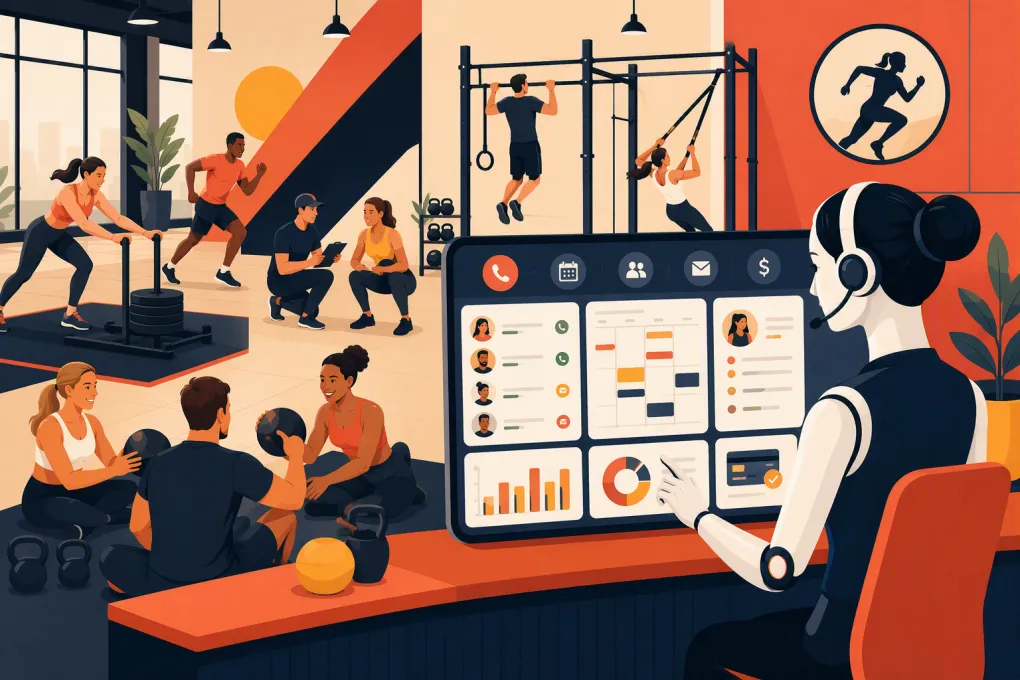 Watch · 20s
A bootcamp gym can deliver an excellent workout and still lose a prospective member before the first burpee. The leak usually happens between inquiry and response: a lead calls during class, sends a message after hours, asks about tomorrow’s session, or wants to know whether beginners are welcome. Nobody answers quickly, so the lead moves on.
An AI receptionist closes that operational gap. It can respond when coaches are occupied, answer routine questions, book the right intro session, follow up with undecided prospects, and help resolve overdue dues. The value is not simply answering more messages. It is moving each conversation toward a clear next action without putting another administrative task on the coaching team.
Why bootcamp gyms are especially vulnerable to missed leads
Bootcamp operations create a difficult front-desk environment. Coaches are often the owners, salespeople, programmers, and customer service team. During a class, they cannot stop a timer to answer every call or message.
At the same time, prospects commonly need answers before they will book:
- Is this suitable for a beginner?
- What should I bring to the first class?
- Is there a trial or introductory offer?
- Which location is closest?
- Are there showers, parking, or childcare?
- Can I attend with an injury or medical condition?
- What happens if a class is full?
- How do memberships, class packs, and cancellations work?
A contact form that promises a later response does not solve this problem. Neither does a generic chatbot that sends every visitor to the same pricing page. A useful AI receptionist needs access to current business rules and a defined process for booking, escalation, and follow-up.
See how Fitty handles bootcamp leads while your coaches run class →
What an AI receptionist for bootcamp gyms should do
The right system should own specific workflows rather than merely generate polite answers.
Respond immediately and qualify the lead
The initial conversation should collect only the information needed to recommend the next step. For most bootcamp gyms, that includes:
- Name and contact details
- Preferred location
- Training experience
- General goal, such as strength, conditioning, or accountability
- Preferred class times
- Whether the person is looking for a trial, drop-in, or membership
Keep qualification short. A prospect who asks for tomorrow’s schedule should not have to complete a long interview before seeing availability.
The AI should also distinguish between a normal sales question and an issue requiring a person. Medical advice, injury clearance, disputes, accessibility questions, and unusual account situations should be escalated rather than improvised.
Book the correct first experience
Bootcamp gyms often have several possible entry points: a free trial, paid intro, foundations session, consultation, drop-in, or standard class. Sending every lead to the entire schedule creates unnecessary decisions and can place a beginner in the wrong session.
Your receptionist should apply booking rules such as:
- New members start with a designated intro session.
- Experienced visitors may book an approved drop-in.
- Full classes trigger a waitlist or alternate recommendation.
- Prospects are sent only to sessions at their selected location.
- Age restrictions and prerequisites are checked before confirmation.
- Required waivers or intake forms are delivered before arrival.
The confirmation should include the location, arrival time, parking instructions, what to bring, and any preparation requirements.
Follow up without relying on staff memory
Most leads do not book during their first interaction. Good follow-up should react to the prospect’s actual status instead of sending the same sequence to everyone.
Useful paths include:
- Asked about pricing but did not book: answer the question, restate the most relevant starting option, and offer available times.
- Started booking but stopped: provide a direct path back to the unfinished booking.
- Booked an intro: send reminders and arrival instructions.
- Missed the intro: acknowledge the missed visit and offer specific alternatives.
- Attended but did not join: ask whether there are unresolved questions and direct the lead to the appropriate membership option or staff member.
Follow-up should stop when the person books, opts out, or asks for human help. Automation that ignores those signals creates more work and damages trust.
Handle routine member requests
An AI receptionist can also deflect repetitive questions from active members. It may provide schedule information, explain published policies, direct members to account actions, or route requests to the correct person.
Set boundaries carefully. The system should not invent exceptions to freeze, refund, cancellation, or late-arrival policies. It should explain the documented policy and escalate anything outside it.
Support overdue-dues recovery
Failed and overdue payments consume staff time because each account requires a reminder and a way to fix the issue. An AI agent can contact the member, explain that an account needs attention, and direct the member into an approved payment-resolution workflow.
The tone matters. Start with a service-oriented assumption that the payment method may need updating. Escalate disputes, hardship requests, cancellation claims, and repeated failures to a team member. Payment details should be handled through secure payment flows, not collected casually in a conversation.
See how Fitty follows up and helps resolve overdue gym dues →
Build the operating rules before turning on AI
An AI receptionist is only as reliable as the instructions and business data behind it. Before launch, create a source of truth for the following areas.
Offers and eligibility
Document every intro offer, its price structure, who can use it, whether it expires, and which classes it covers. Remove old promotions from websites and internal documents so the AI does not encounter conflicting information.
Schedule and capacity
Define which sessions are bookable, how close to class time someone may register, when waitlists apply, and whether drop-ins are allowed. Multi-location operators should identify which policies vary by site.
Membership policies
Provide approved language for cancellations, freezes, refunds, class credits, late arrivals, no-shows, and failed payments. The AI should explain policy, not negotiate it.
Escalation triggers
Create a named owner and response expectation for each escalation category. Common triggers include:
- Injury, pregnancy, or medical questions
- Complaints and refund demands
- Charge disputes
- Requests for policy exceptions
- Harassment or safety concerns
- Minor participation and guardian consent
- Accessibility accommodations
- Corporate or large-group inquiries
Do not use a generic instruction to contact the team. Specify who receives the issue and what context should be included in the handoff.
Brand voice
Give the AI examples of the tone you want, but prioritize clarity over personality. Responses should be direct, friendly, and short enough to scan. Avoid aggressive urgency, fake familiarity, and promises that staff have not authorized.
A practical lead workflow for a bootcamp gym
A simple, well-designed workflow often outperforms a complicated sequence. Start with this structure:
- Answer the question first. If the lead asks for price, schedule, or beginner suitability, provide a useful answer before requesting information.
- Identify the best entry point. Use location, experience, goals, and availability to select an intro session or consultation.
- Show concrete availability. Offer relevant times rather than telling the lead to browse a full calendar.
- Complete the booking. Capture required information and send forms, instructions, and confirmation.
- Remind the prospect. Include arrival time, address, parking, clothing, and what to expect.
- Recover missed appointments. Offer a small set of replacement times instead of a vague invitation to reschedule.
- Hand off high-intent conversations. If a prospect wants a custom plan, family arrangement, or corporate package, send the conversation history to a person.
Fitty is built into WTF Go to connect these conversations with the operational work behind them: answering leads, booking classes, following up, and collecting dues. That reduces the handoffs between a chatbot, booking calendar, CRM, and staff inbox.
Explore Fitty as the AI front desk for your bootcamp gym →
How to evaluate an AI receptionist
Ask vendors to demonstrate your actual workflow, not a generic restaurant or salon script. Give each vendor the same test scenarios:
- A beginner wants to attend a nearly full class tomorrow.
- A former member asks whether an old introductory offer still applies.
- A prospect asks for medical advice about an injury.
- A member disputes a cancellation charge.
- A lead starts booking but stops before confirming.
- A customer wants a class at a different location.
Evaluate whether the system gives an accurate answer, accesses live availability, completes the next action, records the interaction, and escalates correctly.
Also clarify:
- Which communication channels are supported
- How schedules, member records, and payments are connected
- How staff can take over a conversation
- What happens when the AI is uncertain
- How consent and opt-outs are managed for follow-up
- How conversation data is stored and accessed
- How pricing changes with locations, usage, or communication volume
- What implementation and migration support is included
Measure operational outcomes, not conversation volume
A busy AI inbox does not prove business value. Establish a baseline before launch and review outcomes by location and lead source.
Track practical measures such as:
- Inquiries that receive a useful response
- Leads that book an intro or trial
- Time from inquiry to booking
- Booked prospects who attend
- Missed appointments that reschedule
- Conversations escalated to staff
- Overdue accounts that return to good standing
- Incorrect answers and failed workflow steps
Review real conversations during the first few weeks. Update unclear policies, add missing questions, and tighten escalation rules. AI reception should be managed like a front-desk process: trained, audited, and improved.
The goal is a dependable front desk, not an AI novelty
Bootcamp gyms do not need another disconnected messaging tool. They need a receptionist that understands the offer, knows which sessions can be booked, follows up consistently, and recognizes when a human must step in.
Start with one high-value workflow, such as after-hours trial booking. Make the business rules explicit, test difficult scenarios, and measure whether more qualified leads reach the gym. Once that process is reliable, expand into member support and dues recovery.
Frequently asked questions
Can an AI receptionist book bootcamp classes directly?
Yes, if it is connected to the gym's live schedule and booking workflow. It should follow capacity, location, eligibility, waitlist, and intro-offer rules rather than simply sharing a calendar link.
Will an AI receptionist replace gym staff?
It is better used to handle repetitive inquiries, bookings, reminders, and follow-up. Staff should still own sensitive issues, exceptions, disputes, medical questions, and high-value sales conversations.
Can an AI receptionist follow up with missed trial members?
Yes. It can recognize a missed booking, offer appropriate replacement times, and stop follow-up when the prospect rebooks, opts out, or requests human help.
What information does an AI receptionist need from a bootcamp gym?
It needs current schedules, offers, prices, eligibility rules, membership policies, location details, FAQs, booking requirements, and clear escalation instructions.
How should a gym test an AI receptionist before launch?
Test real scenarios involving beginners, full classes, multiple locations, expired offers, injuries, payment disputes, and policy exceptions. Confirm that the AI answers accurately, completes valid bookings, and escalates sensitive requests.
Keep reading

Run your gym on autopilot with WTF Go
Fitty — your AI receptionist — answers calls and DMs, fills classes, follows up with every lead, and collects dues while you coach.