AI & Automation
AI Receptionist for Ballet Schools: The Practical Guide
Learn how an AI receptionist for ballet schools handles inquiries, trial bookings, reminders, payments, and parent follow-up without adding desk staff.
 Watch · 20s
A parent finds your ballet school after dinner, opens the website, and asks whether there is a beginner class for a seven-year-old. If the answer waits until tomorrow, that parent may contact three other schools before your office opens.
That is the practical case for an AI receptionist for ballet schools. It is not about replacing instructors or turning enrollment into an impersonal transaction. It is about giving families a fast, accurate first response while keeping routine administrative work from consuming the school day.
Ballet schools have a more complicated front desk than many service businesses. Families need help matching age, experience, schedule, dress code, trial policies, recital commitments, and placement requirements. A useful AI receptionist must understand those details—not just collect a name and phone number.
See how Fitty handles ballet school inquiries and trial bookings after hours →
What an AI receptionist should handle for a ballet school
The best starting point is not “automate everything.” It is identifying repetitive conversations with clear, approved answers.
New-family questions
An AI receptionist can respond to common questions such as:
- Which classes accept beginners
- Class days, times, and locations
- Age ranges and enrollment cutoffs
- Whether a trial or observation is available
- Required attire and where to buy it
- Tuition structure and payment timing
- Registration steps
- Parking, arrival, and pickup procedures
- Whether a class has space or a waitlist
These answers should come from information maintained by the school. The system should not improvise policies or promise exceptions.
Trial and introductory class booking
Interest falls off when a family has to leave a voicemail, wait for a callback, and exchange several messages to find an opening. An AI receptionist can move the conversation from “Do you have classes?” to a specific next step.
A well-designed trial workflow should:
- Ask the student’s age and relevant experience.
- Confirm the parent or guardian’s contact information.
- show only eligible introductory options.
- Explain what to wear and when to arrive.
- Book the visit or collect details for staff review.
- Send a confirmation and reminder.
- Follow up after the trial if the family has not enrolled.
Not every ballet class should be directly bookable. Advanced levels, pointe work, competition groups, and performance programs may require evaluation. In those cases, the AI should gather the right information and route the request to the artistic or enrollment team.
Current-family administration
Existing families also generate a steady stream of predictable questions. An AI receptionist can help with published information about:
- Holiday closures
- Makeup-class policies
- Attendance reporting
- Recital dates and rehearsal schedules
- Costume or uniform requirements
- Account balances and payment steps
- Studio contact details
- Links to forms, portals, and school policies
The important distinction is between sharing approved information and making judgment calls. A system can explain the published makeup policy. It should not independently authorize an exception.
Why generic chatbots fall short
A generic website chatbot may answer basic questions, but ballet enrollment involves context. “What class is right for my child?” cannot be answered responsibly from age alone in every case.
A ballet-school receptionist needs structured rules covering:
- Minimum and maximum ages
- Experience or prerequisite requirements
- Classes open to mid-session enrollment
- Trial eligibility
- Capacity and waitlist status
- Location-specific schedules
- Placement decisions that require an instructor
It also needs to recognize the difference between a lead and a current family. A prospective parent asking about tuition should enter an enrollment workflow. A current parent asking about a recital fee may need account assistance instead.
This is where an operational AI agent is more useful than a standalone chat widget. WTF Go’s Fitty is built to answer leads, book classes, follow up, and collect dues within the same operating environment. That reduces the number of disconnected handoffs the staff has to monitor.
See how Fitty turns parent questions into scheduled trials and follow-up →
Build the conversation around how parents actually choose
Schools often organize information around internal programs: Pre-Ballet I, Foundations A, Level 2B, or Conservatory Track. New parents may not understand those labels.
The AI conversation should start with what the parent knows:
- Student age
- Prior dance experience
- Preferred days
- Preferred location
- Goal, such as recreation, foundational training, or performance
- Whether the family wants a trial, observation, or enrollment consultation
The system can then present suitable options using plain language while preserving the school’s official class names.
For example, instead of immediately asking a parent to choose between several program labels, the receptionist can say that the school has two beginner options for the student’s age and explain their schedules. If placement must be evaluated, it can offer the next approved step rather than guessing.
Set clear boundaries and human handoffs
An AI receptionist should know when to stop automating. Create explicit escalation rules for:
Placement and technical questions
Questions about pointe readiness, level advancement, injury accommodations, or returning after a long break should go to a qualified instructor or director.
Complaints and sensitive family matters
Billing disputes, student conflicts, withdrawal disagreements, safeguarding concerns, and requests involving custody or authorized pickup require human review.
Schedule exceptions
The AI should not invent makeup availability, override capacity, waive fees, or enroll a student outside the approved age range unless your configured rules expressly allow it.
Emergencies
Your automated response should clearly direct urgent safety or medical situations to the appropriate emergency channel. An AI receptionist is not an emergency response service.
Every handoff should include the conversation context. Parents should not have to repeat the student’s age, class, and issue after the system transfers the request.
Protect student, parent, and payment information
Most ballet-school inquiries involve minors, so collect only what is necessary for the immediate workflow. Early-stage lead capture usually does not require detailed medical information, school records, or other sensitive data.
Use a few operating rules:
- Treat the parent or guardian as the primary contact.
- Avoid requesting sensitive student information in open-ended chat.
- Send payment activity through an appropriate payment workflow rather than asking families to type card details into a conversation.
- Define who can access conversation and account records.
- Set retention and deletion practices based on your legal and operational requirements.
- Confirm how any vendor handles data, permissions, security, and account access.
If your school operates in multiple states or serves families internationally, have qualified counsel review the privacy and consent requirements that apply to your business. Software should support your policies, not substitute for them.
How to prepare your school before launch
An AI receptionist performs well only when the underlying information is clean. Before turning it on, build a controlled source of truth.
1. Audit your recurring inquiries
Review recent calls, emails, contact forms, and front-desk notes. Group them into categories such as new enrollment, trials, dress code, tuition, calendar, recital, makeup classes, and placement.
2. Fix conflicting policies
If the website, registration agreement, and staff scripts describe different trial or makeup rules, resolve those differences first. Automation exposes operational inconsistency quickly.
3. Define booking eligibility
Document which classes can be booked immediately, which allow trials, which use waitlists, and which require staff approval. Include age cutoffs and prerequisites.
4. Write escalation rules
Name the person or team responsible for placement, billing disputes, accessibility questions, complaints, and urgent operational issues. Define expected follow-up internally without promising a response time you cannot maintain.
5. Test realistic conversations
Do not test only simple questions. Try scenarios such as:
- A beginner whose birthday is close to an age cutoff
- Siblings needing different classes on the same day
- A student with previous training but no recent assessment
- A parent requesting a class that is full
- A family asking for a policy exception
- An existing customer with an overdue balance
Review whether the system answers accurately, asks useful questions, and hands off appropriately.
Measure outcomes that matter
Do not judge the project by how many messages the AI sends. Track whether it improves the enrollment and service workflow.
Useful measures include:
- Inquiries that receive an immediate first response
- Qualified trial or consultation bookings
- Trial attendance
- Enrollment after a trial
- Leads still waiting for staff action
- Unanswered or escalated question categories
- Follow-up completion
- Payment issues resolved or routed
- Staff time spent on repetitive inquiries
Review conversation logs for patterns. If parents repeatedly ask a question the AI cannot answer, that may signal missing information, a confusing policy, or a website problem.
Choosing the right AI receptionist
Ask vendors to demonstrate your actual workflows rather than a generic sales script. Give them a sample schedule and test age eligibility, waitlists, placement escalation, trial reminders, follow-up, and account questions.
Look for a system that can connect conversations to booking, lead management, and payments. Otherwise, the AI may create more administrative work by leaving staff to copy information between tools.
Also evaluate how easily your team can update schedules, policies, and answers. Ballet schools change programs by session, intensives, camps, recital cycles, and performance seasons. A receptionist working from last term’s information is worse than no automation at all.
WTF Go combines the core operating workflows with Fitty, its AI receptionist and agent. Fitty can respond to prospects, help book eligible classes, continue follow-up, and assist with dues collection without forcing the front desk to manage each step manually.
Explore an AI receptionist workflow built around enrollment, booking, and dues →
The goal is a better front desk, not a missing one
Ballet families still need knowledgeable people. They need instructors to evaluate placement, leaders to handle sensitive concerns, and staff who understand the culture of the school.
The AI receptionist should protect that human attention. Let it cover repetitive questions, after-hours inquiries, reminders, follow-up, and routine payment workflows. Keep artistic, safety, and relationship decisions with your team.
When those boundaries are clear, an AI receptionist becomes more than a chatbot. It becomes a dependable first layer of enrollment and customer service—one that is available when parents are ready to act.
Frequently asked questions
Can an AI receptionist recommend the right ballet class?
It can narrow options using age, experience, schedule, and documented prerequisites. Placement decisions involving skill assessment, pointe readiness, or advanced levels should be escalated to an instructor.
Can an AI receptionist book ballet trial classes?
Yes, when the school has defined eligible classes, age rules, capacity, and trial policies. Classes requiring an evaluation should use a staff-review workflow instead of instant booking.
Will an AI receptionist replace ballet school staff?
It should replace repetitive administrative tasks, not teaching expertise or sensitive customer service. Staff should remain responsible for placement, exceptions, complaints, safety issues, and complex billing matters.
What information should we prepare before launching?
Prepare current schedules, age ranges, prerequisites, trial rules, tuition and payment policies, dress codes, closure dates, waitlist procedures, and clear escalation contacts.
Can Fitty follow up with families who do not enroll?
Yes. Fitty is designed to follow up with leads after an inquiry or booking while keeping the enrollment workflow connected to WTF Go.
Keep reading
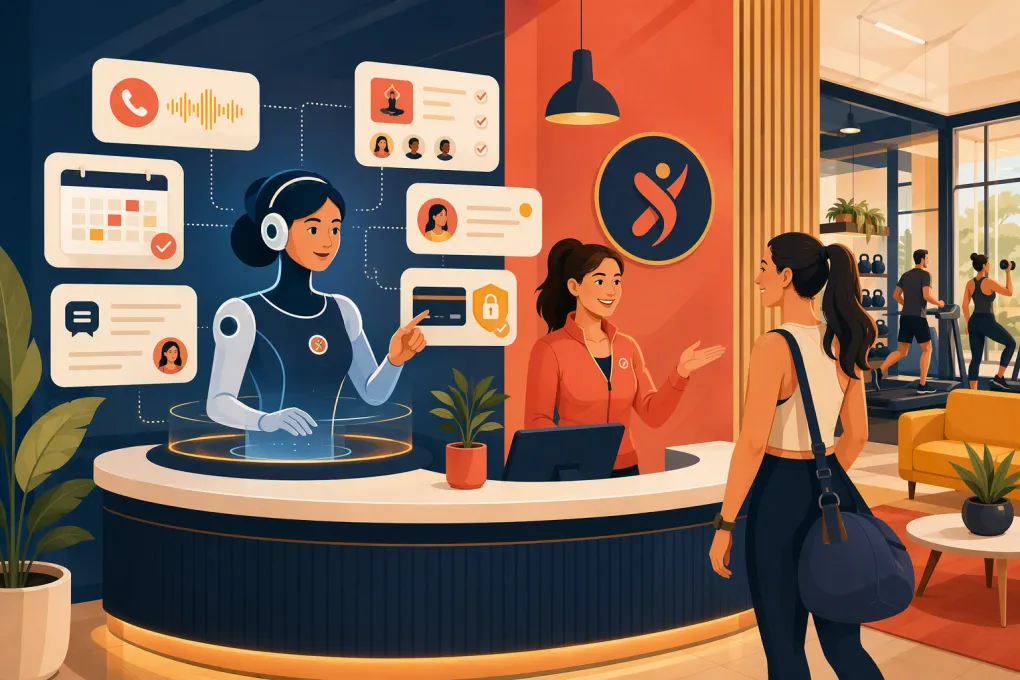


Run your gym on autopilot with WTF Go
Fitty — your AI receptionist — answers calls and DMs, fills classes, follows up with every lead, and collects dues while you coach.