AI & Automation
AI Receptionist for Aquatic Therapy Clinics: Operator Guide
See how an AI receptionist for aquatic therapy clinics can answer inquiries, qualify patients, book visits, follow up, and protect staff time, day and night.
 Watch · 20s
Aquatic therapy clinics have a difficult front-desk workload. A caller may be a prospective patient, a caregiver, a referral coordinator, or someone asking whether a specific condition can be treated in the pool. Each inquiry can lead to several follow-ups involving schedules, referrals, insurance questions, accessibility needs, and intake paperwork.
Meanwhile, the receptionist may also be helping a patient enter the facility, speaking with a therapist, or handling a schedule change. Calls arriving during treatment sessions, lunch, or after closing often go to voicemail. By the time staff respond, the prospective patient may have contacted another provider.
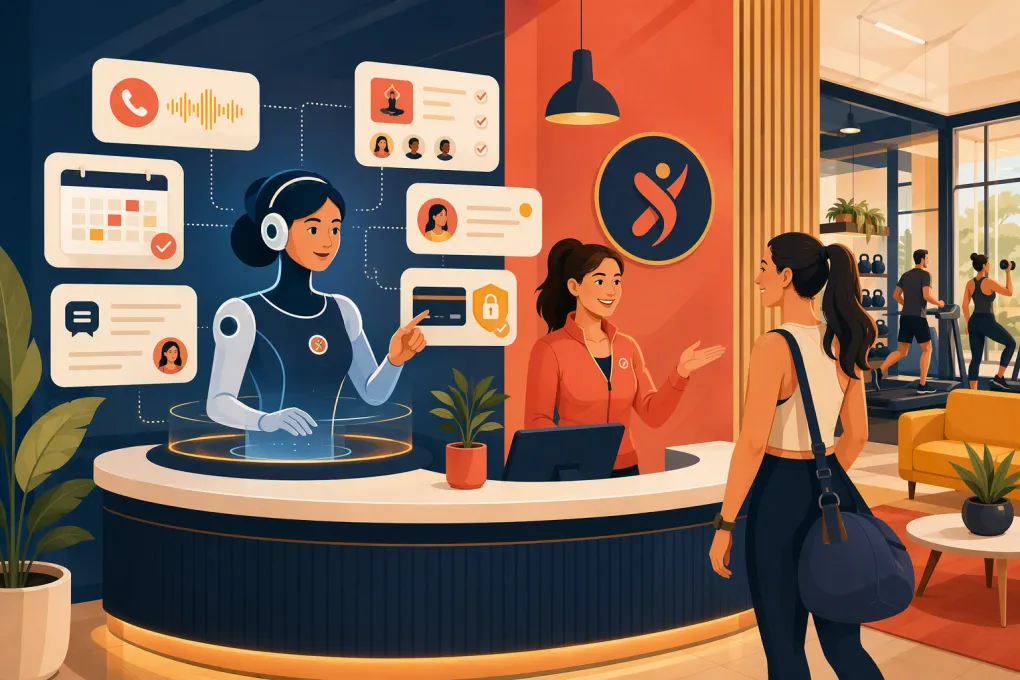
An AI receptionist for aquatic therapy clinics can cover the repetitive parts of this process without pretending to be a clinician. It can respond immediately, collect structured information, book approved appointment types, send reminders, and hand sensitive questions to the right person.
The value is not simply answering more calls. It is creating a reliable path from first inquiry to completed visit.
See how Fitty can handle aquatic therapy inquiries and booking around the clock →
What an AI receptionist should handle
A useful AI receptionist must do more than transcribe voicemail. It should complete clearly defined administrative workflows while knowing when to stop and involve a human.
New-patient inquiries
The receptionist can gather details such as:
- Patient name and preferred contact method
- Whether the caller is the patient, caregiver, or referral source
- General reason for seeking aquatic therapy
- Referral status
- Preferred location, therapist, and appointment window
- Accessibility or mobility accommodations
- Whether the patient has required intake documents
- How the person heard about the clinic
This creates a consistent record for staff. It also prevents the familiar cycle of leaving a voicemail, waiting for a return call, and discovering that important information is still missing.
The AI should not determine whether aquatic therapy is clinically appropriate. It can collect the patient’s stated reason for calling, explain the clinic’s intake process, and route clinical questions to a licensed professional.
Scheduling and rescheduling
Aquatic therapy scheduling is constrained by more than therapist availability. A clinic may need to account for:
- Pool capacity
- Private versus shared treatment sessions
- Initial evaluations versus follow-up visits
- Therapist credentials or specialties
- Accessible changing facilities
- Equipment availability
- Maintenance closures
- Location-specific hours
The AI receptionist should only offer slots that satisfy the clinic’s actual scheduling rules. It should also recognize when a request needs manual review rather than forcing the patient into an unsuitable appointment.
Rescheduling deserves equal attention. If a patient cancels, the system should apply the clinic’s cancellation policy, suggest appropriate alternatives, and notify staff when a waitlist opening may be available.
Routine questions
Many calls concern information that already exists in the clinic’s policies or website:
- What should I wear?
- Are changing rooms available?
- Can a caregiver attend?
- Is the pool wheelchair accessible?
- How warm is the water?
- What forms should I complete?
- Where should I park?
- How early should I arrive?
An AI receptionist can answer these questions using clinic-approved content. The clinic, not the AI vendor, should control the source material and review it whenever policies change.
Follow-up and reminders
Initial contact rarely completes the intake process. Patients may still need to obtain a referral, finish forms, confirm an evaluation, or provide administrative information.
A practical follow-up sequence might include:
- An immediate confirmation of the inquiry or appointment.
- A link to required intake forms.
- A reminder if forms remain incomplete.
- An appointment reminder with arrival and accessibility instructions.
- A post-visit message directing administrative questions to the appropriate team.
Messages should stop when the patient completes the requested action. Repeated reminders after completion make the clinic look disorganized and can create unnecessary concern.
Where the AI must hand off to a person
A clinic should define escalation rules before activating automation. The safest model is administrative automation with explicit clinical boundaries.
Immediate human review may be appropriate when someone:
- Describes urgent or worsening symptoms
- Asks whether treatment is safe for a medical condition
- Reports a fall, injury, infection, or adverse event
- Requests interpretation of a diagnosis or referral
- Disputes a charge or insurance decision
- Needs an accommodation outside the documented process
- Expresses distress, confusion, or dissatisfaction
- Requests information the system cannot verify
Emergency language should trigger the clinic’s approved emergency instruction rather than an improvised AI response. The receptionist should never diagnose, promise an outcome, or represent insurance coverage as guaranteed.
Staff also need an obvious way to take over a conversation. A handoff should include the transcript, contact details, requested action, and why the conversation was escalated. Making the patient repeat everything defeats much of the benefit.
Privacy and healthcare compliance require due diligence
Aquatic therapy can be delivered in different settings, including healthcare practices, rehabilitation facilities, wellness centers, and fitness businesses. The clinic’s legal and privacy obligations depend on its services, relationships, and jurisdiction.
If conversations may include protected health information, evaluate the vendor and configuration accordingly. Ask:
- What information does the system collect and store?
- Where is conversation data retained?
- Who can access transcripts and recordings?
- Can access be restricted by staff role?
- Are retention periods configurable?
- Does the vendor provide the agreements required for your use case?
- How is information transferred to scheduling, CRM, or clinical systems?
- Can patients opt for a human or another communication channel?
- How are consent and call-recording requirements addressed?
Do not assume that a product is appropriate for clinical communication because it uses healthcare terminology. Have qualified privacy or legal professionals review the workflow when necessary.
Fitty can automate lead response, scheduling, follow-up, and payment-related workflows, but every clinic should confirm that its intended configuration matches its own compliance requirements before launch.
Build the workflow before choosing the technology
The best implementation starts with the clinic’s operating rules. Map the current process from first contact through arrival.
Step 1: Audit incoming inquiries
Review the questions staff receive by phone, text, web form, and email. Group them into:
- Safe to answer automatically
- Safe to answer from approved clinic content
- Requires administrative review
- Requires clinical review
- Requires urgent escalation
This becomes the foundation for the AI’s knowledge base and routing rules.
Step 2: Define bookable appointment types
For each appointment type, document:
- Duration
- Eligible locations
- Required provider or resource
- Whether a referral is needed before booking
- Whether forms must be completed first
- Buffer time or pool-capacity constraints
- Cancellation and rescheduling rules
Start with the simplest appointment types. Add complex scheduling only after the basic workflow is reliable.
Step 3: Write approved responses
Create concise answers for common questions. Include links to the authoritative page or form when possible. Avoid broad language such as accepting all major insurance when the actual answer depends on plan details.
A better response explains the verification process: the clinic can collect plan information, but benefits and patient responsibility must be confirmed through the appropriate workflow.
Step 4: Configure escalation ownership
Every escalation needs an owner and response target. For example:
- Scheduling exceptions → front desk
- Referral questions → intake coordinator
- Clinical suitability questions → licensed clinician
- Billing disputes → billing team
- Facility accessibility concerns → site manager
Without ownership, the AI merely creates a better-organized backlog.
Step 5: Test realistic conversations
Test with more than ideal booking requests. Include callers who:
- Change topics mid-conversation
- Speak on behalf of a family member
- Are unsure whether they have a referral
- Need a specific accessibility accommodation
- Ask several insurance questions
- Request a same-day appointment
- Use vague or urgent clinical language
- Want to cancel outside the stated policy
Review both the answer and the action taken in the underlying system.
Explore how Fitty can automate inquiry-to-appointment follow-up for your clinic →
Measure operational results, not conversation volume
A high number of AI conversations does not prove the workflow is helping. Track outcomes connected to front-desk performance:
- Inquiries receiving an immediate response
- Qualified inquiries that book
- Appointments booked outside staffed hours
- Incomplete intake tasks
- Cancellations successfully rescheduled
- Conversations requiring staff intervention
- Incorrect answers or routing failures
- No-shows by appointment type
- Time from first inquiry to booked evaluation
Review failed and escalated conversations regularly. They often reveal missing policies, scheduling problems, confusing website content, or questions the clinic did not anticipate.
A simple financial review can compare the operating cost of the system with the value of completed appointments, reduced administrative work, and recovered balances. Use the clinic’s own numbers rather than generic vendor projections.
Payments need careful boundaries
An AI receptionist may help send secure payment links, explain published payment policies, remind patients about outstanding administrative tasks, or collect dues through an approved workflow. It should not ask patients to send sensitive payment information in an unsecured message.
The clinic should define:
- Which balances can trigger automated reminders
- When a billing question requires human review
- Whether payment status affects future booking
- How disputed charges are handled
- What wording is appropriate for patients and caregivers
Fitty is built to follow up and collect dues continuously, giving operators a way to automate routine payment outreach without relying on staff to remember every contact. The underlying policy and escalation path still belong to the clinic.
See how Fitty combines booking, follow-up, and dues collection in one workflow →
What to look for in an AI receptionist
Before committing to a platform, evaluate it against the clinic’s real workflow rather than a polished demonstration.
Look for:
- Support for phone, text, and web inquiries where needed
- Configurable appointment and resource rules
- Human handoff with full conversation context
- Clinic-controlled answers and policies
- Follow-up that stops when an action is completed
- Permissions, auditability, and appropriate data controls
- Integration with the systems staff actually use
- Multi-location routing if locations differ by pool or service
- Reporting tied to bookings and completed actions
- Clear implementation and migration responsibilities
An AI receptionist should reduce administrative friction without creating clinical risk or another disconnected inbox. For aquatic therapy clinics, the strongest setup is narrow, specific, and operationally grounded: answer known questions, collect the right information, book valid appointments, follow up consistently, and escalate everything else.
Frequently asked questions
Can an AI receptionist answer clinical questions about aquatic therapy?
It should only provide clinic-approved general information. Questions about diagnosis, treatment safety, contraindications, or clinical suitability should be escalated to a licensed professional.
Can an AI receptionist schedule aquatic therapy evaluations?
Yes, if the system is configured with the clinic’s appointment types, provider availability, pool capacity, referral rules, and accessibility constraints. Scheduling exceptions should be routed to staff.
Is an AI receptionist appropriate for healthcare privacy requirements?
That depends on the vendor, configuration, information collected, and the clinic’s legal obligations. Clinics should review data handling, access, retention, agreements, integrations, and consent requirements before implementation.
Will an AI receptionist replace the clinic’s front desk?
It is better used to cover repetitive inquiries, booking, reminders, and after-hours follow-up. Staff remain essential for clinical questions, exceptions, sensitive conversations, and patient support.
How should an aquatic therapy clinic start using AI reception?
Begin with common questions and straightforward appointment types. Define escalation rules, test realistic scenarios, monitor errors and handoffs, and expand automation only after the initial workflow is dependable.
Keep reading


Run your gym on autopilot with WTF Go
Fitty — your AI receptionist — answers calls and DMs, fills classes, follows up with every lead, and collects dues while you coach.