AI & Automation
AI Phone Answering Service for Pilates Studios: A Guide
Learn how an AI phone answering service for Pilates studios captures leads, books intro sessions, handles FAQs, and supports members after hours every day.
 Watch · 20s
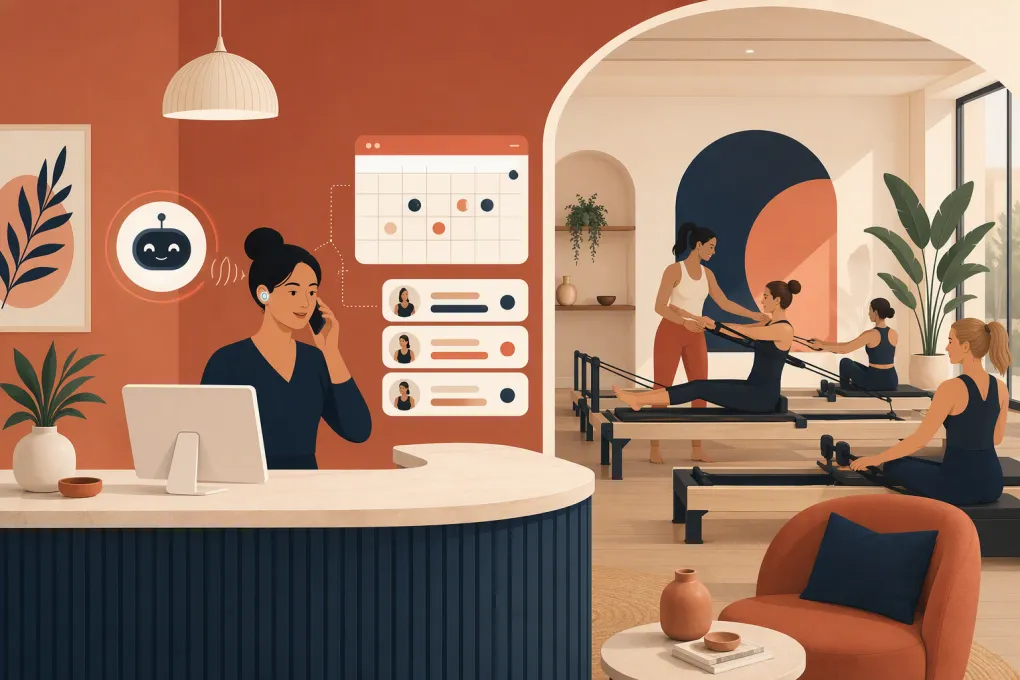
A prospective client calls your Pilates studio between evening classes. Your instructor is teaching, the front desk has gone home, and nobody answers. The caller may leave a voicemail, but they may also call the next studio in their search results.
That is the problem an AI phone answering service is supposed to solve. It answers immediately, handles routine questions, captures qualified lead information, and takes the next operational step without requiring someone to monitor the phone all day.
For a Pilates studio, however, generic call handling is not enough. The service needs to understand private sessions, group reformer classes, experience levels, intro offers, waitlists, studio policies, and the difference between answering a question and giving advice it should not give.
See how Fitty can answer Pilates leads and move them toward a booking →
What an AI phone answering service actually does
An AI phone answering service uses conversational software to respond to inbound calls. Unlike voicemail or a traditional phone tree, it can listen to a caller’s request, answer from studio-approved information, and complete connected tasks.
Depending on the system and its configuration, those tasks can include:
- Explaining class types and introductory options
- Finding available classes or appointments
- Booking or rescheduling a session
- Joining a client to a waitlist
- Capturing names, phone numbers, and email addresses
- Sending confirmations or follow-up messages
- Answering questions about parking, grip socks, arrival time, or policies
- Routing urgent or unusual calls to a person
- Following up with leads who did not book
- Collecting an overdue balance through an approved payment workflow
The important distinction is action. A basic answering service takes a message. A useful AI receptionist resolves the request or creates a clearly assigned next step.
Where it helps a Pilates studio most
Converting first-time callers
New prospects rarely use perfect Pilates terminology. A caller may ask for a beginner class, describe back discomfort, or say they want something less intense than a gym workout. Your phone agent has to clarify the request without diagnosing, prescribing, or promising outcomes.
A practical lead flow might be:
- Ask whether the caller is new to Pilates.
- Determine whether they want group classes or private instruction.
- Ask about prior reformer experience when relevant to studio policy.
- Explain the appropriate intro option using approved language.
- Offer specific available times.
- Book the session and send preparation instructions.
- Escalate questions involving injuries, pregnancy, accessibility, or suitability to qualified staff.
This is stronger than collecting a callback number because it moves an interested caller toward an actual visit while intent is high.
Covering calls during classes and after hours
Pilates operations create predictable coverage gaps. Instructors cannot stop a class to answer the phone, and smaller studios may not employ a full-time receptionist. Calls can also arrive before the first class, after the last class, or on weekends.
AI coverage lets the studio answer routine requests during those gaps. It should not eliminate human access; it should reduce the number of calls that require human interruption.
Set clear transfer rules for situations such as:
- A client is locked out before a scheduled session
- Someone reports a safety issue at the studio
- A caller disputes a charge
- A member requests an exception to policy
- The agent cannot confidently interpret the request
- A caller repeatedly asks to speak with a person
Managing schedule questions without front-desk ping-pong
“Do you have a beginner reformer class tomorrow?” sounds simple, but the correct answer depends on live availability, prerequisites, booking windows, and the client’s account status.
An AI service needs access to current scheduling information. Otherwise, it can only take a message or provide general hours. Before choosing a provider, confirm whether it can read availability and complete bookings in your actual operating system rather than merely sending a booking link.
Explore how WTF Go connects AI conversations with booking and follow-up workflows →
Handling routine member requests
Existing members call about cancellations, waitlists, packages, freezes, late arrivals, and account balances. The AI agent should answer only from the policies you approve and apply them consistently.
Not every request should be fully automated. Membership cancellation, medical circumstances, billing disputes, and policy exceptions often require review. In those cases, the agent can gather the relevant details, explain what happens next, and assign the request to the right employee.
Features Pilates operators should require
Live booking access
The service should recognize the difference between group classes, private sessions, duets, assessments, and intro appointments. Test whether it can apply prerequisites and avoid placing a first-time client into an inappropriate class.
Ask providers to demonstrate a real booking conversation, including what happens when a requested class is full.
Studio-specific knowledge
You should control the information the agent uses. Its knowledge base should include:
- Class descriptions and experience requirements
- Intro packages and current offers
- Location, parking, and entry instructions
- What clients should wear or bring
- Grip sock policy
- Cancellation and no-show rules
- Membership and package basics
- Holiday and weather closures
- Escalation contacts and hours
Assign one person to maintain this information. An AI receptionist working from an outdated policy can create more work than a missed call.
Human handoff with context
A transfer should include the caller’s name, reason for calling, and information already collected. If nobody is available, the system should create a follow-up task rather than leaving the conversation buried in a transcript.
Define who receives each type of issue. Leads might go to sales, account questions to a manager, and schedule exceptions to the front desk.
Follow-up across phone and text
A caller may be unable to finish booking while on the phone. The service should be able to send the agreed next step, such as a booking confirmation, studio directions, or a secure payment link.
Fitty, WTF Go’s AI receptionist, is designed to answer leads, book classes, follow up, and collect dues around the clock. That makes the phone conversation part of a complete workflow rather than an isolated interaction.
Transcripts, summaries, and reporting
Operators need visibility into what callers ask and how the agent responds. Look for searchable call records, useful summaries, outcomes, and a way to review failed or escalated conversations.
This is not only for supervision. Repeated questions can reveal unclear website copy, confusing policies, schedule gaps, or demand for a class format you do not currently offer.
How to build a safe, useful call script
Do not start by uploading every document you have. Build around actual call intents and define the permitted action for each one.
| Caller intent | AI action | Escalation point |
|---|---|---|
| New client asking where to start | Explain approved intro paths and offer times | Suitability, injury, pregnancy, or clinical questions |
| Client wants to cancel a class | Apply published cancellation workflow | Exception request or disputed fee |
| Group class is full | Offer waitlist or nearby alternatives | Caller needs a special accommodation |
| Billing question | Explain visible account facts and approved options | Charge dispute, refund, or account mismatch |
| Private-session inquiry | Gather goals and offer eligible appointment types | Instructor matching requires staff judgment |
Write answers in the language your staff uses. Keep them direct and avoid medical claims. The agent can say which classes your studio designates for beginners; it should not determine whether Pilates is medically appropriate for a caller.
You should also decide whether the agent identifies itself as an AI assistant. Clear identification avoids confusion and sets honest expectations. If calls are recorded or transcribed, review applicable consent requirements with qualified counsel because rules vary by jurisdiction.
For payments, use secure payment workflows rather than having the agent repeat or store card details in a transcript. Clarify what the vendor processes, what your business stores, and how access is controlled.
A practical rollout plan
Start with a narrow deployment rather than automating every call on day one.
1. Review recent call reasons
Use existing voicemail, call logs, and front-desk notes to identify recurring requests. Do not guess from memory alone. Group calls into leads, booking changes, policy questions, billing, and exceptions.
2. Choose the first workflows
Good starting points are new-lead capture, intro booking, business information, and after-hours messages. These are bounded workflows with clear outcomes.
3. Define the source of truth
Document where schedules, pricing, policies, and client records live. Decide which system wins if information conflicts. Give named employees responsibility for updates.
4. Test realistic edge cases
Call as a complete beginner, an experienced visitor, a late client, a parent booking for someone else, and a member disputing a fee. Interrupt the agent, change your mind, and ask for a human. A polished demo using easy questions is not enough.
5. Review calls weekly
During rollout, inspect incorrect answers, abandoned conversations, transfers, and bookings. Update the knowledge base and routing rules. Keep reviewing after launch whenever schedules, offers, or policies change.
See how Fitty can handle calls, bookings, follow-up, and dues in one operating system →
What to measure
Measure outcomes, not just answered calls. Useful operational measures include:
- Qualified callers who book an intro session
- Calls resolved without staff follow-up
- Calls transferred or escalated appropriately
- Booking errors requiring correction
- Leads awaiting follow-up
- Common unanswered questions
- Time between an unresolved call and human response
- Cancellations or account actions completed correctly
Listen to a sample of both successful and failed calls. A high call count is meaningless if the agent gives vague answers, books the wrong service, or creates cleanup work.
The right role for AI in a Pilates studio
An AI phone answering service should protect instructor focus and make the studio easier to reach. It should not replace judgment where safety, medical questions, billing disputes, or policy exceptions are involved.
The best setup is operationally clear: AI handles repetitive, approved workflows; humans handle nuance and exceptions; every conversation is logged; and ownership of follow-up is visible. When the phone agent is connected to booking, lead management, and member accounts, it becomes more than call coverage. It becomes part of how the studio runs.
Frequently asked questions
Can an AI phone answering service book Pilates classes?
Yes, if it can access the studio's live schedule and booking rules. Confirm that it can distinguish class types, prerequisites, private sessions, waitlists, and intro appointments.
Will callers know they are speaking with AI?
The service can identify itself as an AI assistant at the start of the call. Clear disclosure helps set expectations and avoids presenting software as a human employee.
Can AI answer questions about injuries or pregnancy?
It can provide studio-approved general information, but it should not give medical advice or decide whether Pilates is appropriate for a caller. Those questions should be escalated to qualified staff.
Does an AI receptionist replace Pilates studio staff?
It is better used to cover repetitive calls, after-hours inquiries, booking, and follow-up. Staff should remain responsible for exceptions, sensitive situations, disputes, and judgment-based decisions.
How should a Pilates studio test an AI answering service?
Test real scenarios involving new clients, full classes, schedule changes, billing questions, injuries, policy exceptions, and requests for a person. Verify both the spoken answer and the action recorded in your system.
Keep reading

Run your gym on autopilot with WTF Go
Fitty — your AI receptionist — answers calls and DMs, fills classes, follows up with every lead, and collects dues while you coach.