AI & Automation
After-Hours AI Receptionist for Personal Training Studios
See how an after-hours AI receptionist for personal training studios captures leads, books consults, answers questions, and follows up automatically 24/7.
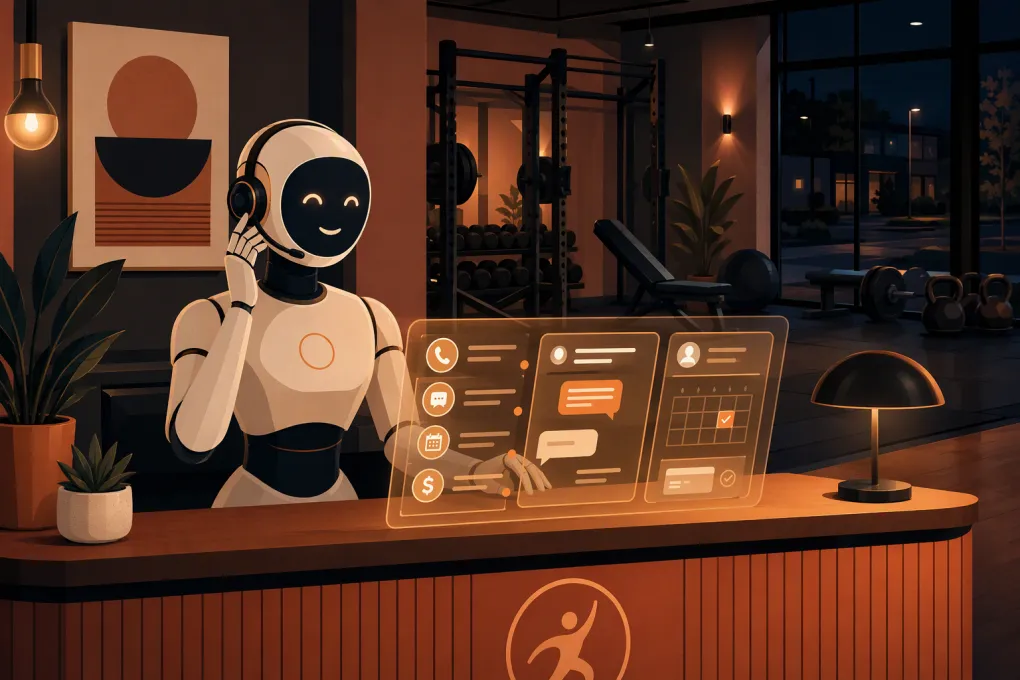 Watch · 20s
A prospect searches for a personal trainer at 9:30 p.m. They call two studios, message a third, and book with whichever business responds first. If your voicemail promises a callback tomorrow, your team may never get the chance to speak with them.
That is the real use case for an after-hours AI receptionist for personal training studios. It is not simply an answering service. Properly configured, it can respond to common questions, qualify leads, book consultations, follow up with prospects, and route urgent issues without requiring a coach to monitor the studio phone all night.
The value is not that AI can talk. The value is that your sales process keeps moving when the front desk is unavailable.
See how Fitty handles after-hours inquiries and books personal training consultations →
Why after-hours response matters for personal training studios
Personal training is usually a considered purchase. Prospects want to know whether you can help with their goal, what training looks like, when appointments are available, and what it may cost. They may also feel uncomfortable discussing injuries, fitness history, or body image.
Those conversations often start outside normal staffed hours because prospects research training after work, after dinner, or when frustration finally pushes them to act.
A missed inquiry creates several operational problems:
- The prospect continues contacting competitors.
- The coach receives a vague voicemail without enough context.
- Staff must remember to follow up the next morning.
- Calls, texts, website forms, and social messages end up in separate queues.
- Follow-up stops after one or two attempts.
- The owner becomes the default evening receptionist.
An AI receptionist can close these gaps, but only if it is connected to a clear workflow. A bot that merely says, “Someone will contact you soon,” is still a digital voicemail box.
What an after-hours AI receptionist should actually do
Respond on the channels prospects use
At minimum, the system should support the inquiry channels your studio actively publishes. These may include phone, SMS, web chat, and website lead forms.
The conversation should continue in the appropriate channel. A missed caller might receive a text if they consent to messaging, while a website visitor may complete qualification and booking inside chat. The interaction should also be logged so staff can see what happened before taking over.
Answer studio-specific questions
Generic fitness answers are not enough. The receptionist needs a controlled knowledge base covering details such as:
- Studio address, parking, and entry instructions
- Staffed and training hours
- One-on-one, semi-private, and small-group options
- Trainer specialties and service boundaries
- Consultation or assessment process
- Accepted payment methods
- Cancellation, rescheduling, and late-arrival policies
- Accessibility information
- What a new client should bring
Pricing requires careful handling. If your rates are fixed and public, the AI can share them. If pricing depends on frequency, package, location, or coach, it should explain the structure and move the prospect toward a consultation. It should never invent a price or promise a discount.
Qualify without interrogating
Qualification should help the trainer prepare, not create an exhausting intake form. A practical after-hours flow might ask:
- What would you like help achieving?
- Have you worked with a personal trainer before?
- Do you prefer one-on-one or semi-private training?
- What days or times generally work for you?
- When would you like to start?
- Is there anything a trainer should know before the consultation?
Avoid asking the AI to diagnose pain, interpret medical conditions, or provide treatment advice. Health concerns should be routed to a qualified professional, and emergencies should receive clear instructions to contact emergency services.
Book the next step
For most studios, the after-hours conversion goal is not an immediate long-term membership. It is a defined next step, such as a discovery call, studio tour, movement assessment, or introductory session.
The AI receptionist should be able to:
- Check real appointment availability
- Apply coach, service, or location rules
- Book the correct appointment type
- Collect required contact information
- Send confirmation and preparation instructions
- Handle basic rescheduling or cancellation requests
- Notify the assigned team member
Direct booking removes the delay created by “What time works for you?” messages. It also prevents staff from offering times that are no longer available.
Build the after-hours workflow before turning on AI
The software cannot fix an undefined sales process. Before launch, map what should happen from the first inquiry through the consultation.
Define the conversion event
Choose one primary action for new personal training leads. If one coach offers a free call while another requests a paid assessment and a third asks prospects to drop in, the AI will struggle to route people consistently.
Document:
- The appointment type to offer
- Duration and available hours
- Which staff members can receive bookings
- Required buffers between appointments
- Whether payment or a card is required
- What information must be collected
- When a human must approve the booking
Create escalation rules
AI should handle repeatable requests and hand off exceptions. Common escalation triggers include:
- Medical or injury-related questions
- Complaints and refund requests
- Threats, harassment, or safety concerns
- Requests for a specific coach with no visible availability
- Corporate wellness or partnership inquiries
- Questions the approved knowledge base does not answer
- A caller who explicitly requests a person
Decide whether each issue should create a task, send an alert, transfer to an on-call person, or wait for staffed hours. Not every message deserves to wake the owner.
Write policies in plain language
Your AI is only as reliable as the information it receives. Replace scattered notes and assumptions with one approved source of truth.
For each policy, include the rule, any exceptions, and the correct next action. For example, do not enter only “24-hour cancellation policy.” Clarify what happens inside the window, whether clients should contact the studio, and what the receptionist may or may not promise.
Use Fitty to turn your studio’s booking rules and FAQs into a working 24/7 lead-response flow →
Follow-up is where the workflow earns its keep
Some prospects will not book during the first conversation. They may stop replying, need to check a schedule, or feel uncertain about committing. Your system needs a follow-up sequence that remains useful without becoming intrusive.
A sensible sequence can include:
- An immediate response acknowledging the inquiry
- A direct booking link or suggested appointment options
- A reminder that addresses the prospect’s stated goal
- A final check-in that makes it easy to reply or opt out
- A task for staff when the prospect asks a complex question
Use the details already collected. “You mentioned wanting evening sessions” is more useful than “Are you still interested?” However, avoid pretending a human wrote the message when the conversation is automated. Clear identification builds better expectations.
Follow-up also matters after booking. Confirmation messages should state the time, location, coach, preparation requirements, and rescheduling process. Reminder timing should give prospects enough opportunity to change the appointment instead of simply failing to appear.
Protect the client experience
An AI receptionist represents your studio when nobody else is available. Treat its configuration like staff onboarding, not a plug-and-play widget.
Be transparent
The receptionist should identify itself as an automated or AI assistant. It can still sound natural and helpful without posing as a human employee.
Limit sensitive data collection
Collect only what is necessary for the next step. Detailed medical histories, diagnoses, and other sensitive records should stay within the appropriate intake and recordkeeping process—not an open-ended sales conversation.
Honor communication preferences
Your messaging process should support consent, opt-outs, and applicable telemarketing and privacy requirements. Do not treat a general inquiry as unlimited permission for ongoing promotional texts or calls.
Review conversations
During launch, review conversations frequently. Look for unanswered questions, incorrect routing, unnatural phrasing, duplicate messages, and booking failures. Continue periodic reviews after the workflow stabilizes, especially when prices, policies, coaches, or schedules change.
How to measure performance without chasing vanity metrics
The goal is not to maximize the number of messages sent. It is to create qualified appointments and reduce avoidable manual work.
Track operational measures such as:
- After-hours inquiries received
- Inquiries that received a successful response
- Qualified leads created
- Consultations booked
- Booking completion and abandonment
- Consultation show and cancellation status
- Human escalations and why they occurred
- Questions the AI could not answer
- Leads requiring manual follow-up
- Consultations that progressed to a paid service
Review results by channel, service, location, and lead source where possible. A high conversation count means little if prospects cannot find a suitable appointment or arrive expecting a service you do not provide.
Where Fitty fits into the studio operation
Fitty is WTF Go’s AI receptionist and agent for fitness and wellness businesses. It is designed to keep lead response, booking, follow-up, and dues-related outreach moving around the clock rather than leaving those tasks in disconnected inboxes.
For a personal training studio, that means Fitty can serve as the first responder after hours, guide a prospect toward the correct consultation, answer approved studio questions, and keep following up when the initial conversation does not produce a booking.
The broader advantage is operational continuity. WTF Go brings the customer journey into one operating system, so the receptionist workflow does not have to live separately from booking and ongoing client management.
See how WTF Go and Fitty can cover your personal training studio after hours →
A practical rollout checklist
Before sending all evening inquiries to an AI receptionist, complete these steps:
- Choose the exact consultation or assessment to promote.
- Confirm calendar availability, buffers, and assignment rules.
- Document services, policies, directions, and pricing language.
- List prohibited claims and topics requiring escalation.
- Create separate flows for prospects and existing clients.
- Test calls and messages using realistic questions.
- Test unavailable times, cancellations, and coach requests.
- Confirm staff notifications and ownership of follow-up tasks.
- Review consent, privacy, and opt-out procedures.
- Monitor conversations and update the knowledge base regularly.
Start with one high-value workflow, such as new-lead consultation booking. Once that flow works reliably, expand into rescheduling, reminders, dormant-lead follow-up, and payment outreach. A focused implementation is easier to audit and more useful than automating every conversation at once.
Frequently asked questions
Can an AI receptionist book personal training consultations directly?
Yes, if it is connected to current calendar availability and configured with the studio’s appointment, coach, buffer, and location rules.
Will an AI receptionist replace my front-desk staff?
It is better used to cover repeatable conversations and after-hours gaps. Staff should still handle sensitive issues, exceptions, complaints, and high-value sales conversations that require judgment.
Can the AI answer questions about injuries or medical conditions?
It can follow approved safety language and route the inquiry, but it should not diagnose conditions or give medical advice. Those questions need an appropriate qualified professional.
What information does an AI receptionist need before launch?
Provide accurate service descriptions, hours, pricing language, booking rules, staff availability, policies, directions, FAQs, escalation triggers, and communication requirements.
How should a studio evaluate an after-hours AI receptionist?
Track qualified leads, consultations booked, show status, successful handoffs, unanswered questions, and progression to paid services—not just call or message volume.
Keep reading
Run your gym on autopilot with WTF Go
Fitty — your AI receptionist — answers calls and DMs, fills classes, follows up with every lead, and collects dues while you coach.