AI & Automation
After-Hours AI Receptionist for Martial Arts Schools: Playbook
Learn how an after-hours AI receptionist for martial arts schools can answer leads, book intro classes, follow up, and protect staff time 24/7 every day.
 Watch · 20s
A parent searches for kids’ martial arts at 9:15 p.m. An adult prospect asks about beginner classes while your evening session is running. A former student wants to update a payment method after the front desk has gone home.
These are ordinary requests, but they arrive at inconvenient times. If the response waits until the next business day, the prospect may contact another school, forget the request, or lose the motivation that prompted the inquiry.
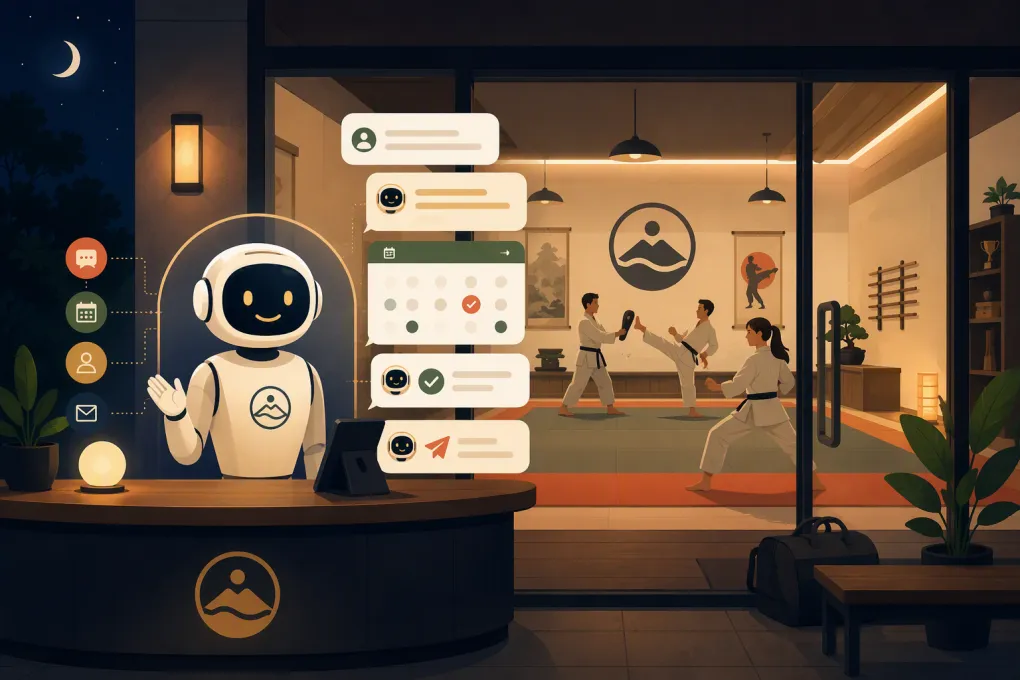
An after-hours AI receptionist for martial arts schools closes that operational gap. It can answer approved questions, qualify prospects, book intro classes, follow up with leads, route sensitive issues, and help with routine account requests without asking an instructor to monitor a phone all night.
The goal is not to replace the people who teach or sell memberships. It is to give every inquiry an immediate, useful next step.
See how Fitty can handle martial arts inquiries after your front desk closes →
Why after-hours response matters in martial arts
Martial arts schools have a difficult front-desk environment. The times when prospects are most likely to call or message often overlap with the times when staff are teaching, helping students, cleaning mats, or speaking with parents.
Even when someone can answer, switching between instruction and lead intake creates inconsistent conversations. One prospect gets a complete explanation and a booked visit. Another is told to call back tomorrow.
Common after-hours inquiries include:
- Whether beginners are welcome
- Which programs match a child’s age
- Class times and location details
- Pricing or introductory offer questions
- Uniform and equipment requirements
- Whether the school teaches competition, fitness, or self-defense
- How to book a trial, tour, or introductory lesson
- Membership, billing, freeze, and cancellation questions
Most of these requests do not require an owner’s judgment. They require accurate information, a clear booking path, and reliable follow-up.
What an AI receptionist should actually do
A useful AI receptionist is more than a website chatbot that repeats generic answers. It should move the conversation forward while respecting the school’s policies and escalation rules.
Answer program questions with school-specific information
The agent needs an approved knowledge base covering your actual programs. For each program, document:
- Eligible ages or age ranges
- Experience requirements
- Class schedule and capacity rules
- Trial or intro options
- What students should wear or bring
- Arrival instructions
- Parent or guardian requirements
- Pricing information the agent may disclose
- Claims or guarantees it must not make
This information should match what instructors and front-desk staff say. If your website lists an outdated timetable while the AI uses a current one, prospects will receive conflicting answers.
Qualify without creating an interrogation
Qualification should help the prospect choose the right next step. It should not feel like a long application.
For an adult prospect, the agent might ask:
- Which discipline or goal interests you?
- Are you a beginner or experienced student?
- Which days generally work for you?
- Would you like to book an intro lesson or speak with an instructor?
For a child, it may need the student’s age, the parent’s contact details, the preferred location, and a broad goal such as confidence, activity, focus, or competition.
Only collect information that affects routing, booking, safety, or follow-up. Long conversational forms create unnecessary friction.
Book the correct intro experience
The best next step differs by school. It could be a private orientation, a group trial class, a facility tour, or a phone consultation.
Your AI receptionist should follow the same booking rules as your staff:
- Offer only eligible programs and time slots
- Respect age and experience restrictions
- Avoid classes that are full or closed to trials
- Include arrival time and check-in instructions
- Explain what to wear and bring
- Collect guardian information when required
- Send confirmation and reminder messages
If the agent cannot determine eligibility, it should create a staff task instead of guessing.
Build an after-hours workflow that converts cleanly
A good workflow separates routine conversations from those that need human involvement.
| Inquiry | AI action | Human handoff |
|---|---|---|
| New beginner asking about classes | Answer, qualify, and offer an intro slot | If no suitable program is available |
| Parent asking about age eligibility | Use approved age rules and recommend a program | If the child needs an exception or accommodation |
| Experienced student asking about placement | Gather discipline, rank, and training history | Instructor confirms class placement |
| Prospect asking about pricing | Share approved pricing or explain the consultation process | Negotiation, discounts, or unusual household arrangements |
| Student reporting an injury | Avoid medical advice and capture the request | Route promptly to designated staff |
| Billing update | Send the approved secure payment path | Disputes, refunds, freezes, or policy exceptions |
| Complaint or safeguarding concern | Acknowledge and stop routine automation | Escalate immediately under school policy |
This structure matters because automation should reduce routine work without taking authority it should not have.
See how WTF Go and Fitty can connect after-hours answers, intro booking, and follow-up →
Follow-up is part of the job
Answering the first question is not enough. Prospects often intend to book but become distracted, need to check a family schedule, or stop responding after asking about price.
Create follow-up paths based on what happened.
If the prospect did not book
Send a short message that returns to the stated goal and provides one clear action. For example:
You mentioned finding a beginner class for your 10-year-old. I can help you choose an intro time. Would a weekday or Saturday work better?
Avoid repeatedly sending the same generic invitation. Follow-up should use the context already provided.
If the prospect booked
Confirm the appointment, then send practical preparation details. Include:
- Date, time, and address
- Recommended arrival time
- Clothing or equipment instructions
- Parking and entrance details
- Whether a parent must remain onsite
- A simple rescheduling path
These messages reduce uncertainty, which is one common reason a first-time visitor fails to arrive.
If the prospect attended
The AI can trigger the next approved step, such as asking whether the visitor has enrollment questions or offering a conversation with the program director. The actual membership recommendation may still belong with an instructor or salesperson.
Use AI carefully for dues and account requests
After-hours account questions can consume significant staff time the next morning. An AI receptionist can identify the member, classify the request, and provide approved self-service options.
For a failed payment or card update, it can send a secure payment link and follow up according to your policy. It should not ask a member to send full card details in a message.
Policy decisions require stricter guardrails. Freezes, cancellations, refunds, disputed charges, medical circumstances, and contract exceptions should be routed to an authorized employee. The agent can collect the relevant facts, but it should not invent an exception or promise an outcome.
Fitty is built to answer leads, book classes, follow up, and support dues collection around the clock inside WTF Go’s operating system. That keeps the conversation and the resulting task connected instead of leaving staff to reconstruct what happened from scattered messages.
Explore Fitty for after-hours lead response and dues follow-up →
What to configure before going live
Do not switch on an AI receptionist with a loose instruction to answer everything. Prepare the operating rules first.
Create a single source of truth
Review your schedules, programs, intro offers, policies, contact details, and location information. Assign an owner for keeping each area current.
For a multi-location martial arts business, define which information is global and which varies by location. Parking, instructors, class availability, phone numbers, pricing, and intro formats may differ.
Define escalation categories
At minimum, establish escalation rules for:
- Injuries and medical concerns
- Child safety or safeguarding reports
- Threats, harassment, or emergencies
- Complaints and negative experiences
- Billing disputes and refund requests
- Contract exceptions
- Accessibility or accommodation requests
- Questions the agent cannot answer confidently
Specify who receives each issue, through which channel, and how urgent it is.
Test realistic conversations
Do not test only easy questions. Use the messy language prospects actually use:
- My daughter is almost five. Can she join the six-year-old class?
- I trained years ago but do not know what level I am now.
- Can both siblings try the same night?
- I work rotating shifts. Which membership makes sense?
- I need to cancel because I am injured.
Check whether the agent answers accurately, asks only necessary questions, and hands off when appropriate.
Measure operational performance, not conversation volume
The number of automated conversations does not tell you whether the system is helping the school.
Track the full path from inquiry to enrollment:
- First-response time by channel and time of day
- Percentage of leads that receive a useful response
- Intro bookings from after-hours inquiries
- Booking-to-attendance rate
- Attendance-to-enrollment rate
- Reschedules and cancellations
- Human escalation volume and reasons
- Questions the AI could not answer
- Payment links completed after account follow-up
- Opt-outs and complaints
Review failed or escalated conversations regularly. They reveal outdated information, missing policies, unclear offers, and training opportunities for both the AI and your staff.
The standard to aim for
A strong after-hours AI receptionist does not try to sound clever. It gives prospects accurate answers, helps them take the next step, and knows when to involve a person.
For martial arts operators, that means fewer leads sitting unanswered while classes are running, more consistent intro booking, cleaner follow-up, and fewer routine requests waiting for the morning shift. The school remains human where judgment and trust matter; the repetitive front-desk work keeps moving when nobody is at the desk.
Frequently asked questions
Can an AI receptionist book martial arts trial classes automatically?
Yes, if it has access to the correct schedule and clear eligibility rules. It should offer only valid slots and escalate unusual placement, age, or accommodation questions.
Will an AI receptionist replace my martial arts front-desk staff?
It should handle repetitive inquiries and follow-up, not replace human judgment. Staff should remain responsible for sensitive complaints, safety concerns, policy exceptions, and complex enrollment decisions.
What information should a martial arts AI receptionist know?
It should know your programs, ages, schedules, trial options, locations, preparation instructions, approved pricing language, booking rules, and escalation policies.
Can an AI receptionist help collect overdue martial arts dues?
It can follow up and direct members to an approved secure payment method. Billing disputes, refunds, freezes, cancellations, and exceptions should be escalated to authorized staff.
How should a multi-location school set up after-hours automation?
Separate global policies from location-specific schedules, pricing, staff, parking, and availability. Every inquiry should be tagged and routed to the correct location before booking.
Keep reading

Run your gym on autopilot with WTF Go
Fitty — your AI receptionist — answers calls and DMs, fills classes, follows up with every lead, and collects dues while you coach.