AI & Automation
After-Hours AI Receptionist for Dance Studios That Books
See how an after-hours AI receptionist for dance studios answers questions, qualifies leads, books trials, follows up, and keeps enrollment moving 24/7.
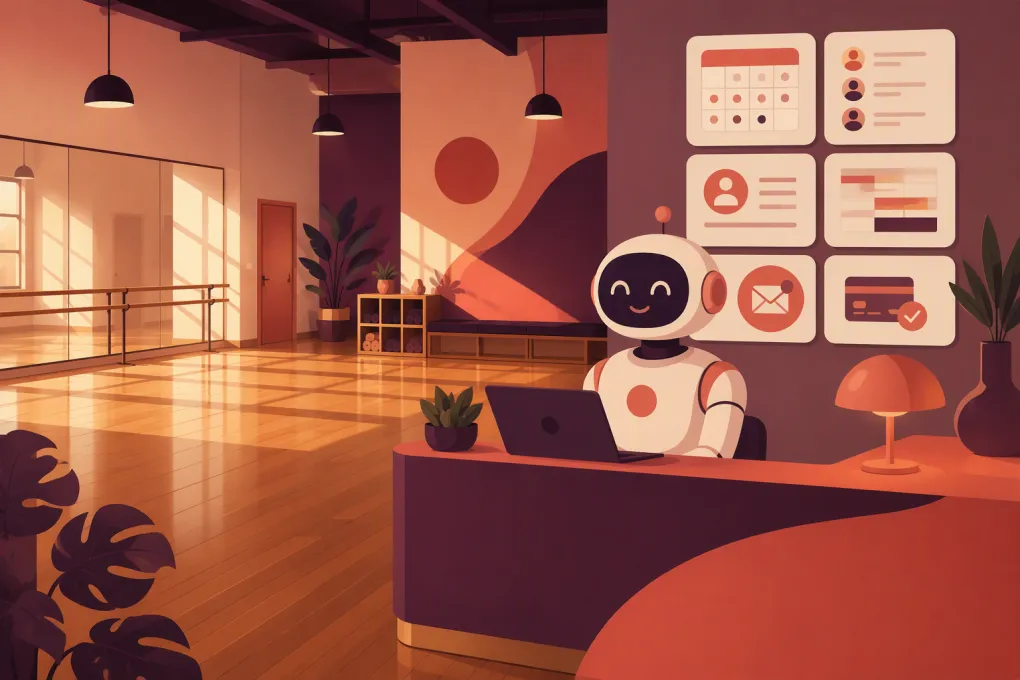 Watch · 20s
A parent finds your studio at 9:17 p.m. Their child wants to try ballet, but they need to know which class fits, whether beginners are welcome, what to wear, and how to book. They send an inquiry, then open two competing studio websites.
If your response waits until the front desk reopens, the lead may already have booked elsewhere. This is the specific problem an after-hours AI receptionist for dance studios should solve: not simply sending an instant reply, but moving a real prospect toward the right next step.
Dance studios have unusually detailed inquiries. Age, experience, schedule, location, class level, tuition, dress code, recital commitments, and trial policies can all affect the answer. A generic chatbot that says someone will respond tomorrow does not reduce the workload or protect the enrollment opportunity.
See how Fitty handles after-hours dance studio inquiries and bookings →
What an after-hours AI receptionist should actually do
A useful AI receptionist operates from approved studio information and follows defined booking rules. Its job is to resolve routine questions, collect the details your team needs, and complete permitted actions without pretending every situation is simple.
For a dance studio, that usually means five core workflows.
1. Respond immediately with relevant information
The receptionist should identify what the person is trying to do before dumping a list of links on them. Common intents include:
- Finding a class for a child, teen, or adult
- Comparing dance styles
- Booking a trial or introductory class
- Asking about tuition, registration fees, or payment timing
- Checking class times and availability
- Understanding dress code or first-class expectations
- Rescheduling a visit
- Asking about camps, intensives, or seasonal programs
Each response should use current information from a controlled source. If tuition, schedules, faculty assignments, or policies change, the AI needs an updated source of truth.
2. Qualify the lead without creating an interrogation
Your enrollment team needs enough information to recommend the right class. It does not need a 15-question intake form before the prospect receives any help.
A practical qualification flow asks only what affects the next step:
- Student age or age range
- Previous dance experience, if relevant
- Preferred style or goal
- Preferred days or general availability
- Studio location for multi-location operators
- Whether the person wants a trial, a call, or more information
The order matters. Ask one or two questions, provide something useful, then continue. A conversational exchange feels more helpful than a form disguised as chat.
3. Recommend the right class
Class matching is where basic automation often fails. A prospect should not be sent to a class merely because the class name contains “ballet.” The recommendation may need to account for age bands, prerequisites, level, capacity, location, and whether trials are allowed.
Build explicit rules such as:
- Do not recommend an intermediate class without the required experience.
- Do not place a student outside the published age range without staff review.
- Do not offer trials in classes where trials are unavailable.
- Do not promise a spot when the class is full or requires approval.
- Route uncertain placement questions to an instructor or enrollment manager.
The AI should explain why it is recommending a class and offer a human handoff when placement requires judgment.
4. Book the trial or next appointment
The strongest after-hours workflow ends with a confirmed action. Depending on your model, that could be a trial class, studio tour, introductory call, private lesson consultation, or enrollment appointment.
The booking process should:
- Use current class or appointment availability
- Collect the required contact and student details
- Apply the correct location and program rules
- Confirm the date, time, address, and arrival instructions
- Send the waiver or registration step when required
- Trigger reminders before the visit
- Give the prospect a clear way to reschedule or ask for help
See how WTF Go and Fitty turn after-hours questions into booked classes →
5. Follow up when the lead does not book
Many inquiries do not convert in one conversation. The parent may need to check a school schedule. An adult student may want to compare class times. Someone may reach the payment screen and stop.
A defined follow-up sequence keeps the inquiry from disappearing into an inbox. Useful follow-ups can:
- Restate the recommended class
- Offer another suitable time
- Answer common concerns about experience or what to wear
- Remind the lead to finish registration
- Ask whether they want staff assistance
- Stop when the person books, opts out, or says they are no longer interested
Follow-up should be helpful and finite. Repeating the same sales message every day is not intelligent automation.
What should stay with your staff
An AI receptionist is best used for repeatable, policy-based conversations. It should not improvise through sensitive or high-consequence situations.
Create immediate escalation paths for:
- Injuries, accidents, or safety concerns
- Child safeguarding issues
- Harassment or serious complaints
- Complex refund and charge disputes
- Audition, competition, or advanced placement decisions
- Accessibility needs requiring individual planning
- Exceptions to enrollment, recital, or cancellation policies
- Any question the approved studio information cannot answer confidently
The handoff should include the conversation history and collected details. Making the customer repeat everything defeats much of the value.
How to set up the workflow without creating a mess
The technology is only part of the implementation. Your operating rules determine whether the AI produces clean bookings or extra front-desk work.
Build one approved information source
Start with the information your team repeatedly types or says:
- Programs, levels, and age ranges
- Current schedules and locations
- Trial and registration policies
- Tuition structure and accepted payment methods
- Dress codes and arrival instructions
- Recital or performance commitments
- Cancellation, makeup, and withdrawal policies
- Parking, building access, and contact information
Assign an owner for each category. Schedules may belong to operations, while tuition and payment policies may require administrative approval. Do not let conflicting website pages, old PDFs, and staff notes compete as equally valid sources.
Define actions, not just answers
For each common inquiry, map the desired outcome.
| Inquiry | Information needed | Approved action | Escalate when |
|---|---|---|---|
| Beginner class search | Age, style, availability | Recommend and book a trial | No suitable class or unclear placement |
| Tuition question | Program and class | Explain approved pricing structure or send enrollment link | Discount or exception requested |
| Missed payment | Account identification | Provide a secure payment path or approved next step | Charge is disputed |
| Full class | Age, style, schedule | Offer a waitlist or alternative | Family requests an override |
| Trial reschedule | Existing booking and availability | Move to an eligible opening | Policy exception is required |
This exercise exposes gaps before prospects find them at night.
Protect consent and payment data
Work with your legal and compliance advisers to configure communications appropriately. Automated calls and texts can be subject to consent, identification, opt-out, timing, and recordkeeping requirements. Rules may vary by channel and jurisdiction.
For payments, avoid collecting card details in ordinary chat messages. Use a secure payment workflow and limit access to account information. Fitty is designed to help with dues collection, but the surrounding process still needs clear permissions, escalation rules, and accurate account data.
Explore how Fitty follows up and supports dues collection around the clock →
Test the receptionist like a difficult prospect
Do not test only the ideal journey. Before launch, have staff try realistic edge cases:
- A four-year-old interested in a class for ages six to eight
- A beginner asking for an advanced class
- A student who can attend only on a day with no suitable opening
- A parent asking for an unpublished discount
- An adult asking whether a youth class is appropriate
- A lead who changes locations halfway through the conversation
- A person asking to stop receiving messages
- A customer disputing a charge
- A question based on an outdated recital date
Check whether the AI gives an accurate answer, takes the correct action, or escalates cleanly. Review these conversations after schedule changes and at the start of each major enrollment season.
Measure whether it improves studio operations
An AI receptionist should be evaluated on completed work, not the volume of messages it sends. Track a small set of operational measures:
- Median response time for after-hours inquiries
- Percentage of inquiries that receive a meaningful response
- Qualified leads that book a trial or appointment
- Trial attendance and no-show outcomes
- Follow-ups that result in a booking
- Conversations requiring staff intervention
- Incorrect recommendations or avoidable escalations
- Payment conversations resolved through the approved workflow
Review the actual transcripts behind the numbers. A high booking count is not healthy if students are being placed into unsuitable classes or staff must repair the records later.
The goal is a better front desk, not a fake human
A dance studio does not need AI to imitate an artistic director or make judgment calls about every student. It needs dependable coverage for the repetitive work that happens when staff are teaching, helping families, or off the clock.
A well-configured after-hours AI receptionist answers routine questions, identifies the right program, books eligible prospects, follows up on unfinished enrollment, and hands exceptions to the right person. That gives families a useful next step when they are ready to act—and gives your team a cleaner queue when the studio opens.
Frequently asked questions
Can an AI receptionist book dance studio trial classes?
Yes, if it has access to current availability and clear rules for ages, levels, locations, capacity, and trial eligibility. Ambiguous placement decisions should be routed to staff.
Will an after-hours AI receptionist replace front-desk staff?
It is better used to handle repetitive inquiries, qualification, booking, reminders, and follow-up. Staff should retain sensitive conversations, policy exceptions, complaints, and placement decisions requiring judgment.
What information does a dance studio AI receptionist need?
It needs approved schedules, age and level requirements, tuition information, trial policies, dress codes, location details, booking rules, and escalation contacts. That information must be kept current.
Can Fitty follow up with leads who do not book immediately?
Yes. Fitty can follow up with leads, answer questions, book classes, and help collect dues, giving dance studios coverage beyond normal front-desk hours.
Keep reading

Run your gym on autopilot with WTF Go
Fitty — your AI receptionist — answers calls and DMs, fills classes, follows up with every lead, and collects dues while you coach.