Comparisons
The Best Zenoti Alternative for Facial Spas: Buyer's Guide
Compare Zenoti alternatives for facial spas across booking, memberships, AI follow-up, payments, multi-location tools, migration, and operational fit.
 Watch · 20s
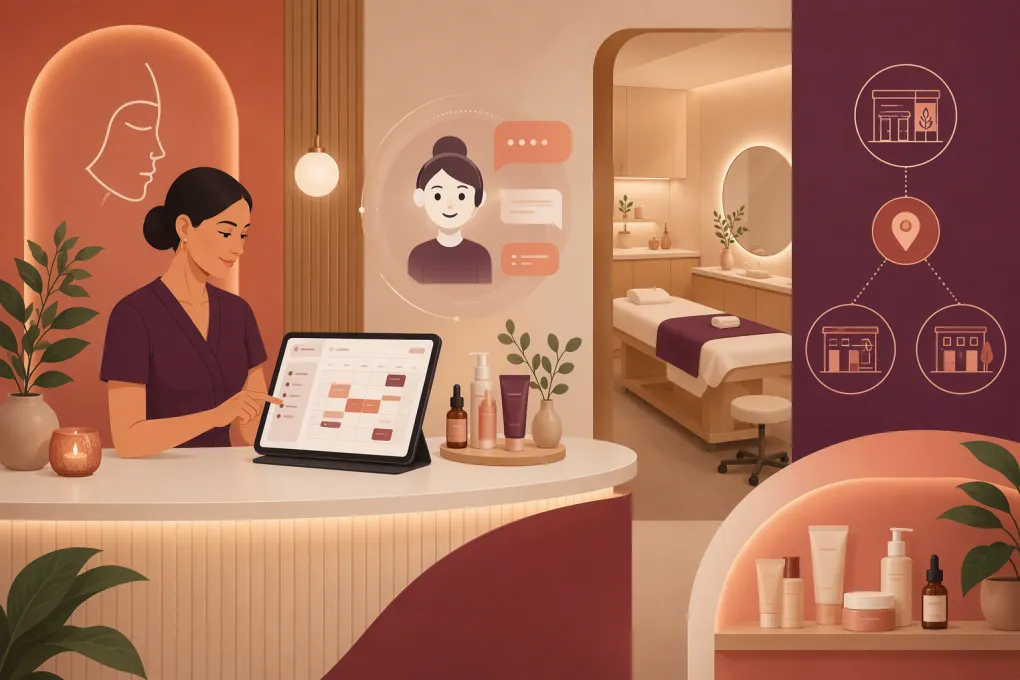
Zenoti is built to handle substantial spa and salon operations, especially businesses with multiple locations, centralized controls, inventory, memberships, and complex reporting. That breadth is valuable—but it can also be more platform than an independent facial spa, esthetics studio, or growing regional operator needs.
The right Zenoti alternative is not simply the system with a prettier calendar or a lower starting price. It is the one that prevents leads from going cold, makes rebooking easy, supports your treatment and membership model, and gives staff fewer disconnected tools to manage.
Before scheduling demos, identify the operational problem behind your search. Are you replacing Zenoti because of complexity, implementation demands, staff adoption, lead follow-up, cost structure, or a missing workflow? That answer should drive your shortlist.
See how WTF Go and Fitty handle facial spa inquiries, booking, follow-up, and dues →
Zenoti alternatives for facial spas compared
The options below serve different segments of the beauty, spa, and wellness market. Product capabilities, packaging, and integrations change, so confirm critical requirements directly with each vendor.
| Platform | Core strength | Booking and client management | Automation and AI | Multi-location fit | Pricing approach | Best fit | Potential limitation |
|---|---|---|---|---|---|---|---|
| WTF Go + Fitty | Unified operations with an AI receptionist and follow-up agent | Classes, appointments, leads, clients, payments, and operational workflows in one system | Fitty can answer leads, help book services, follow up, and collect dues around the clock | Supports independent and multi-location wellness operators | Contact WTF Go for current packaging | Facial spas that want software plus active lead response and revenue follow-up | Businesses should confirm specialized clinical, inventory, and integration requirements during the demo |
| Zenoti | Broad enterprise spa and salon management | Extensive scheduling, POS, memberships, inventory, marketing, and centralized management | Offers automation and customer engagement capabilities across a broad suite | Particularly strong for complex multi-location and franchise-style operations | Typically sales-led and quote-based | Large spa groups requiring deep centralized control | Breadth and implementation demands may exceed what a smaller facial spa needs |
| Boulevard | Polished client experience for appointment-based self-care businesses | Scheduling, client profiles, checkout, forms, memberships, and communication tools | Includes marketing and workflow automation; evaluate AI requirements specifically | Suitable for growing and multi-location beauty businesses | Plan-based packaging; confirm current features and add-ons | Spas prioritizing premium online booking and front-desk usability | Desired marketing, integration, or advanced operational features may require higher plans or add-ons |
| Mindbody | Large wellness ecosystem and consumer marketplace | Booking, client management, memberships, payments, and marketing tools | Provides automated marketing and communication features | Used by independent and multi-location wellness businesses | Tiered or sales-assisted packaging; verify current terms | Operators that value broad wellness functionality and marketplace exposure | The platform’s breadth can introduce complexity for a focused facial practice |
| Vagaro | Broad feature set for beauty and wellness businesses | Appointments, client records, payments, forms, memberships, and related business tools | Marketing and communication capabilities are available; packaging varies | Can support solo providers through larger businesses | Published plan structure with optional features may apply | Cost-conscious spas wanting many operational tools from one vendor | Add-ons and configuration should be mapped carefully to total operating cost |
| Mangomint | Modern interface and streamlined spa or salon workflows | Scheduling, client management, checkout, memberships, forms, and communication | Includes workflow and messaging automation; verify AI-led conversation needs | Supports established businesses and multi-location operations | Plan-based pricing; confirm current limits and options | Spas that prioritize staff usability and a modern front-desk experience | Operators with enterprise-level customization needs should validate depth during evaluation |
No table can tell you which platform will work at 7:30 p.m. when a prospective client asks whether a chemical peel is appropriate, what your next opening is, and whether she can book without calling back tomorrow. Your demo must test the complete journey, not isolated feature boxes.
What facial spas should require from their software
Fast response from inquiry to consultation
Facial spa leads often arrive while providers are in treatment rooms. A receptionist may be helping a client, and an owner may not see an Instagram, website, text, or phone inquiry until later.
Your system should create a clear path from inquiry to booked appointment:
- Capture the lead and its source.
- Respond promptly with approved information.
- Ask the questions needed to route the client correctly.
- Offer an appropriate consultation or service slot.
- Follow up if the person does not book.
- Record the conversation for staff visibility.
Traditional booking software often begins at step four: it displays available appointments after a client reaches the booking page. That leaves your team responsible for the conversation that gets the prospect there.
WTF Go approaches this differently. Fitty acts as an AI receptionist and agent, helping answer leads, book services, continue follow-up, and pursue outstanding dues instead of leaving another static task list for staff.
See how Fitty can cover the gap between a facial spa inquiry and a booked appointment →
Scheduling that reflects real treatment constraints
A facial spa calendar is not just a grid of open times. Confirm that each platform can represent how your services are actually delivered, including:
- Provider qualifications and service eligibility
- Treatment-room and equipment availability
- Service duration, cleanup time, and buffers
- Consultation requirements
- Deposits, cancellation rules, and no-show handling
- Add-ons and treatment upgrades
- Recurring appointments or treatment plans
- Online booking restrictions for new clients
During a demo, build one simple facial and one operationally difficult service. If the difficult service requires staff workarounds, the calendar is not ready for your business.
Memberships, packages, and rebooking
Facial spas frequently rely on repeat visits rather than one-time transactions. Software should make recurring revenue and treatment continuity easy to administer.
Ask vendors to demonstrate—not merely confirm—how the system handles:
- Monthly memberships and included services
- Member pricing or benefits
- Service credits and expiration rules
- Multi-session packages
- Pauses, cancellations, and failed payments
- Package redemption across eligible providers or locations
- Rebooking reminders based on treatment cadence
- Outstanding balances and card-update workflows
Pay close attention to exceptions. A membership works smoothly until a client freezes it, changes locations, upgrades a service, or has a failed payment. Your staff should not need spreadsheets to reconcile normal exceptions.
Consultation forms and client records
The client record should give providers useful context without forcing them to search across several screens. Depending on your services, you may need intake forms, consent records, treatment notes, product history, contraindication questions, photos, and aftercare communication.
If your facial spa offers medical aesthetics or operates under healthcare privacy requirements, do not assume that general spa software is sufficient. Ask about data handling, permissions, audit controls, document retention, and whether the vendor will execute any agreement your compliance obligations require. Obtain qualified legal or compliance advice for your specific operation.
Inventory and retail operations
Retail skincare and treatment supplies can make inventory important, but the required depth varies. A facial studio may only need accurate retail counts and reorder visibility. A large spa group may need purchasing controls, stock transfers, consumption tracking, and location-level reporting.
Test these scenarios:
- Selling a take-home product during checkout
- Processing a return or exchange
- Moving stock between locations
- Identifying low inventory
- Restricting discounts or adjustments by staff role
- Distinguishing retail products from treatment-room supplies
Do not pay for enterprise inventory complexity if your team will continue using a simpler process outside the platform. Conversely, do not accept weak controls if product sales are a meaningful part of the business.
How to choose the right Zenoti alternative
Build a weighted scorecard
Separate mandatory requirements from preferences. Then weight the workflows that affect revenue, client experience, and staff time most heavily.
A useful scorecard might include:
- Lead response and follow-up
- Online booking conversion
- Calendar and resource rules
- Membership and package administration
- Payments and failed-payment recovery
- Intake, consent, and client records
- Rebooking and retention workflows
- Inventory and retail
- Multi-location permissions and reporting
- Integrations and data access
- Implementation and support
- Total cost, including add-ons and payment terms
Avoid awarding the same importance to every feature. An attractive dashboard should not outweigh unreliable membership billing or a weak booking flow.
Run role-based demos
Give every vendor the same scenarios. Ask them to show the exact clicks for an owner, receptionist, provider, and client.
Use realistic tasks such as:
- A new lead asks which service to book after business hours.
- A client wants a facial at a specific location with any qualified provider.
- A member’s payment fails before an upcoming visit.
- A provider calls out and the day’s appointments must be reassigned.
- A client buys a package but redeems services at another location.
- An owner wants location-level lead, booking, and revenue visibility.
If a vendor answers with “that can be configured,” ask to see the configuration and who is responsible for maintaining it.
Compare total workflow cost, not subscription price
Software cost includes more than the quoted platform fee. Review payment processing terms, required hardware, messaging usage, add-ons, onboarding, data migration, integrations, training, and staff time spent maintaining manual processes.
Also account for tool consolidation. A platform that replaces separate scheduling, CRM, follow-up, and collections workflows may be operationally simpler than a cheaper calendar that requires several additional subscriptions.
Plan the migration before signing
Changing spa software affects future appointments, memberships, packages, stored balances, forms, staff access, payment methods, and financial reporting. Establish migration responsibilities in writing before committing.
Request clear answers about:
- Which records can be imported and in what format
- Whether future appointments preserve provider and resource assignments
- How active memberships, credits, and packages are validated
- Whether stored payment credentials can be migrated
- Which historical records remain accessible
- Who tests balances and booking rules
- How long staff training takes
- What support is available during launch
- How you can export your data if you leave later
Run a small set of records through the proposed process before the full migration. Reconcile active liabilities—such as unused package sessions or client credits—against your source data, and keep a secure archive of required historical records.
Which option is the best fit?
Choose Zenoti when enterprise depth, centralized governance, and complex multi-location operations justify the implementation footprint.
Consider Boulevard or Mangomint when a refined front-desk and client experience is a leading priority. Evaluate Mindbody when its wider wellness ecosystem and marketplace align with your acquisition strategy. Consider Vagaro when you want broad beauty and wellness functionality with a plan structure that can be assembled around your needs.
Choose WTF Go when the central problem is not merely managing appointments, but converting and retaining more clients without asking staff to monitor every inquiry and follow-up task. Fitty gives facial spas an AI receptionist and agent alongside the operating system, so lead response, booking, follow-up, and dues collection can continue when your providers are busy or the front desk is closed.
Explore WTF Go as a Zenoti alternative built around active client follow-up →
Frequently asked questions
What is the best Zenoti alternative for a small facial spa?
The best choice depends on your workflows. WTF Go is worth evaluating if lead response and follow-up are priorities, while Boulevard, Vagaro, and Mangomint may suit spas focused on appointment and front-desk management.
Is Zenoti only for large spa businesses?
No, but its broad feature set and multi-location orientation are often most valuable to larger or operationally complex businesses. Smaller spas should compare that depth with implementation effort and actual usage.
Can spa software automatically follow up with facial leads?
Some platforms provide automated messages, but capabilities vary. WTF Go's Fitty is designed to act as an AI receptionist that answers leads, assists with booking, follows up, and helps collect dues.
What data should I migrate from Zenoti?
Prioritize client records, future appointments, active memberships, unused packages, credits, forms, treatment history, and required financial records. Confirm what can be exported and imported before signing with a replacement.
Does a facial spa need specialized medical spa software?
It depends on the services offered and applicable legal requirements. Spas providing medical aesthetics should validate clinical documentation, permissions, privacy, and compliance capabilities with qualified advisers and each vendor.
Keep reading
Run your gym on autopilot with WTF Go
Fitty — your AI receptionist — answers calls and DMs, fills classes, follows up with every lead, and collects dues while you coach.