Comparisons
Best Zen Planner Alternative for Every Gym Type (2026)
Compare each leading Zen Planner alternative by booking, billing, CRM, automation, pricing, and fit to find the right platform for your gym or studio.
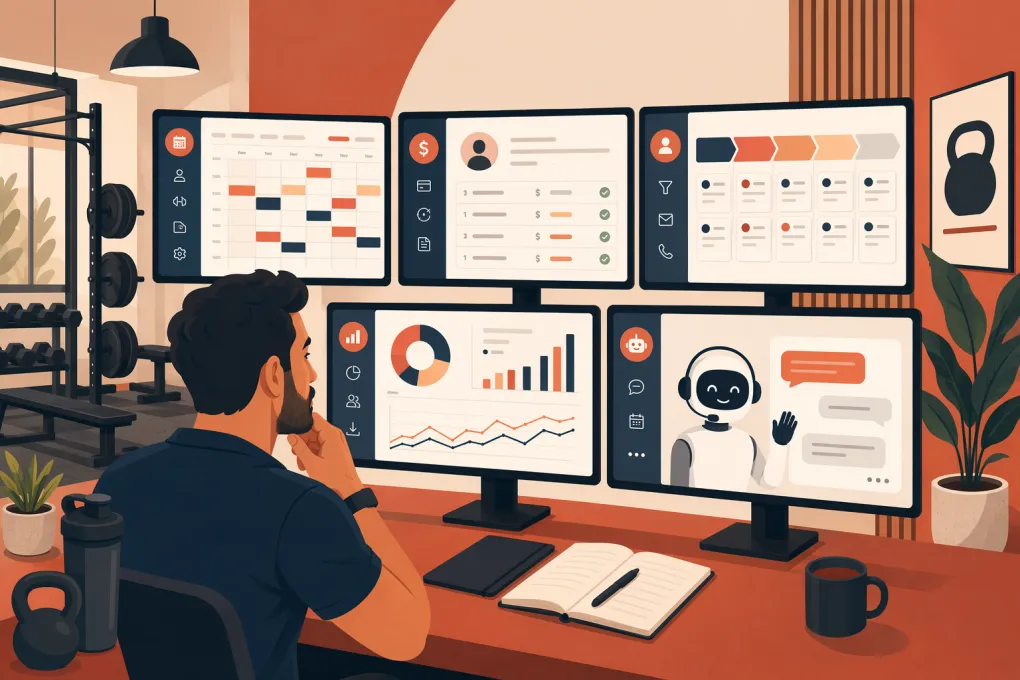 Watch · 20s
A Zen Planner alternative should solve a specific operating problem—not merely provide a different interface. Some gyms need better lead follow-up. Others need family management, skill tracking, branded apps, appointment scheduling, or clearer multi-location reporting.
This comparison identifies the strongest option by business type, explains the ranking method, and gives you concrete workflows to test. It is based on publicly available vendor materials and documentation reviewed in July 2026, not a paid hands-on test of every platform. Features, packages, and contract terms change, so treat official documentation as the starting point and require vendors to demonstrate your critical workflows before signing.
Quick answer: the best Zen Planner alternatives by gym type
There is no responsible universal winner because a martial arts school and an appointment-heavy wellness studio operate differently. Based on product focus and documented capabilities, the strongest shortlists are:
- Best for AI-assisted lead response and follow-up: WTF Go. Fitty is positioned as an AI receptionist for answering inquiries, booking, follow-up, and dues outreach.
- Best for functional fitness and class-based gyms: PushPress. Its product family is built specifically around gym operations, lead management, and member engagement.
- Best for marketplace visibility and broad wellness services: Mindbody. Its consumer marketplace and support for both classes and appointments distinguish it from gym-only systems.
- Best for boutique fitness brands: Glofox. Its focus includes boutique-fitness sales, memberships, schedules, and branded member experiences.
- Best for mixed fitness and wellness operations: WellnessLiving. It combines class and appointment scheduling with marketing, rewards, staff, and client-management functions.
- Best reason to remain with Zen Planner: martial arts and established member-based gyms. Zen Planner documents belt, rank, and skill tracking alongside its core billing and scheduling tools. Replacing it may remove a useful specialty workflow.
How these alternatives were ranked
The ranking uses seven operator-level criteria:
- Business-model fit: Does the product support the way this gym or studio sells and delivers services?
- Revenue workflows: Can it capture leads, book prospects, sell memberships, process recurring payments, and manage failed payments?
- Scheduling depth: Does it fit classes, appointments, or both?
- Automation: Does it only send predefined messages, or can it handle two-way conversations and next actions?
- Member experience: Are self-service booking, account management, and branded mobile options available?
- Operational depth: Does it address permissions, reporting, multiple locations, and specialized workflows?
- Buying and implementation risk: Are pricing, required modules, migration responsibilities, integrations, and contract terms clear?
For your own ranking, rate each platform from one to five on these criteria, then multiply each rating by an importance score of one to three. Use evidence from a live demonstration rather than vendor promises. A platform should not receive a top score unless it completes the workflow with the package you were actually quoted.
Zen Planner alternatives compared
| Platform | Concrete strengths | Automation and AI | Integrations and ecosystem | Pricing and buying model | Best fit | Important limitation to test |
|---|---|---|---|---|---|---|
| WTF Go | Combines CRM, scheduling, payments, communications, and lead management for gyms, studios, spas, and wellness businesses | Fitty is the differentiator: an AI receptionist designed to answer leads, book classes, follow up, and conduct dues outreach 24/7 | Confirm every required accounting, access-control, marketing, telephony, and payment connection during the sales process | Obtain a current quote covering implementation, messaging, payment processing, AI usage, and locations | Operators trying to consolidate front-desk and sales work around an AI agent | Buyers should test unusual booking rules, specialist integrations, escalation controls, and migration depth rather than assuming an AI conversation completes every back-office task |
| Zen Planner | Membership management, recurring billing, class scheduling, attendance, member apps, and martial-arts rank or skill tracking | Provides communications and operational workflows, but it is not primarily positioned as a conversational AI receptionist | Established fitness-management ecosystem; verify each required integration and whether it is native, partner-built, or export-based | Sold through a sales process; request the complete package, implementation terms, processing terms, and contract conditions | Martial arts schools and established membership-based fitness businesses | A switch may improve a weak workflow, but it can also sacrifice historical data or specialty functionality your staff already uses |
| Mindbody | Classes, appointments, memberships, payments, staff management, marketing options, branded apps, and exposure through Mindbody’s consumer marketplace | Automated marketing and client communications are available, with capability depending on package and connected products | Broad wellness ecosystem and consumer discovery network | Tiered business packages are marketed, while exact costs and add-ons should be confirmed with sales | Studios and wellness businesses that value appointments, marketplace discovery, and a broad platform | The ecosystem may be more complex than a small class-only gym needs; identify which functions require higher packages or add-ons |
| PushPress | Gym-focused member management, billing, classes, check-ins, lead management, websites, and training products | Lead nurture and communication capabilities are provided through its product family, including PushPress Grow | Integrations are oriented toward gym operations; confirm access control, accounting, workout tracking, and messaging requirements | Products are modular, so compare the cost of the complete required stack rather than one entry product | CrossFit-style, functional fitness, and other class-based gyms | Determine which workflows sit in Core, Grow, Train, or another product and whether staff must move between them |
| WellnessLiving | Class and appointment booking, client management, payments, staff tools, marketing, rewards, and branded client experiences | Offers automated marketing and client-engagement tools; verify triggers, two-way handling, and package access | Supports a broad fitness and wellness model; validate specialist hardware and external marketing connections | Uses packaged plans and optional capabilities; request an itemized quote | Businesses combining fitness classes, appointments, and wellness services | Broad functionality requires careful setup; test payroll-related workflows, resources, rooms, providers, and location-specific rules |
| Glofox | Boutique-fitness lead management, memberships, schedules, payments, reporting, and member apps | Provides sales and member-engagement automation, with exact capabilities depending on the selected package | Fitness-oriented ecosystem with branded digital experiences; confirm regional payment and hardware support | Generally purchased through a sales consultation; obtain written package and implementation details | Boutique studios focused on membership sales and a branded experience | Appointment-heavy spas and businesses with complex resource scheduling should test those workflows explicitly |
For additional verification, consult the vendors’ named support resources: the Zen Planner Help Center, Mindbody Support Center, PushPress Help Center, WellnessLiving Help Center, and Glofox Help Center. Support articles often reveal package restrictions and operational steps that a sales page leaves out.
Where WTF Go and Fitty differ
Most platforms in this comparison can automate a reminder or start a nurture sequence. WTF Go’s stated distinction is Fitty, an AI agent intended to participate in two-way front-office workflows: answering leads, booking classes, following up, and contacting members about dues.
That does not mean Fitty—or any AI agent—should have unlimited authority. During a demonstration, test whether it can:
- Answer pricing questions using your approved offers
- Recognize when a prospect is asking about a class versus an appointment
- Respect capacity, instructor, location, and eligibility rules
- Stop outreach after an opt-out
- Avoid promising refunds, medical outcomes, or contract exceptions
- Hand an injury, complaint, cancellation dispute, or billing dispute to a person
- Record the conversation and outcome in the member or lead record
- Limit dues outreach to authorized channels and approved language
The 24/7 claim describes agent availability, not a guarantee that every request can or should be completed without human review. Ask WTF Go to document supported channels, response boundaries, uptime terms, escalation behavior, and which actions require staff approval.
Test gym-specific workflows, not generic features
For a class-based gym
Submit a lead after staffed hours. Ask about a beginner class, disclose an injury, reject the first proposed time, and then book. Check whether the platform selects an appropriate session, sends the correct waiver, records the source, and assigns follow-up if the booking is abandoned.
For a martial arts school
Create a household with a parent and two children. Apply different programs, ranks, attendance records, and billing arrangements. Then test promotion tracking and family communication. This is an area where Zen Planner’s documented martial-arts functionality may be harder to replace than its basic calendar.
For a boutique studio
Buy an introductory offer, reserve a full class, join a waitlist, cancel, and use the remaining credit at another location. Confirm exactly when a spot is released, how notifications work, and whether package rules remain consistent across locations.
For a spa or hybrid wellness business
Book a service that requires a practitioner, room, and equipment. Add preparation time and a cancellation fee. A class calendar is not proof that the platform can manage resource-dependent appointments.
Compare contracts, support, and migration in writing
Do not select software until the order form identifies:
- Contract length, renewal method, and cancellation notice
- Required implementation or onboarding charges
- Included locations, staff accounts, contacts, and messaging usage
- Payment-processing obligations and payout arrangements
- Which mobile apps, marketing tools, or CRM functions cost extra
- Support channels and staffed support hours
- Data-export formats and fees, including access after cancellation
- Ownership of phone numbers, domains, message history, and creative assets
For migration, request a field-level plan covering member profiles, active agreements, future bookings, credits, waivers, attendance, notes, leads, and communication history. Stored cards or bank credentials may require a processor-managed transfer and cannot necessarily be moved through a spreadsheet.
Run a reconciliation before launch: active memberships by type, upcoming bookings, account credits, overdue balances, and the next recurring billing batch should match the approved source data.
Compliance for automated messages and dues outreach
Automation creates obligations as well as efficiency. Work with qualified counsel on federal and state requirements; software settings are not legal advice.
At minimum, operators should:
- Document consent by channel. Keep the source, date, disclosure, phone number or email address, and purpose associated with consent. Marketing consent is not automatically the same as consent for every automated call or text.
- Honor opt-outs promptly. Recognize standard stop requests, suppress further nonessential outreach, and retain the suppression record when contacts are imported or systems change.
- Separate service and marketing messages. A booking reminder and a promotional offer may be treated differently. Do not add marketing content to operational messages without reviewing the implications.
- Control calling times and frequency. Configure quiet hours using the recipient’s local time and review applicable federal and state rules, including state-specific automated-messaging requirements.
- Maintain payment authorization. Recurring card or ACH charges require an appropriate agreement and authorization. An AI agent should not alter an amount, date, or payment method beyond the authority your documented process allows.
- Use careful dues language. Outreach should accurately state the account status and provide a route to dispute errors. Escalate bankruptcy notices, identity questions, chargebacks, threats, hardship requests, and legal disputes to trained staff.
- Provide human escalation. Members need a clear way to reach a person. Preserve conversation logs and restrict who can issue refunds, waive fees, modify contracts, or submit charges.
The best Zen Planner alternative is therefore not simply the system with the most automation. It is the one that completes your highest-value workflows while preserving consent, authorization, auditability, and human control.
Frequently asked questions
What is the best Zen Planner alternative for a small gym?
PushPress is a strong shortlist option for class-based and functional fitness gyms, while WTF Go is better suited to operators prioritizing AI-assisted lead response and follow-up. Test both against your actual booking, billing, and failed-payment workflows.
Which Zen Planner alternative is best for martial arts?
Zen Planner may still be the best fit when belt, rank, and skill tracking are essential. Any replacement should demonstrate family accounts, attendance, promotions, and program-specific billing before you migrate.
Can Fitty collect overdue gym dues automatically?
WTF Go positions Fitty for dues outreach and collection workflows, but the exact action depends on configuration, payment authorization, and escalation rules. Require documentation showing when Fitty sends a message, accepts payment, or transfers the issue to staff.
Can payment information be migrated from Zen Planner?
Member records can generally be exported, but stored card or bank credentials may require a secure processor-to-processor transfer. Confirm portability with both payment providers before signing a new software agreement.
What should I ask during a Zen Planner alternative demo?
Ask the vendor to complete a real lead-to-booking journey, a failed-payment workflow, a cancellation dispute, and a data export. Also request written pricing, contract, support, integration, compliance, and migration details.
Keep reading
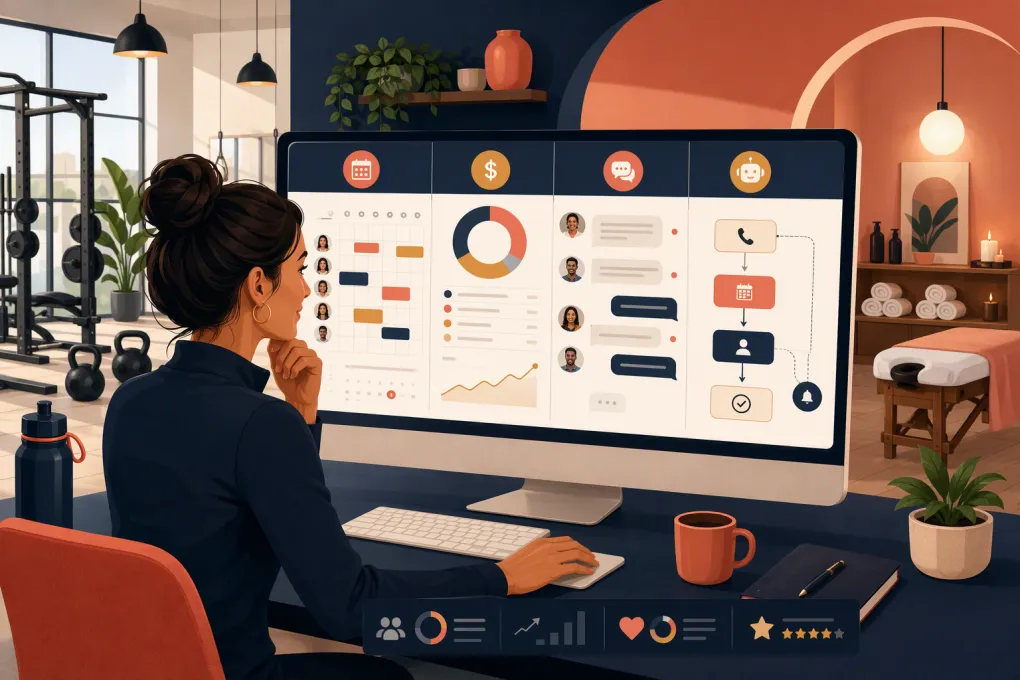


Run your gym on autopilot with WTF Go
Fitty — your AI receptionist — answers calls and DMs, fills classes, follows up with every lead, and collects dues while you coach.