Comparisons
Best Upper Hand Alternative for Baseball Training Facilities
Find an Upper Hand alternative for baseball training facilities. Compare cages, scheduling, billing, AI, integrations, migration, support, and contracts.
 Watch · 20s
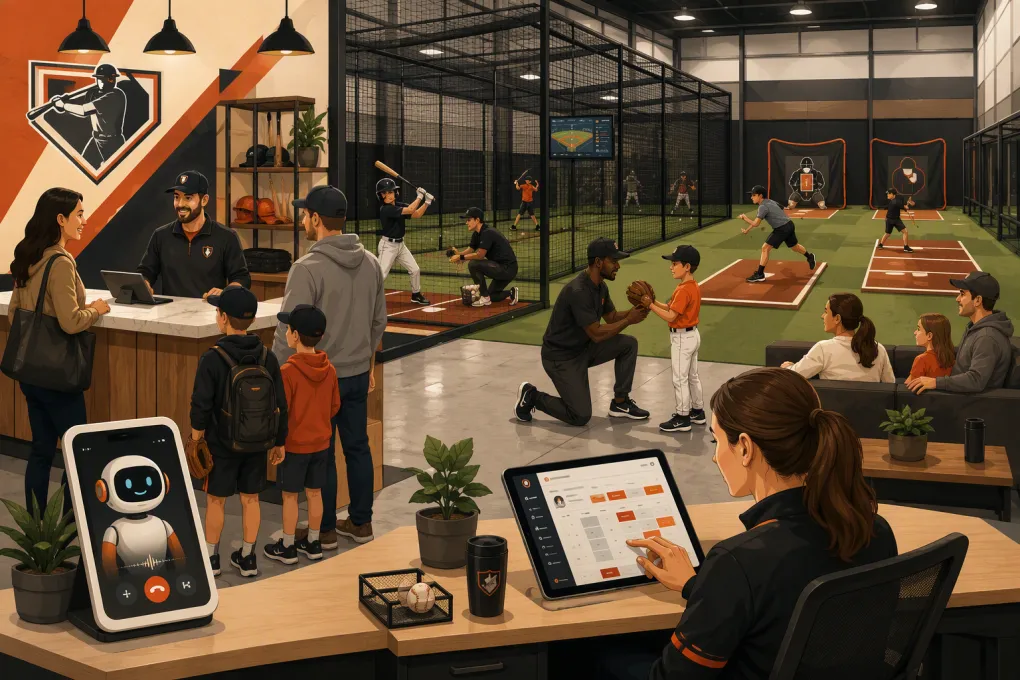
Replacing Upper Hand is not simply a matter of finding another calendar. Baseball facilities must coordinate athletes, parents, coaches, cages, bullpens, turf, evaluations, packages, team rentals, waivers, and payments—often in the same transaction.
The best Upper Hand alternative therefore depends on your revenue model. A lesson-driven academy needs different software from a batting-cage rental business or a travel organization managing teams and tournaments.
This comparison uses publicly described vendor capabilities and market positioning from the official sites linked below. It is not based on authenticated test accounts, and no screenshots are included because we did not conduct a controlled hands-on product test. Product packaging changes, so treat every uncertain capability as a demo and contract question rather than an established fact.
See how Fitty handles inquiries, booking, follow-up, and dues workflows →
How we evaluated Upper Hand alternatives
Calling one product the “best” without defining the job is not useful. We scored each platform against six criteria relevant to baseball training operators:
| Criterion | Weight | What it covers |
|---|---|---|
| Baseball workflow fit | 25% | Lessons, camps, evaluations, team programs, rentals, athletes, and parents |
| Scheduling and resources | 20% | Coaches, cages, turf, capacity, conflicts, waitlists, and recurring bookings |
| Lead response and revenue automation | 20% | Inquiry handling, follow-up, booking conversion, reminders, and collections |
| Billing and account administration | 15% | Memberships, packages, household billing, failed payments, credits, and commissions |
| Organizational fit | 10% | Permissions, reporting, multiple locations, teams, and staff roles |
| Buying and implementation confidence | 10% | Integrations, support, contracts, migration, and data portability |
Scores are editorial fit assessments, not laboratory results or universal product rankings. A high score means the vendor’s public positioning appears aligned with the criterion. It does not prove that every workflow is native or included in every package.
Shortlist and scoring
| Platform | Baseball fit | Resources | Revenue automation | Billing | Organization | Buying confidence | Weighted fit |
|---|---|---|---|---|---|---|---|
| Upper Hand | 5/5 | 4/5 | 3/5 | 4/5 | 4/5 | 3/5 | 79/100 |
| EZFacility | 4/5 | 5/5 | 2/5 | 4/5 | 4/5 | 3/5 | 74/100 |
| WTF Go with Fitty | 3/5 | 3/5 | 5/5 | 4/5 | 4/5 | 3/5 | 73/100 |
| LeagueApps | 4/5 | 3/5 | 2/5 | 3/5 | 4/5 | 3/5 | 63/100 |
| Mindbody | 2/5 | 3/5 | 3/5 | 4/5 | 4/5 | 4/5 | 62/100 |
Upper Hand scores highest as a sports-specific baseline—which is precisely why a switch needs a clear business case. WTF Go becomes the stronger alternative when missed inquiries, inconsistent follow-up, unattended phones, and dues collection are more damaging than the lack of highly specialized league or facility-resource features.
Side-by-side buying comparison
| Platform | Documented orientation | Strengths to investigate | Limitations or open questions | Best-fit operation |
|---|---|---|---|---|
| WTF Go with Fitty | Operating system for gyms, studios, spas, and wellness businesses, with an AI receptionist | Lead response, class booking, follow-up, customer management, and dues workflows | Confirm simultaneous coach-and-cage reservations, team rentals, coach commissions, package sharing, waiver handling, and required integrations | Lesson, class, and membership-led academies prioritizing sales response and administrative automation |
| Upper Hand | Sports business management | Sports-oriented scheduling, programs, client management, memberships, and commerce | Compare current automation depth, integration access, support terms, exports, and contract provisions with your requirements | Sports training businesses that want a platform designed around sports operations |
| EZFacility | Facility, membership, league, and scheduling management | Physical-resource scheduling and broader facility administration are central to its positioning | Examine lead qualification, conversational AI, household experience, mobile booking, and marketing automation | Facilities where cages, fields, courts, turf, or rentals drive the calendar |
| LeagueApps | Youth sports registration and organization management | Programs, teams, registration, communication, and organizational workflows | May be less natural for high-volume private lessons, drop-in cage rentals, or AI-driven lead conversion | Clubs and organizations where teams, seasons, and registrations drive revenue |
| Mindbody | Appointment, class, membership, payment, and consumer marketplace software | Mature consumer booking model, business tooling, and broader app ecosystem | Sports-specific resources, team rentals, athlete evaluations, and parent-athlete relationships require close validation | Class- or appointment-led facilities comfortable adapting wellness-oriented workflows |
This table intentionally distinguishes documented orientation from workflows that still require proof. “Supports scheduling” does not necessarily mean a platform can prevent a coach from being booked for a pitching lesson while the required bullpen is occupied.
Baseball workflows every vendor should demonstrate
Coach, cage, and equipment conflicts
Ask the salesperson to create a pitching lesson requiring all of the following:
- One specific instructor
- One bullpen lane
- A pitching machine or other limited resource
- A 15-minute turnover buffer
- Availability at only one location
Then book the coach elsewhere and see whether the original time disappears. If staff must compare separate calendars manually, the conflict control is not truly operational.
Evaluations and program placement
A new athlete may need an evaluation before joining a program. Test whether the system can capture age, position, goals, experience, preferred location, and availability; book the evaluation; record the recommendation; and trigger enrollment follow-up.
Fitty can handle configured inquiry and booking steps, but it should not make coaching judgments, diagnose injuries, or decide competitive placement. Those decisions belong to qualified staff.
Households and package sharing
Baseball businesses frequently sell to parents while delivering services to children. Demonstrate:
- One payer managing multiple athletes
- Separate waivers and birth dates for each athlete
- Siblings enrolled in different programs
- A package restricted to one athlete
- A family package shared across eligible athletes
- Different payment methods or responsible parties where needed
Do not accept “family accounts are supported” without seeing balances, credits, communications, and attendance from both the parent and athlete views.
Team rentals and recurring reservations
Create a weekly team rental that uses two cages and a turf area, skips a holiday, changes time for one week, and invoices the organization rather than each athlete. Check whether one edited date changes the entire series and how deposits, cancellations, and outstanding balances appear.
Coach compensation
If coaches receive commissions, session rates, or revenue shares, test how the platform treats discounts, refunds, no-shows, package redemptions, substitute coaches, and unpaid transactions. A basic payroll export may not equal commission accounting.
Purchase-critical questions missing from most demos
Payments and contracts
Ask whether you must use the vendor’s designated processor, whether processing terms are separate from the software agreement, and what happens to stored payment credentials during migration. Review contract length, renewal mechanics, termination notice, implementation charges, and any fees tied to exports or additional locations.
Do not rely on verbal answers. Request the current order form, service agreement, processing agreement, and fee schedule.
Waivers and documents
Confirm whether waivers are native, attached to each athlete, versioned, timestamped, and reportable. Ask how updated waivers are collected and whether signed records remain exportable after termination. Have counsel review your waiver language; software availability does not establish legal sufficiency.
Integrations
Create a list of required systems before the demo: accounting, email marketing, access control, phone service, analytics, payroll, and advertising platforms. Ask whether each connection is native, third-party, API-based, or dependent on manual exports. Also ask who supports it when data stops syncing.
Mobile experience
Test both sides. A parent should be able to register two children, sign required documents, pay, cancel, and check package balances from a phone. A coach should be able to view the roster, record attendance, check athlete notes, and avoid seeing restricted financial information.
Support and data portability
Request support hours, channels, escalation procedures, onboarding scope, and expected ownership of configuration work. Export sample customers, future bookings, attendance, balances, payments, waivers, and notes before signing. A generic promise that “your data is exportable” is not enough.
Where WTF Go and Fitty fit
WTF Go is most compelling when the facility already understands its services but cannot respond consistently while coaches are on the floor or the front desk is closed.
According to WTF Go’s product positioning, Fitty is an AI receptionist and agent designed to answer leads, book classes, follow up, and collect dues 24/7. The practical scope still depends on configuration: Fitty can only book inventory and workflows made available to it, answer from approved business information, and operate within connected payment and account permissions. It does not guarantee payment, replace judgment on athlete placement, or resolve every account dispute without staff involvement.
For a baseball academy, an appropriate workflow could be:
- A parent asks about beginner hitting instruction after hours.
- Fitty answers from approved program information and gathers relevant details.
- The parent books an eligible introductory class or evaluation.
- Automated follow-up continues if the parent does not complete the next step.
- Staff handle coaching recommendations, exceptions, injuries, and sensitive billing disputes.
That division of labor is important. AI should remove repetitive administrative work, not impersonate a baseball development director.
Explore Fitty for after-hours baseball training inquiries →
When another option is better
Choose Upper Hand if its sports-specific workflows already fit and your problems can be fixed through configuration, training, or process ownership.
Prioritize EZFacility when cage, field, court, or turf-resource scheduling is the hardest operational problem. Require a live demonstration of your exact resource combinations.
Consider LeagueApps when teams, seasons, registrations, and organization-wide communication matter more than private-lesson conversion.
Evaluate Mindbody when the business behaves like a class-and-appointment studio and values a broad consumer booking ecosystem more than baseball-specific administration.
Choose WTF Go when lessons, classes, memberships, lead conversion, follow-up, and collections are central—and confirm any advanced resource, waiver, commission, and household requirements before committing.
A defensible final selection process
Run every finalist through the same scripted test. Score each workflow as native, configurable, workaround-dependent, or unavailable. Require written answers for integrations, payment constraints, support, migration, exports, renewal, and termination.
Finally, speak with references operating a similar mix of private lessons, group programs, rentals, and memberships. Vendor category fit matters, but your exact revenue model should decide the winner.
Ask WTF Go to demonstrate your real baseball facility workflow →
Frequently asked questions
What is the best Upper Hand alternative for a baseball training facility?
WTF Go is a strong option for lesson- and membership-led academies prioritizing AI lead response and follow-up. EZFacility may better fit resource-heavy rental operations, while LeagueApps is oriented toward teams and registrations.
Can Fitty schedule both a coach and a batting cage?
Fitty can book configured offerings, but simultaneous coach, cage, equipment, and buffer-time requirements should be demonstrated against your setup. Do not assume class booking automatically provides advanced resource scheduling.
What data should I export before leaving Upper Hand?
Export customers, athletes, households, future bookings, memberships, package balances, credits, payments, attendance, waivers, notes, and outstanding balances. Test the files before terminating access.
Should baseball facility software support household billing?
Yes, if parents pay for multiple athletes. Test sibling registration, athlete-specific waivers, shared and restricted packages, credits, communications, and payer access rather than relying on a family-account label.
What contract questions should I ask software vendors?
Ask about term length, automatic renewal, termination notice, implementation fees, payment processing requirements, support scope, data exports, and post-termination access. Get every material answer in writing.
Keep reading



Run your gym on autopilot with WTF Go
Fitty — your AI receptionist — answers calls and DMs, fills classes, follows up with every lead, and collects dues while you coach.