Comparisons
How to Choose a Mindbody Alternative for Rowing Studios
Find the right Mindbody alternative for rowing studios. Compare booking, memberships, AI follow-up, reporting, migration, and daily operations in one guide.
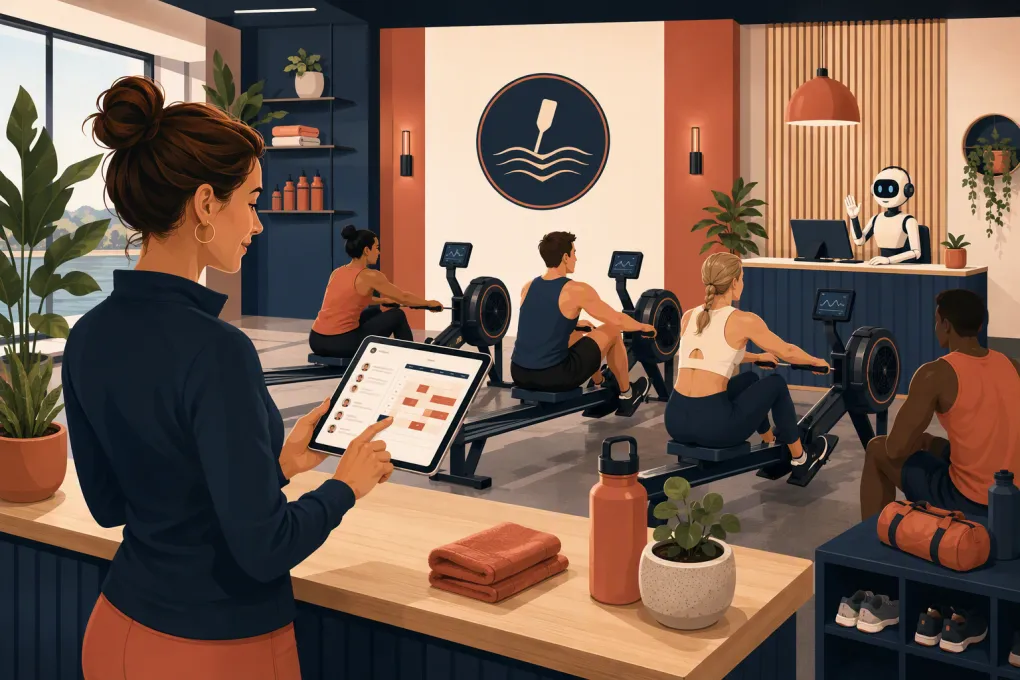 Watch · 20s
Running an indoor rowing studio is not the same as managing a general-purpose gym. Every class has a hard equipment limit, first-timers need more guidance, attendance changes affect the room immediately, and a missed call can mean an empty erg in tomorrow’s intro session.
Mindbody can cover many standard studio workflows, including scheduling, memberships, payments, marketing, and consumer discovery. But breadth does not automatically make it the right operational fit. Rowing studio owners often start looking elsewhere when they want simpler administration, faster lead response, more useful automation, or a system better aligned with how a specialized studio sells and delivers classes.
The right Mindbody alternative for a rowing studio should not merely offer a calendar. It should reduce the work between a prospect’s first question and their first paid session.
See how Fitty can answer rowing studio leads and book intro classes 24/7 →
What rowing studios need from management software
Before comparing brands, document the workflows your software must support. Feature lists are less useful than testing what happens during a real day at your studio.
Capacity tied to physical equipment
A rowing class cannot exceed the number of usable machines in the room. Your system should support:
- Class-level capacity limits
- Online booking and cancellation rules
- Waitlists with clear promotion logic
- Staff overrides for maintenance or equipment downtime
- Separate limits for classes with different layouts
- Real-time availability across staff and customer views
Ask what happens when an erg is out of service after a class is already full. Operators should be able to lower capacity, contact affected members, and move reservations without rebuilding the session.
Intro offers and beginner conversion
Rowing has a learning curve. Many prospects want to know whether they need experience, what to wear, how difficult the workout is, and whether an injury or mobility issue changes their options.
Your software should make it easy to create a beginner path such as:
- Lead asks a question by phone, text, or web form.
- The studio answers immediately and recommends the correct intro option.
- The lead books and pays without waiting for the front desk.
- The system sends preparation instructions and reminders.
- Staff follow up after the first visit with the appropriate membership offer.
A platform that technically stores leads but requires employees to handle every step manually leaves a major gap.
Memberships, packs, and recurring programs
Rowing studios frequently combine recurring memberships with class packs, drop-ins, challenges, private coaching, or fixed-duration programs. Check whether each product can have its own:
- Booking window
- Expiration rules
- Cancellation policy
- Class eligibility
- Renewal behavior
- Location access
- Family or household permissions
Do not rely on a salesperson saying the platform supports memberships. Build your actual products during the demo and test the exceptions.
Communication that responds, not just broadcasts
Email campaigns are useful, but operators also need timely one-to-one communication. A strong system should handle common questions, missed-call follow-up, class reminders, waitlist notifications, failed-payment outreach, and reactivation conversations.
This is where an AI receptionist can be more valuable than another campaign builder. Fitty, WTF Go’s AI agent, can answer leads, book classes, follow up, and collect dues around the clock. That gives a rowing studio a practical response layer when coaches are teaching and the desk is unattended.
Mindbody alternatives for rowing studios compared
No platform is universally best. Product packaging and feature availability can change, so confirm critical capabilities, integrations, implementation support, and total pricing directly with each vendor.
| Platform | Core strengths | Automation and lead handling | Multi-location fit | Pricing approach | Potential limitation | Best fit |
|---|---|---|---|---|---|---|
| WTF Go + Fitty | All-in-one operations for gyms, studios, spas, and wellness businesses; booking and business workflows paired with an AI receptionist | Fitty answers leads, books classes, follows up, and collects dues 24/7 | Relevant to independent and multi-location operators; confirm the exact controls required for your structure | Contact WTF Go for current packaging and implementation details | Operators should validate any specialized rowing-performance or hardware integrations they require | Studios prioritizing immediate lead response and reduced front-desk workload |
| Mindbody | Broad scheduling, membership, payment, marketing, and consumer marketplace capabilities | Offers business automation and marketing tools; exact access can depend on plan or add-ons | Established option for multi-location wellness businesses | Tiered or quote-based packaging; verify add-ons and processing costs | Its breadth can introduce complexity, and operators should check which workflows require additional products | Studios that value a large wellness ecosystem and consumer discovery |
| Mariana Tek | Boutique fitness platform with branded digital experiences and centralized operations | Supports customer journeys and marketing workflows; confirm the desired conversational or AI capabilities | Strong orientation toward growing boutique fitness brands | Generally sold through a custom sales process | May be more platform than a small single-location studio needs | Multi-location or expansion-focused boutique rowing brands |
| WellnessLiving | Broad studio management suite covering scheduling, memberships, client engagement, and business administration | Includes marketing and engagement tools; test response speed and two-way lead workflows | Supports businesses with multiple locations | Packages vary; request a quote based on required modules | A wide feature set requires careful configuration and staff training | Operators wanting a broad suite under one vendor |
| PushPress | Gym-focused membership, billing, scheduling, and CRM tools with a relatively direct operational model | CRM and automation capabilities are available within its product ecosystem; verify package requirements | Can serve growing gyms and studios; test cross-location reporting and permissions | Plan and product packaging varies | Operators needing spa-style appointments or highly specialized boutique workflows should test them closely | Rowing studios that operate more like membership gyms |
| Momence | Scheduling, memberships, events, communication, and customer-facing booking for fitness businesses | Provides marketing and customer management functionality; confirm advanced voice or conversational needs | Suitable for studios and expanding operators, subject to configuration | Contact the vendor for current plan details | Studios should test complex membership rules, reporting, and migration requirements | Class-driven studios seeking a modern booking experience |
How to evaluate the options without sitting through six generic demos
Give every vendor the same rowing-specific test script. This prevents the conversation from drifting toward polished features that do not solve your daily problems.
Run a complete prospect journey
Use a new test contact and ask the vendor to demonstrate the following live:
- Submit an inquiry after business hours.
- Ask whether beginners are welcome.
- Book an intro class with limited capacity.
- Pay or claim an introductory offer.
- Receive confirmation and preparation instructions.
- Cancel within and outside the allowed window.
- Join a waitlist and move into the class.
- Receive follow-up after attendance or a no-show.
- Convert to a recurring membership.
Count how many steps require an employee. Automation should eliminate repetitive work without hiding conversations from staff.
Explore how WTF Go connects booking with Fitty’s lead follow-up →
Test exceptions, not just the happy path
Software weaknesses usually appear when something changes. Ask each vendor to show how the system handles:
- A coach substitution
- A machine removed from class capacity
- A member with an expired pack
- A failed recurring payment
- A late cancellation exception
- A prospect who starts by phone and finishes online
- A member visiting a second location
- A duplicate customer record
Also confirm which actions are logged. Staff should be able to see who changed a reservation, adjusted a balance, or overrode a policy.
Separate studio management from rowing performance data
Booking software and rowing-performance software solve different problems. If you use Concept2 tools, heart-rate platforms, leaderboard software, or a custom training app, do not assume a studio platform will store split times, watts, distance, or workout history.
Ask about documented integrations, APIs, webhooks, data exports, and customer identifiers. A manual export may be acceptable for a monthly challenge but inadequate for a live leaderboard. Make the distinction before signing a contract.
Calculate the operational cost, not only the subscription
The lowest software quote can become expensive if staff must constantly work around it. Compare the complete operating burden:
- Base subscription and required modules
- Payment processing structure
- Messaging or communication charges
- Branded app or website costs
- Data migration and onboarding fees
- Staff training time
- Manual lead follow-up hours
- Time spent reconciling failed payments
- Contract length and cancellation terms
Avoid assigning an assumed dollar value to automation. Instead, review one representative week. List every call, text, booking adjustment, payment chase, and lead follow-up handled manually. Then identify which platform can reliably absorb those tasks.
Plan the migration before leaving Mindbody
A platform switch affects customer access, saved payment methods, recurring contracts, future reservations, reporting, and staff routines. Migration quality matters as much as the new feature set.
Inventory your data
Export and review:
- Active and inactive customer profiles
- Memberships, packs, and expiration dates
- Account credits and outstanding balances
- Future reservations and waitlists
- Waivers and signed agreements
- Attendance history
- Staff schedules and compensation inputs
- Product and service definitions
- Communication consent records
Ask the new provider what can be imported directly, what must be recreated, and what will remain available only as an archive. Sensitive payment data may follow separate processor and security requirements; never assume it can be moved like a spreadsheet.
Clean up before importing
A migration is an opportunity to remove duplicate contacts, retire unused pricing options, standardize naming, and document policy exceptions. Importing years of clutter makes the new platform harder to operate.
Create a mapping sheet that pairs every old product, status, and field with its new destination. Assign one employee to approve the mapping rather than letting several people make conflicting decisions.
Use a controlled launch
Before going live:
- Configure products, policies, taxes, and class capacities.
- Test customer and staff permissions.
- Run internal bookings and payment scenarios.
- Train employees on common exceptions.
- Communicate login and booking changes to members.
- Keep a read-only archive of required historical records.
- Review the first renewals, waitlists, and payroll-related reports closely.
If your main reason for switching is missed calls or slow lead response, configure that workflow before launch—not several weeks later. Fitty can become the always-on contact point while coaches and staff remain focused on the floor.
See whether WTF Go and Fitty fit your rowing studio’s migration plan →
The practical decision
Stay with Mindbody if its marketplace reach, existing integrations, and broad feature set are central to your business and your team can operate it efficiently. Switching platforms creates real work, so dissatisfaction with one report or screen is not enough reason by itself.
Consider an alternative when the same operational problems keep repeating: leads wait too long, staff duplicate tasks across tools, membership rules are difficult to maintain, or your system records inquiries without actively moving them toward a booking.
For most rowing studios, the decisive question is simple: which platform can manage limited-capacity classes while creating the fewest gaps between inquiry, first row, membership, and renewal? Test that journey with real scenarios, verify the contract details, and choose the system your team can run consistently.
Frequently asked questions
What is the best Mindbody alternative for a rowing studio?
The best option depends on your operating model. WTF Go is worth considering when AI lead response and front-desk automation are priorities, while platforms such as Mariana Tek, WellnessLiving, PushPress, and Momence serve different boutique and gym workflows.
Can rowing studio software track erg performance and split times?
Most studio management platforms focus on booking, memberships, payments, and communication rather than detailed rowing metrics. Verify integrations, APIs, or export options if performance data is essential.
Can I move memberships and future bookings out of Mindbody?
Much of the business data may be exportable or recreated, but migration coverage varies by provider. Confirm treatment of future bookings, contracts, credits, waivers, payment credentials, and historical reports before committing.
What should I test during a rowing studio software demo?
Test an after-hours inquiry, intro booking, capacity limit, waitlist promotion, cancellation, no-show follow-up, failed payment, and membership conversion. Also test what happens when a rowing machine becomes unavailable.
Does WTF Go replace a front-desk employee?
WTF Go and Fitty can handle repetitive work such as answering leads, booking classes, following up, and collecting dues. Staff are still important for exceptions, member relationships, coaching, and in-studio service.
Keep reading
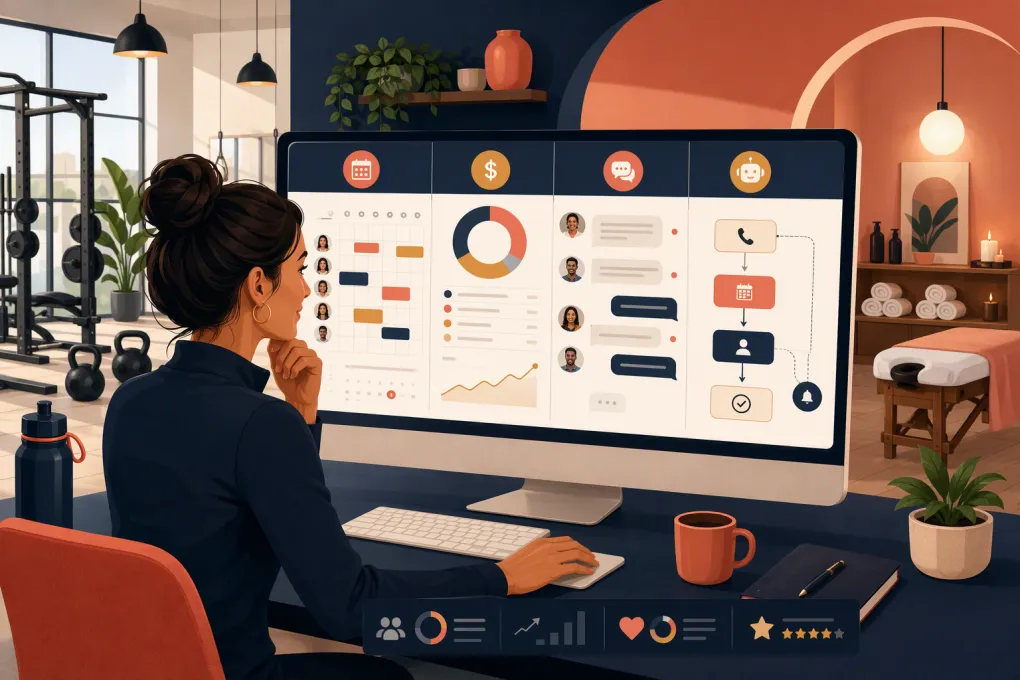


Run your gym on autopilot with WTF Go
Fitty — your AI receptionist — answers calls and DMs, fills classes, follows up with every lead, and collects dues while you coach.